
Health Claims
Consumers looking to improve their health need to be wary of deceptive marketing.
Unsubstantiated health claims are made by many different types of companies, including supplement retailers, MLMs and device makers.

Consumers looking to improve their health need to be wary of deceptive marketing.
Seen or heard a deceptive ad? Report an Ad

TINA.org submitted a comment to the FTC supporting a proposed consent order reached in a case the agency filed against TruHeight alleging deceptive growth claims and fabricated reviews.
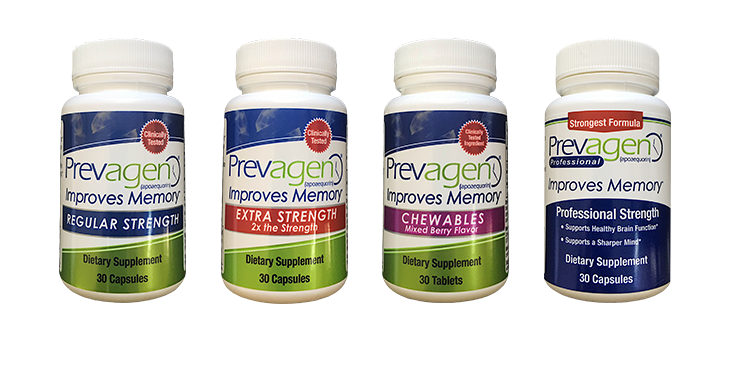
TINA.org found supplement company claiming its product could improve memory without having the necessary competent or reliable scientific evidence.

TINA.org investigation found company using unsubstantiated health and disease-treatment claims to market many of its products.

Lisa Fickenscher, New York Post

Sara Talpos, Med Shadow

Sarah Todd, STAT News

How do you cast Cerebral Palsy when there is no such thing as a typical person with Cerebral Palsy?




Information about relevant class actions filed around the country.
XanRelax and Addall
Misleadingly labeling products as “dietary supplements” when they contain illegal ingredients and thus do not meet the definition of “dietary supplement” under federal law
Misleadingly using the name XanRelax to make consumers believe the product provides benefits similar to the prescription drug Xanax
Misleadingly using the name Addall to make consumers believe the product provides benefits similar to the prescription drug Adderall
Falsely marketing products as able to treat, cure, and prevent diseases, including depression, anxiety, and ADHD, and without FDA approval to do so
Voluntarily dismissed When a complaint is dismissed without prejudice, an amended version of the complaint can be refiled.
Brown et al. v. ZMB Enterprises LLC
22-cv-54, S.D. Cal.
(Jan. 2022)
XanRelax and Addall
Misleadingly labeling products as “dietary supplements” when they contain illegal ingredients and thus do not meet the definition of “dietary supplement” under federal law
Misleadingly using the name XanRelax to make consumers believe the product provides benefits similar to the prescription drug Xanax
Misleadingly using the name Addall to make consumers believe the product provides benefits similar to the prescription drug Adderall
Falsely marketing products as able to treat, cure, and prevent diseases, including depression, anxiety, and ADHD, and without FDA approval to do so
Voluntarily dismissed When a complaint is dismissed without prejudice, an amended version of the complaint can be refiled.
Bodywell cellphone chips
Falsely advertising that products provide various health benefits – including that they reduce the amount of radiation that a brain absorbs by 80 percent and the temperature of a brain by 50 percent; reduce headaches, hand pain and anxiety; and improve sleep quality and mental clarity – when the products do not provide any of the advertised benefits
Pending
Hoffman et al. v. Haim Einhorn et al.
26-cv-1414, D.N.J.
(Jan. 2026)
Bodywell cellphone chips
Falsely advertising that products provide various health benefits – including that they reduce the amount of radiation that a brain absorbs by 80 percent and the temperature of a brain by 50 percent; reduce headaches, hand pain and anxiety; and improve sleep quality and mental clarity – when the products do not provide any of the advertised benefits
Pending
Crest Pro-Health toothpastes
Falsely marketing that products improve gum health and treat gingivitis when the sodium lauryl sulfate in them can cause gum and mouth tissue damage, inflammation, allergic reactions and other oral health conditions
Pending
Oliver et al. v. The Procter & Gamble Co.
26-cv-3859, S.D. Cal.
(July 2026)
Crest Pro-Health toothpastes
Falsely marketing that products improve gum health and treat gingivitis when the sodium lauryl sulfate in them can cause gum and mouth tissue damage, inflammation, allergic reactions and other oral health conditions
Pending
Colgate Total toothpastes
Falsely marketing that products improve gum health and treat gingivitis when the sodium lauryl sulfate in them can cause gum and mouth tissue damage, inflammation, allergic reactions, and other oral health conditions
Pending
Walsh et al. v. The Colgate-Palmolive Co.
26-cv-3858, S.D. Cal.
(July 2026)
Colgate Total toothpastes
Falsely marketing that products improve gum health and treat gingivitis when the sodium lauryl sulfate in them can cause gum and mouth tissue damage, inflammation, allergic reactions, and other oral health conditions
Pending
Sensodyne and Parodontax toothpastes
Falsely marketing that products improve gum health and treat gingivitis when the sodium lauryl sulfate in them can cause gum and mouth tissue damage, inflammation, allergic reactions, and other oral health conditions
Pending
Garland et al. v. Haleon US, Inc.
26-cv-3855, S.D. Cal.
(July 2026)
Sensodyne and Parodontax toothpastes
Falsely marketing that products improve gum health and treat gingivitis when the sodium lauryl sulfate in them can cause gum and mouth tissue damage, inflammation, allergic reactions, and other oral health conditions
Pending