


Eskiin
Send these marketing claims to the shower.
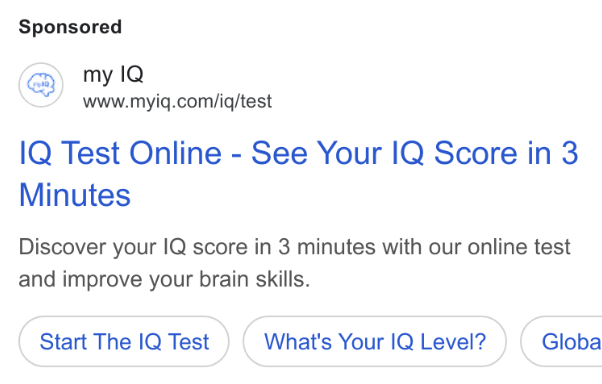
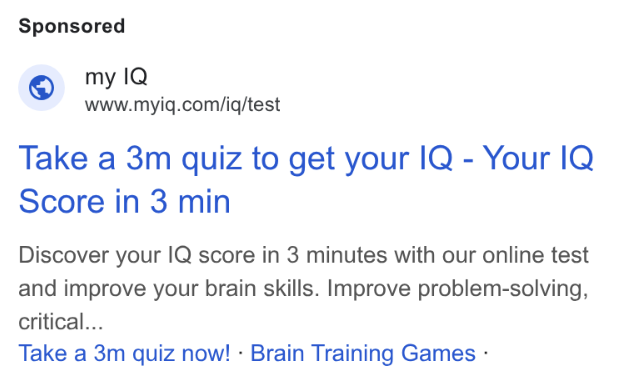
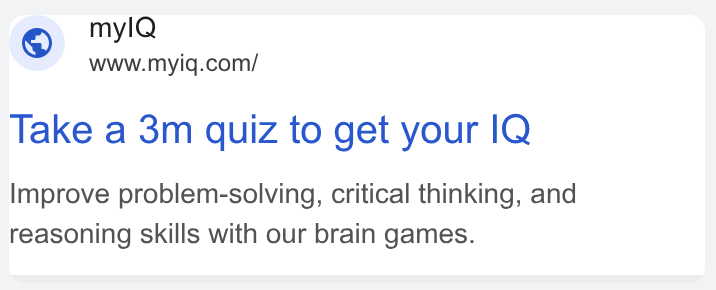
In Google ads, myIQ claims you can get your IQ score by taking its three-minute test.
But it’s not that simple.
For starters, when TINA.org first took the advertised test, the myIQ website said the 60-question quiz takes 20 minutes, not three. In response to a request for comment, myIQ said that more than 50,000 users – or fewer than half of 1% of the 80 million people the company claims “have discovered their IQ score with myIQ” – have completed the test in under three minutes but added that the majority of users complete the test in under 10 minutes. Interestingly, after TINA.org reached out to myIQ, it changed the number of questions in its test from 60 to 40, but did not change the amount of time it takes to finish the test.
Then, after investing the time it takes to complete the test, you still don’t get your test results.
That’s because in order to see your IQ score, you need to provide your email address and payment information, which then signs you up for an autorenewing subscription, the terms of which are not properly disclosed. In fact, many consumers may not even see the terms – if they see them at all – until after they’ve taken the test when they appear in fine print below what is advertised as a $1 total.
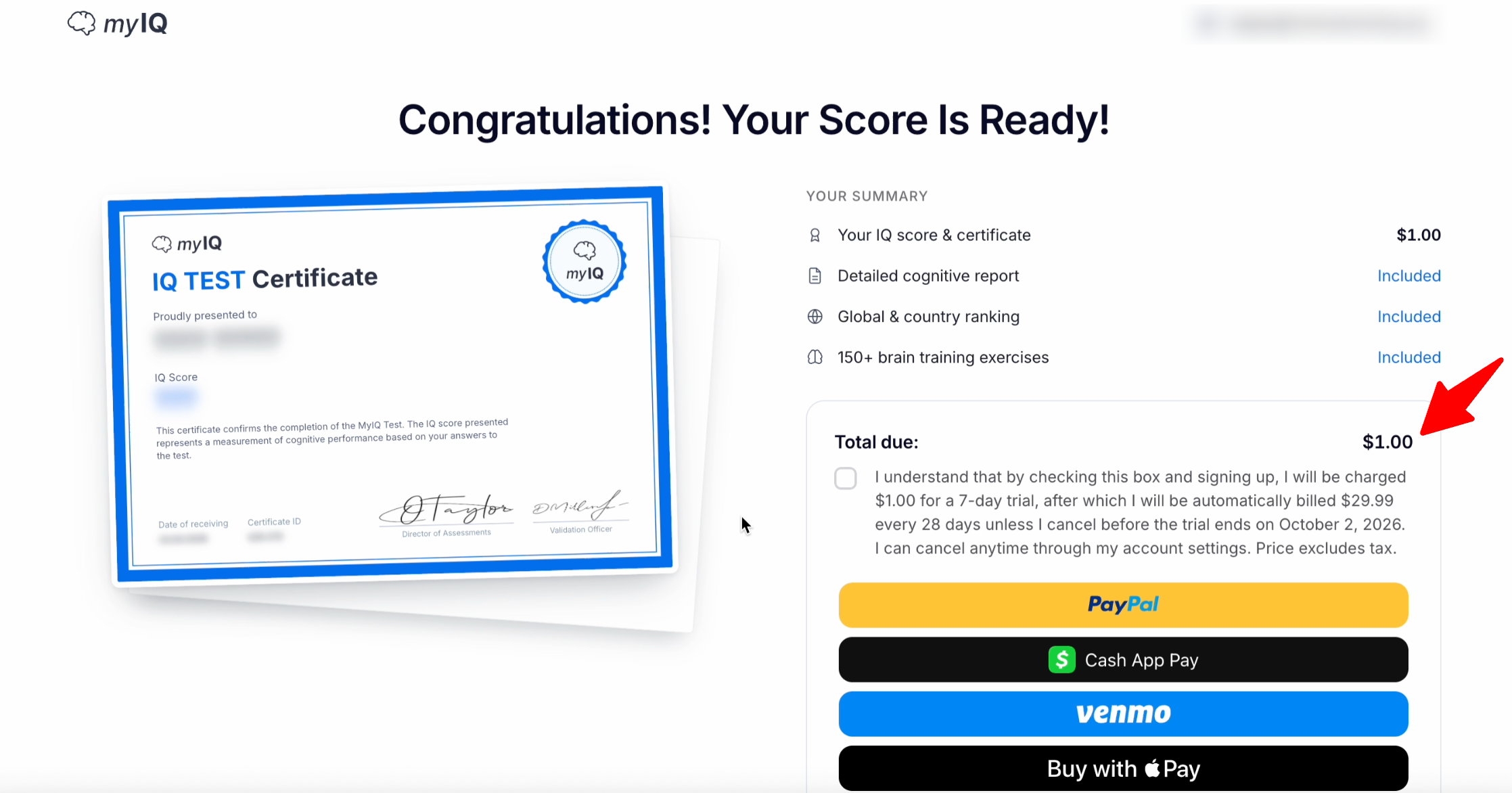
Here, myIQ discloses that if the subscription is not canceled within seven days, membership automatically renews at $29.99 every 28 days.
The company told TINA.org that it discloses its subscription terms at “every stage” of the user journey, including on the homepage. However, in order to see the subscription terms on the homepage, consumers must click on a “pricing” tab at the top of the page (which doesn’t appear on mobile without clicking on three horizontal lines in the top right corner) or scroll down to the bottom of the page, neither of which is required to take the test.
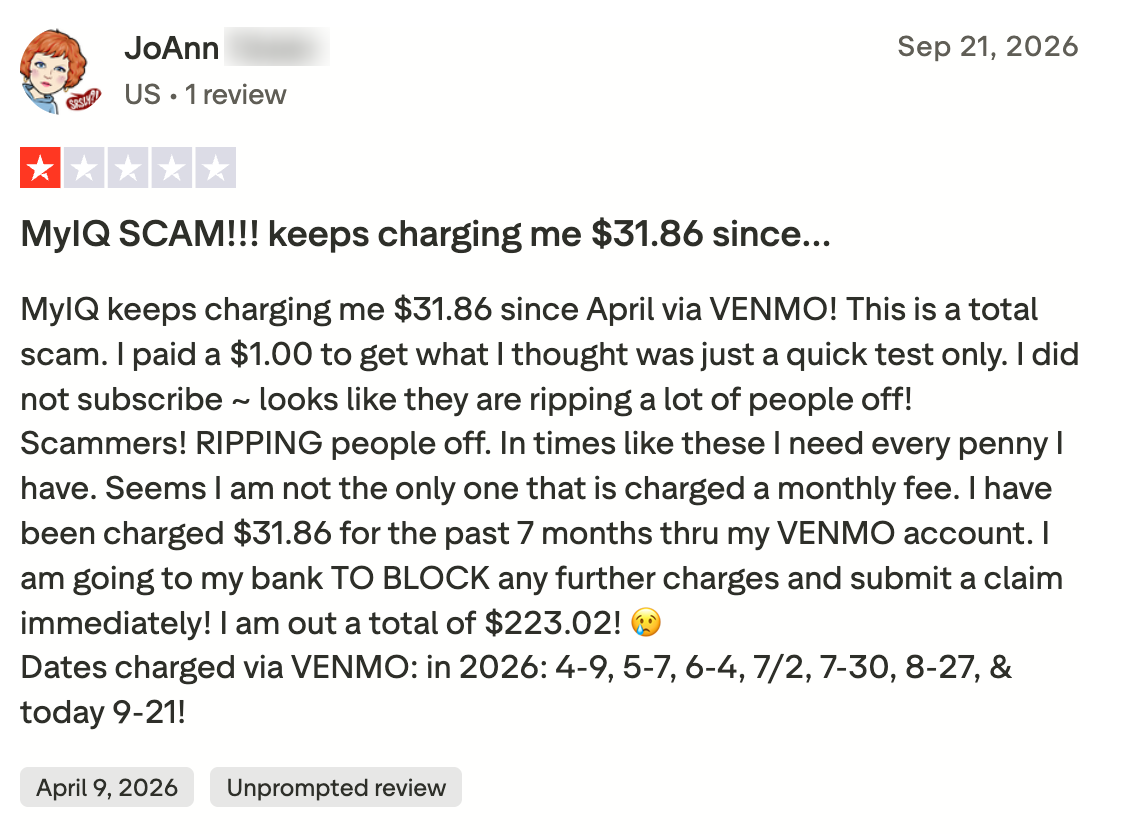
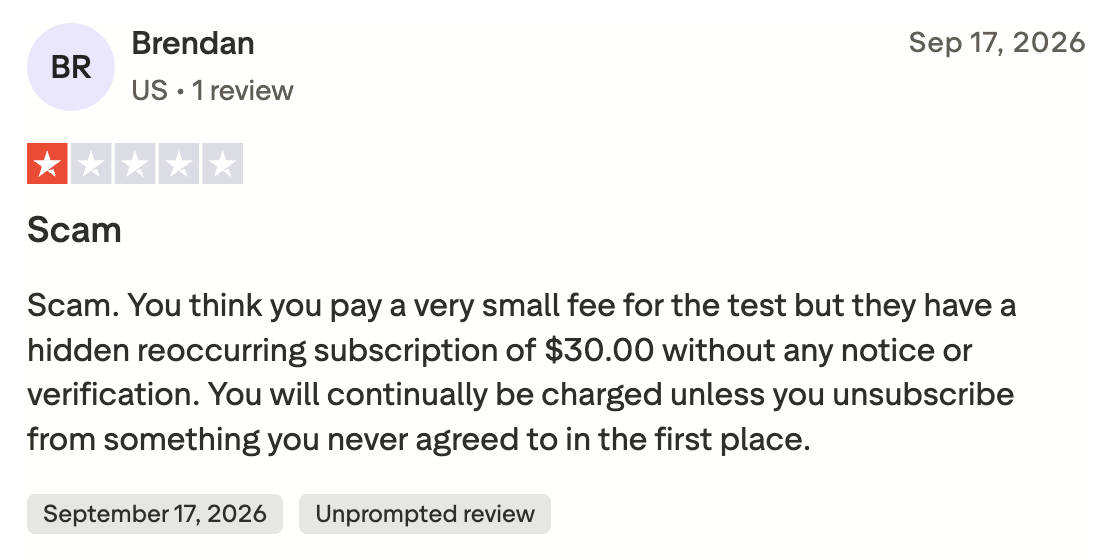
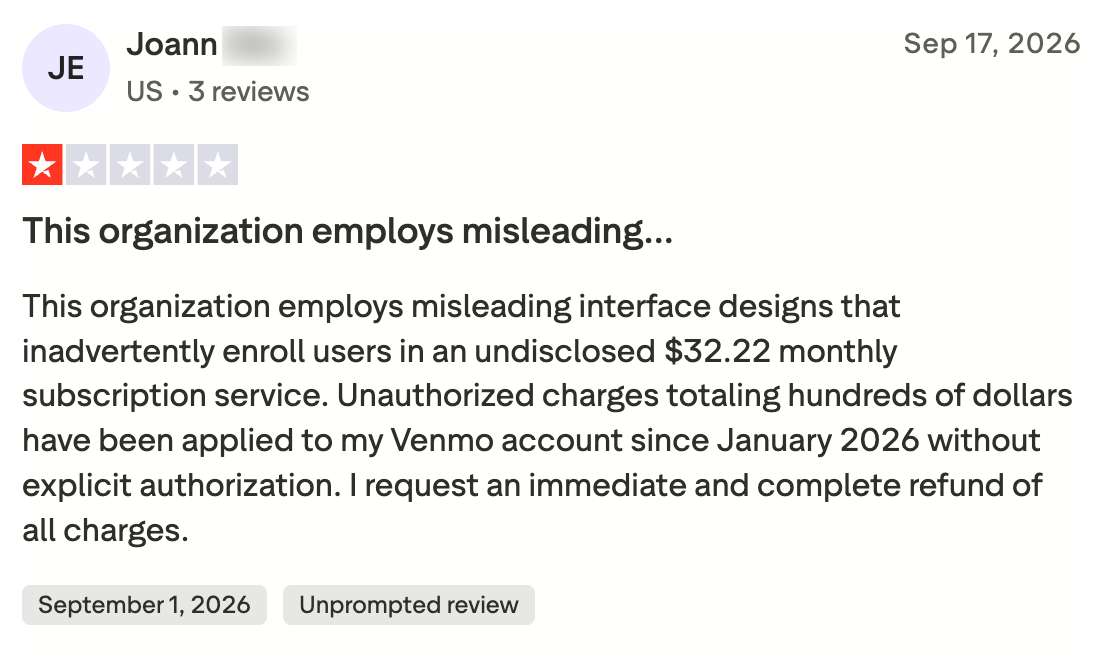
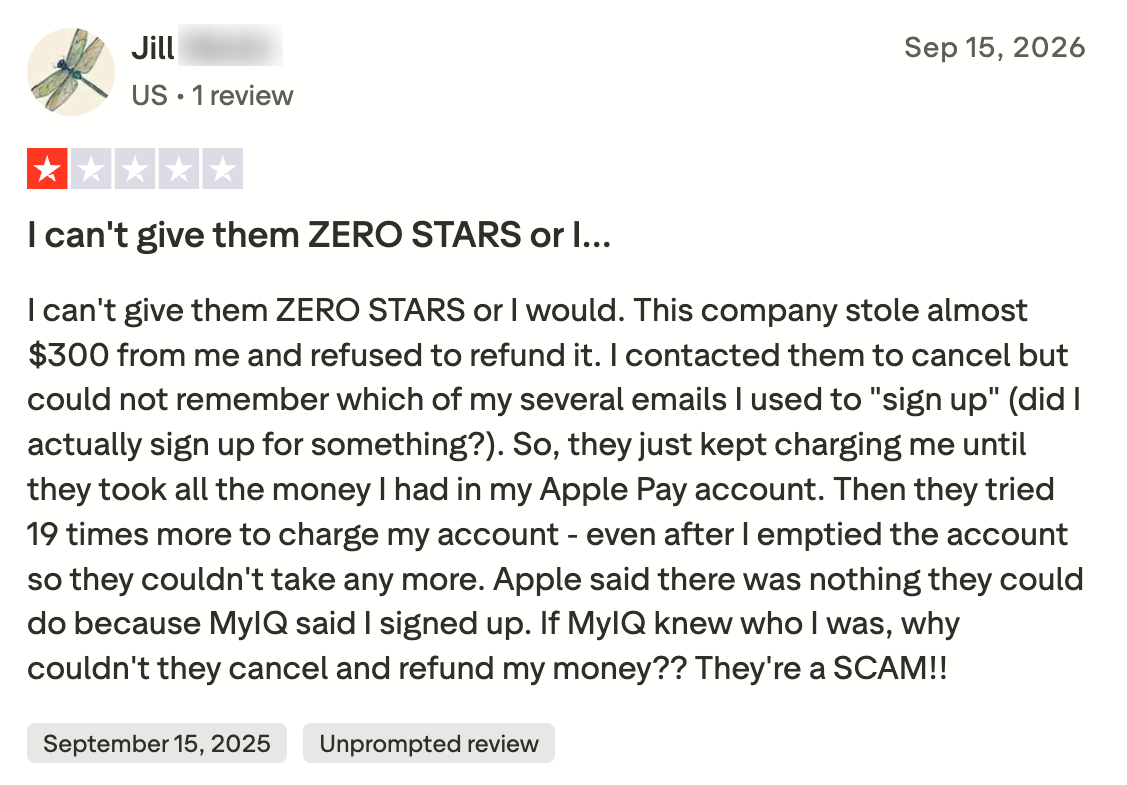
Given all this, it may come as no surprise that many consumers have reported that myIQ signed them up for a subscription without their consent. Consumers have also left one-star reviews on Trustpilot and lodged complaints with the BBB regarding difficulties canceling their myIQ subscription, among other issues.
Some additional red flags include:
MyIQ did not respond to a question asking the company to identify its “Director of Assessments” and “Validation Officer,” whose signatures appear on its “IQ Test Certificate.”
Read the company’s full response.
If you want to prove your intelligence, online IQ tests might not be the way to go. As always, before handing over any financial information, know exactly what you’re signing up for.
Find more of our coverage on subscriptions.
Our Ad Alerts are not just about false and deceptive marketing issues, but may also be about ads that, although not necessarily deceptive, should be viewed with caution. Ad Alerts can also be about single issues and may not include a comprehensive list of all marketing issues relating to the brand discussed.
Send these marketing claims to the shower.
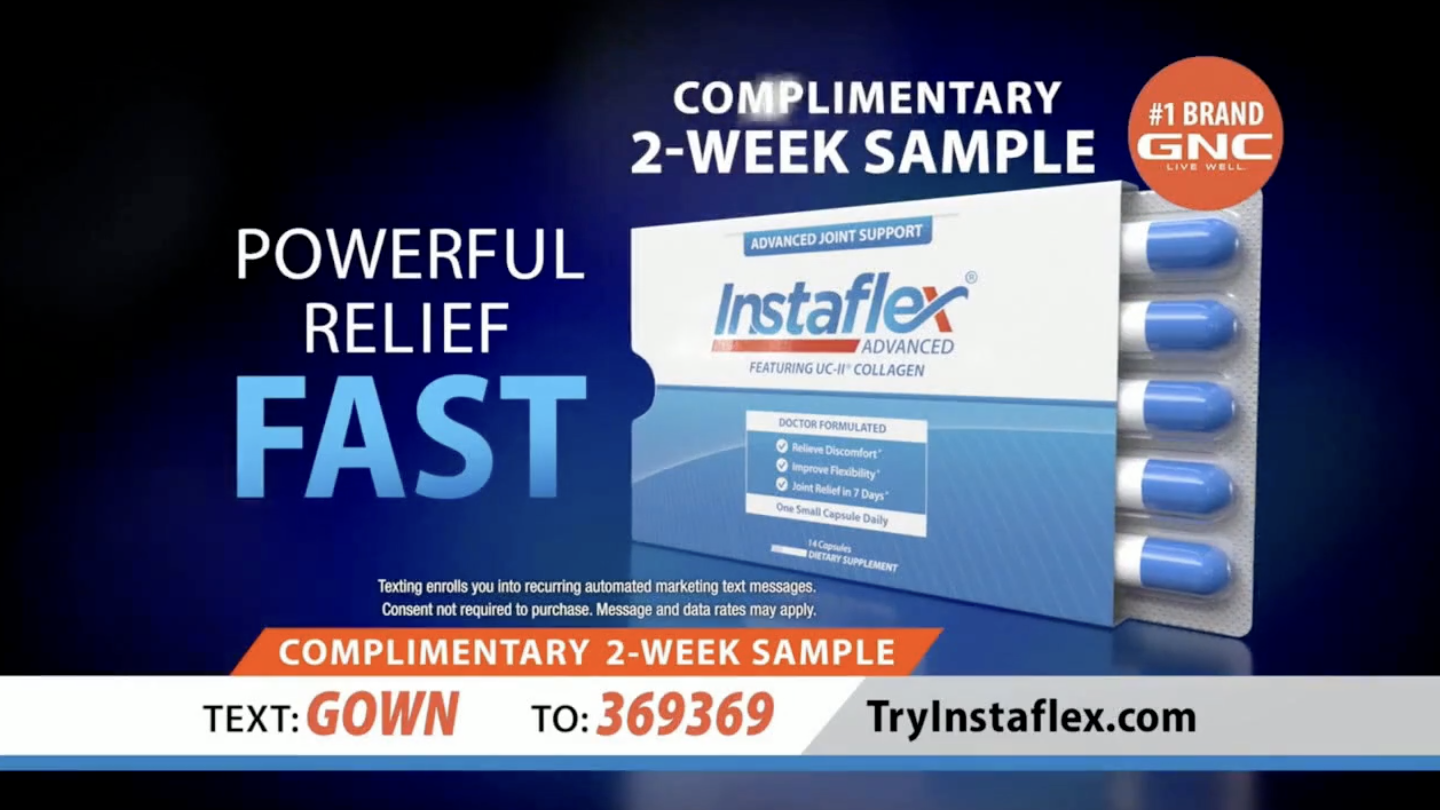
Can this joint supplement back up its stiff promises?

Webpage promoting ED pill is the quintessential example of fake news.