
AARP Membership
The only thing more “ridiculous” than the touted benefits is the cancellation process.
Is your Social Security number as vulnerable as this company claims?
In the TV ad above, LifeLock paints a frightening picture of identity theft.
The company claims that hackers can easily discover the first five digits of your Social Security number (SSN) using just your birthplace and birth year. Not convinced? LifeLock shows viewers how it’s purportedly done, step by step. And the ad goes further, warning that it only takes “a single vulnerability” at your bank, hospital or employer for someone to access the remaining four digits and have the ability to steal your identity.
The solution? Purchase a LifeLock subscription and if (or when) this happens to you, the company will take care of it by contacting institutions, disputing charges, closing accounts and helping you receive legal support. LifeLock is so confident that it can “step in and fix it” that it advertises a “restoration guarantee.”
However, after receiving a tip from a TINA.org reader, we discovered a few holes in the company’s scary marketing pitch. But first, a little background on LifeLock.
LifeLock claims to be “the leader in identity theft protection.” But as LifeLock discloses in fine print at the bottom of its website (but not its TV ad), “No one can prevent all cybercrime or prevent all identity theft.” In reality, identity theft protection services like LifeLock only monitor for signs of fraudulent activities and provide assistance after the incident has already occurred, as the company explains in a blog post. Of note, TINA.org has been tracking the limitations with LifeLock’s identity protection services for years, including the fact that its own CEO had his identity stolen after publicizing his SSN in a LifeLock marketing stunt in 2007.
Additionally, while the ad above suggests that resolving identity theft is a long, complex ordeal that only LifeLock is equipped to handle, the Bureau of Justice Statistics reports that the majority of identity theft victims resolve the issues in one day or less. And there are things you can do on your own such as canceling credit cards and disputing unauthorized charges that don’t require professional paid help.
Thankfully, predicting the first five digits of someone’s SSN isn’t nearly as simple as LifeLock makes it seem. For one, the first three digits – or the “area number” – reflect where someone applied for their SSN, which do not “necessarily represent the State of residence,” according to the Social Security Administration. And even if a hacker did know the state where someone applied, guessing these three digits may still be difficult – especially in larger states like New York, which has more than 80 possible area numbers available. Perhaps it’s no coincidence that LifeLock chose to feature Delaware, which only has two area numbers, in its commercial.
Additionally, it’s unclear where the cybersecurity expert in the ad came up with “44” for the middle two digits to represent a birth year. In reality, the middle two digits are more complicated than a person’s birth year and are actually assigned within each area number using the following pattern:
Within each area, the group number (middle two (2) digits) range from 01 to 99 but are not assigned in consecutive order. For administrative reasons, group numbers issued first consist of the ODD numbers from 01 through 09 and then EVEN numbers from 10 through 98, within each area number allocated to a State. After all numbers in group 98 of a particular area have been issued, the EVEN Groups 02 through 08 are used, followed by ODD Groups 11 through 99.
It’s also worth noting that, as the company states in the quickly disappearing fine print of its TV commercial, the sequence for SSNs was completely randomized for those issued after 2011 (June 25, 2011, to be exact).
The bottom line? As the Social Security Administration notes, while it is true that the application for a SSN asks for information such as birthplace and birth year, “none of this identifying information is encoded in the SSN itself.”
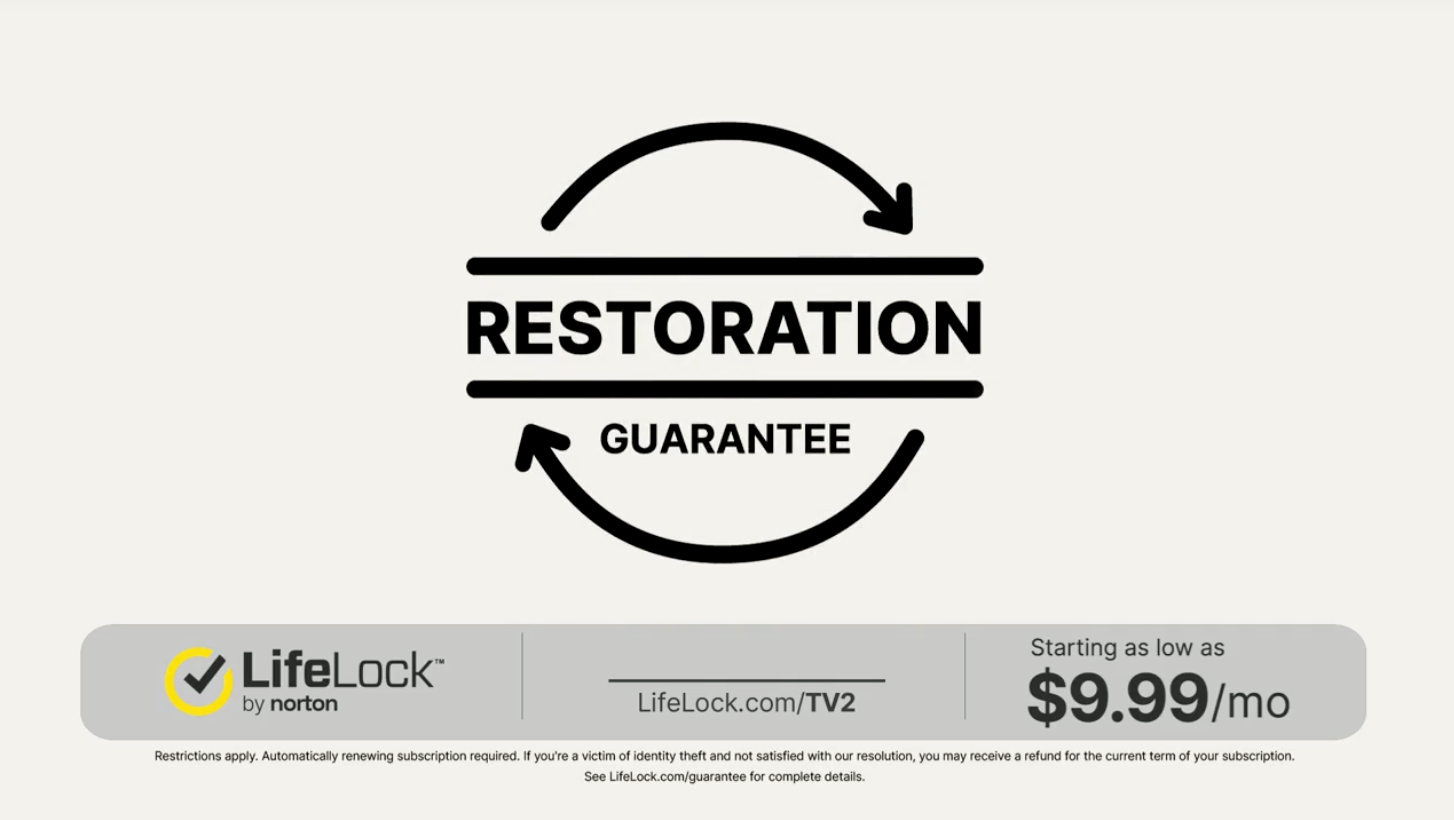
All that said, identity theft is still a real concern. So you may be enticed by LifeLock’s claim that “[i]f you’re a victim of identity theft, LifeLock will step in and fix it so you don’t have to, guaranteed.” (In numerous Meta ads, LifeLock also claims to “fix ID theft, guaranteed – and get your money back.”)
However, the company’s so-called “restoration guarantee” does not actually ensure that you will be reimbursed the amount you lost or that the problem will even be fixed. Instead, as LifeLock explains on its website, the guarantee only means that if it “cannot reinstate your identity to good standing, you get your money back,” but only “up to twelve months of your subscription payment.”
Where is this fun fact disclosed in the commercial above? In teeny, tiny fine print that flashes on the bottom of the screen for about three seconds, LifeLock states that if “you’re not satisfied with your resolution, you may receive a refund for the current term of your subscription.”
LifeLock has a long history of legal trouble.
For example, in 2010, the company agreed to pay $12 million to settle charges by the FTC and 35 state attorneys general that it made deceptive claims about its ability to protect consumers from identity theft. When it allegedly continued to make deceptive claims in violation of that settlement, the company was ordered to pay an additional $100 million.
LifeLock’s claims to protect consumers from identity theft and even “stop thieves before they do damage” have also been the subject of class-action lawsuits, one of which resulted in a $68 million settlement. Lawsuits have also taken issue with the company’s subscription practices.
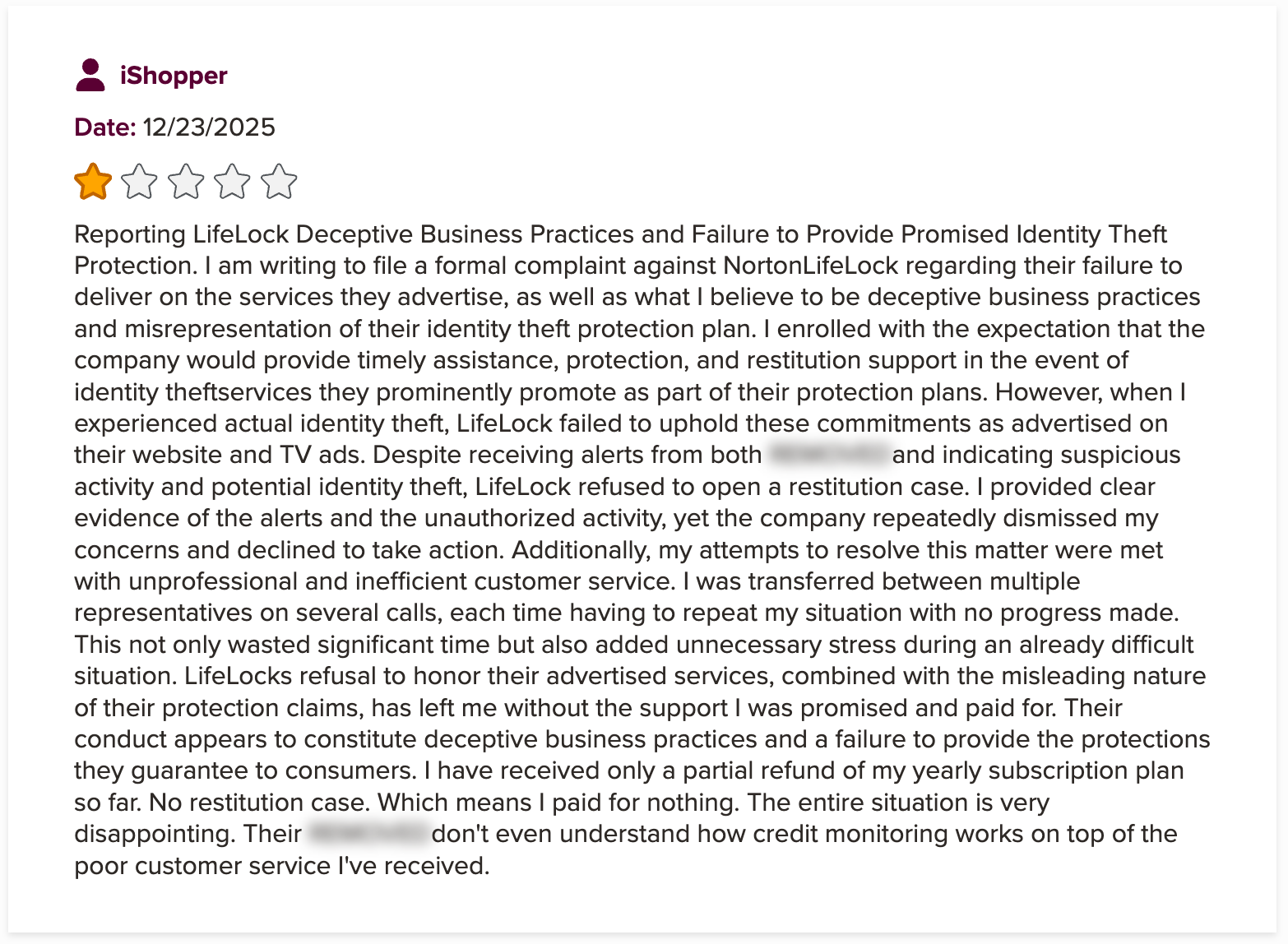
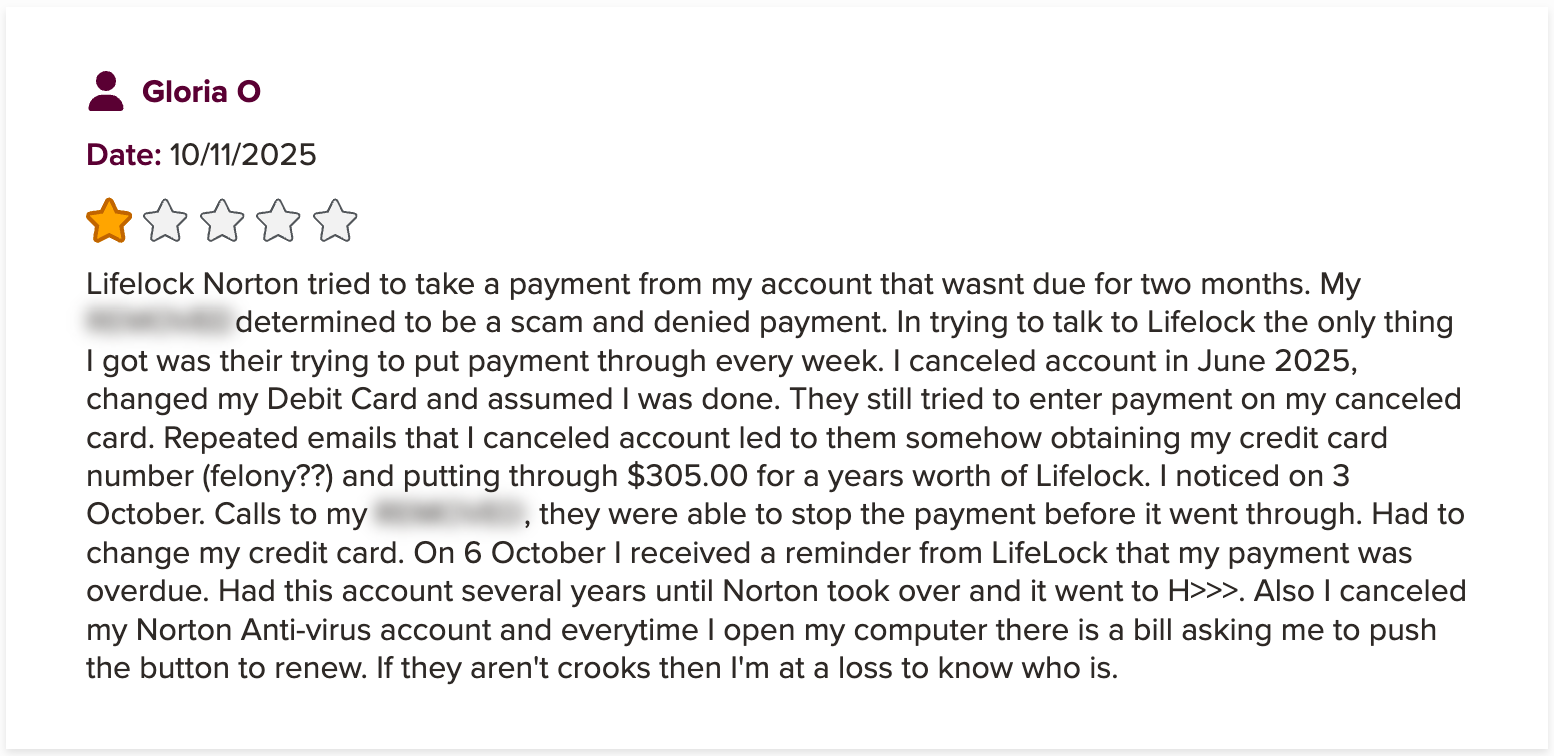
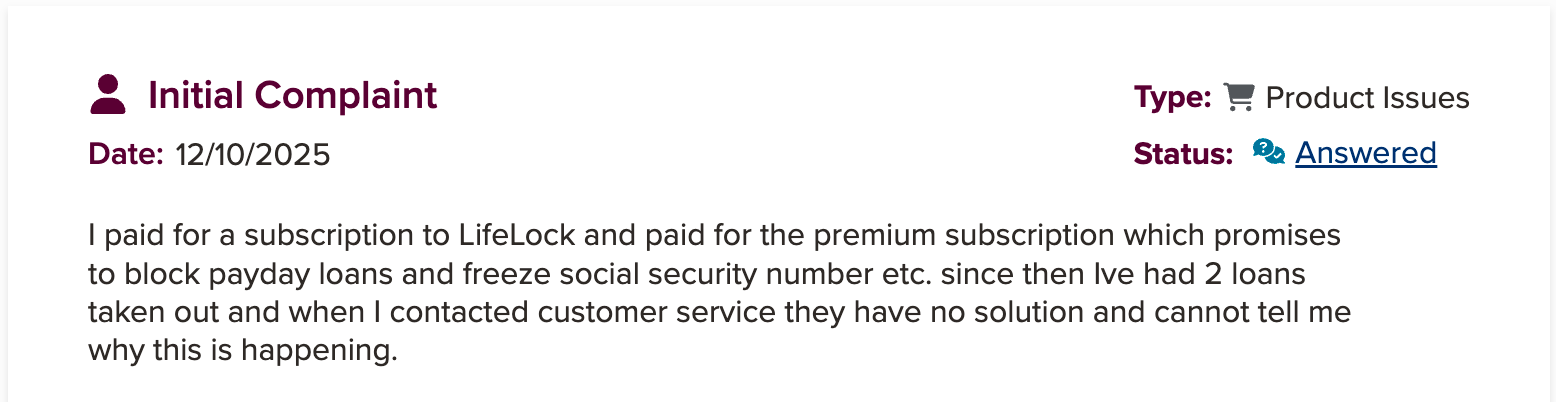
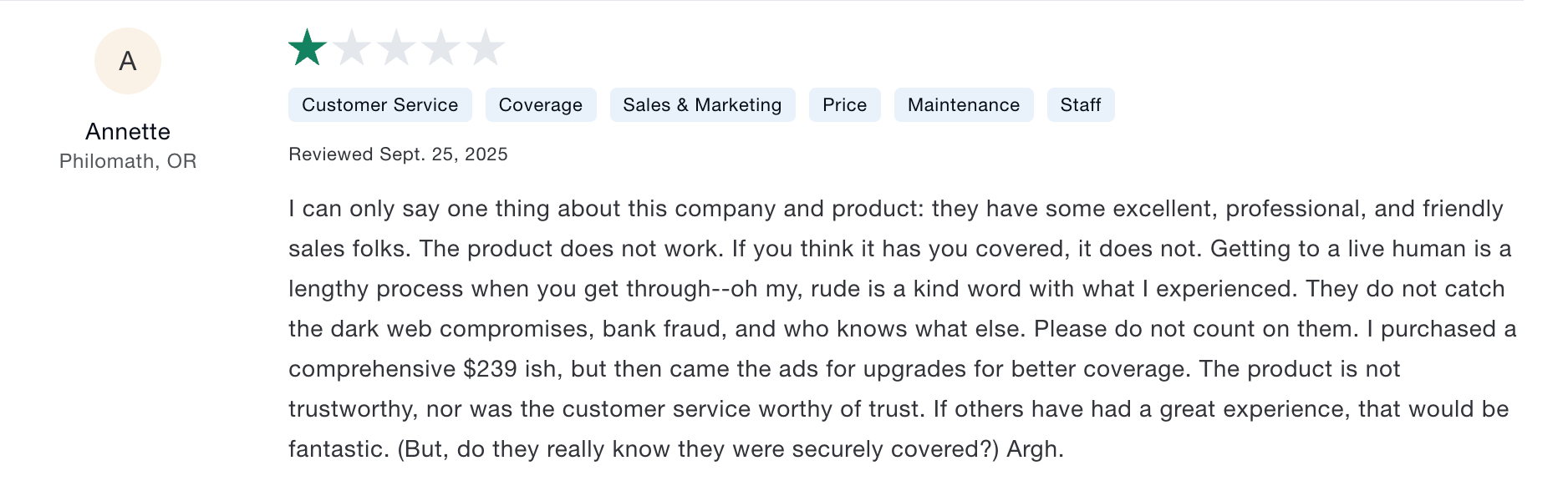
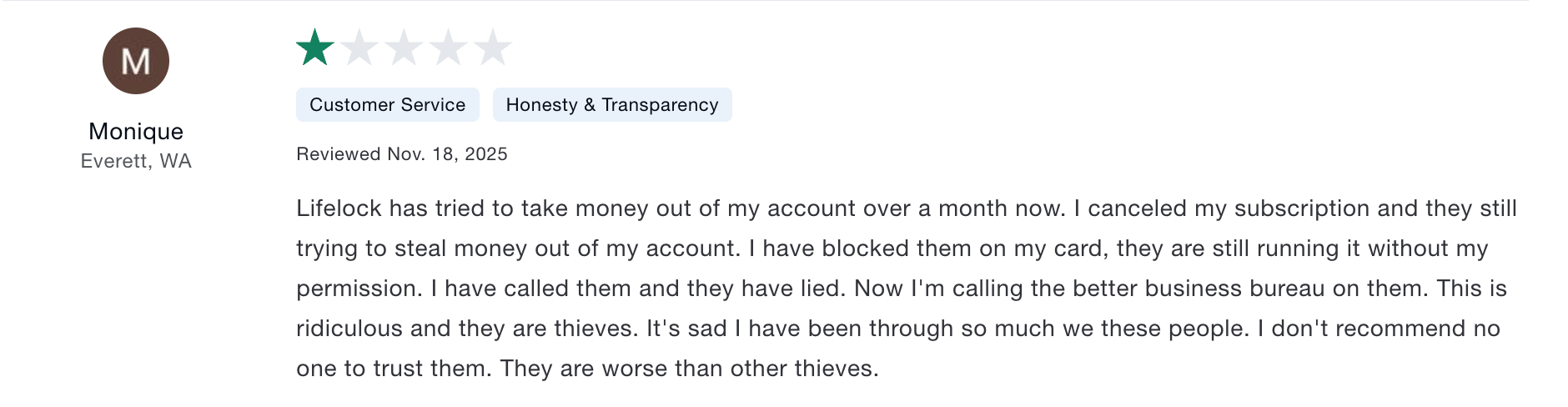
A multitude of consumers have complained to third-party review sites like the BBB and ConsumerAffairs about LifeLock not delivering on its advertised identity protection services, in addition to issues canceling subscriptions and unauthorized charges by LifeLock, among other things:
On both review platforms, LifeLock has a customer rating of just above 1 star.
LifeLock did not respond to our request for comment.
LifeLock is not an identity theft prevention tool. And with respect to its purported restoration guarantee, it’s not a guarantee that LifeLock will get your money back or regain control of your identity. When a company leans on fear to sell you something, always check the facts before trusting it with your money.
Find more of our coverage on LifeLock.
Our Ad Alerts are not just about false and deceptive marketing issues, but may also be about ads that, although not necessarily deceptive, should be viewed with caution. Ad Alerts can also be about single issues and may not include a comprehensive list of all marketing issues relating to the brand discussed.
The only thing more “ridiculous” than the touted benefits is the cancellation process.

When you don’t own what you buy.
‘The future of TV has finally arrived’ and with it, hidden fees.