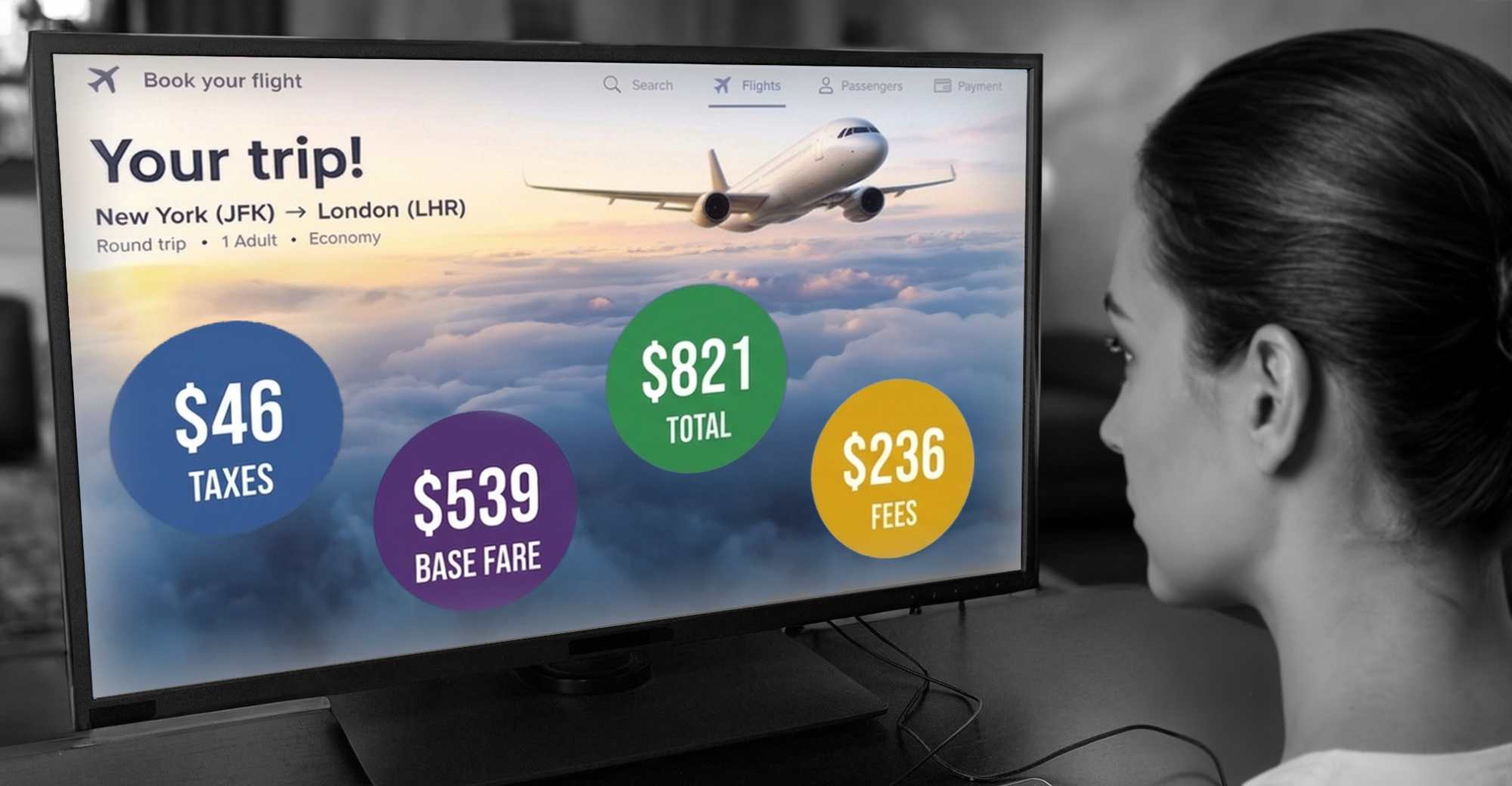
TINA.org Tells DOT: Don’t Muddy Airline Pricing
A proposed rule change could make it harder to know what you’ll actually pay for a flight.
TINA.org and other consumer advocates file comment with FTC.
| Laura Smith

More and more, companies are using the personal data they collect about us – including location, browsing history, past purchases, online behavior and other nuggets of information – to size up individual shoppers, guess how much each one is willing to pay and set customized prices accordingly. Most people have no idea this is happening, let alone that the price they’re seeing may be higher than the one offered to another shopper for the same product or service. Fortunately, regulators have started to take notice, and on Friday, TINA.org joined a coalition of consumer advocacy organizations in filing a comment with the FTC supporting the agency directing its attention to the pricing practice and urging it expand its reach.
In August 2026, the FTC announced it was seeking public comment on a proposed enforcement policy statement addressing personalized pricing. The commission voted 2-0 to publish the statement, with Chairman Andrew Ferguson noting that “when consumers see a listed price, they expect it to be the same price everyone else sees, not the retailer’s estimate of how much they are willing to pay based on their personal data.”
The proposed statement is a meaningful step, stating that failing to disclose personalized pricing, or misrepresenting how it works, likely violates the FTC Act’s prohibition on unfair and deceptive act and practices. But TINA.org and its partners believe the commission can – and should – do more.
In January, TINA.org identified algorithmic – or personalized – pricing as a deceptive ad trend we’d be keeping an eye on this year.
At the end of 2025, Consumer Reports (together with Groundwork Collaborative and More Perfect Union) published the results of an investigation into grocery delivery app Instacart’s AI-enabled pricing, which found that the same items showed up at different prices for different shoppers in the same store at the same time – sometimes by as much as 23 percent.
Prompted by the investigation, Instacart paused its personalized pricing practices. But this pricing method isn’t limited to groceries. For example, one journalist found certain hotel booking sites charging San Francisco residents more than travelers from other areas and states for the same hotel stay, sometimes by as much as $500 more per night. And last summer, Delta Air Lines announced plans to set 20% of its domestic fares using an algorithm that factors in a customer’s purchase history and other personal elements – prompting Transportation Secretary Sean Duffy to warn airlines that his department “will investigate” any carrier that tries to “individualize pricing on seats based on how much you make or don’t make or who you are.”
States are moving, too. New York now requires disclosure of personalized pricing, Connecticut requires disclosure when personal data is used to set prices and broadly prohibits the practice and Maryland has passed a law aimed at reining in personalized pricing at grocery stores.
This is also the latest chapter in personalized pricing advocacy TINA.org and its partners have been a part of. In February 2026, we submitted a comment supporting a citizen petition asking the FTC to require disclosure whenever a price is set by an algorithm using a consumer’s personal data – the same core idea now reflected in the commission’s proposed policy statement.
Our latest filing supports the FTC’s proposed statement but pushes the commission to close some gaps:
In short, disclosure is an important first step – and something TINA.org and its partners pushed for earlier in the year. But, as the FTC so aptly illustrated in its proposed policy statement, as personalized pricing technology advances and spreads into more corners of the marketplace, simply disclosing the practice doesn’t automatically make it fair.
The FTC’s public comment period on the proposed policy statement closed Sept. 25 and the commission will now consider input from the comments it has received before finalizing its approach. In the meantime, TINA.org will continue to track how companies use consumer data to set prices behind the scenes and how regulators respond.
Stay tuned for updates.

A proposed rule change could make it harder to know what you’ll actually pay for a flight.

TINA.org urges the FTC to adopt a fee disclosure rule for the online food delivery market.

And TINA.org is all for it.