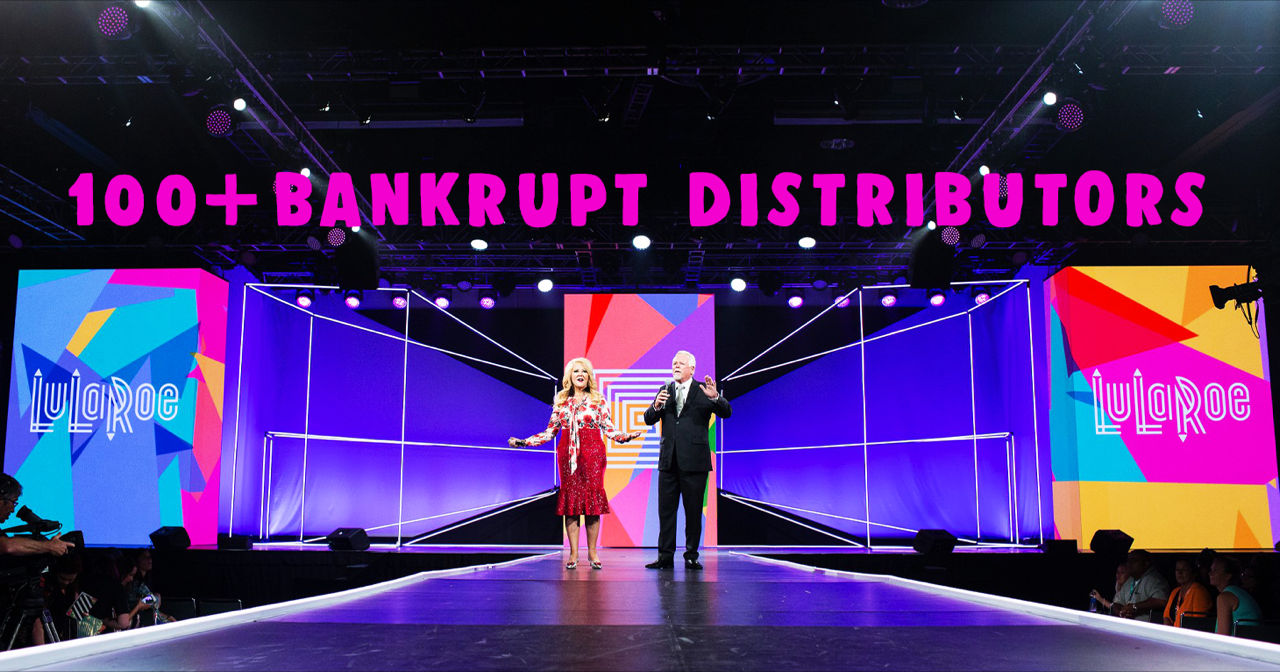
LuLaRoe Distributors in Bankruptcy as Founder Touts Financial Freedom
At least 115 current or former LuLaRoe distributors have filed for personal bankruptcy since 2016.
Permanently banned from MLM, Noland has found other ways to exploit consumers.
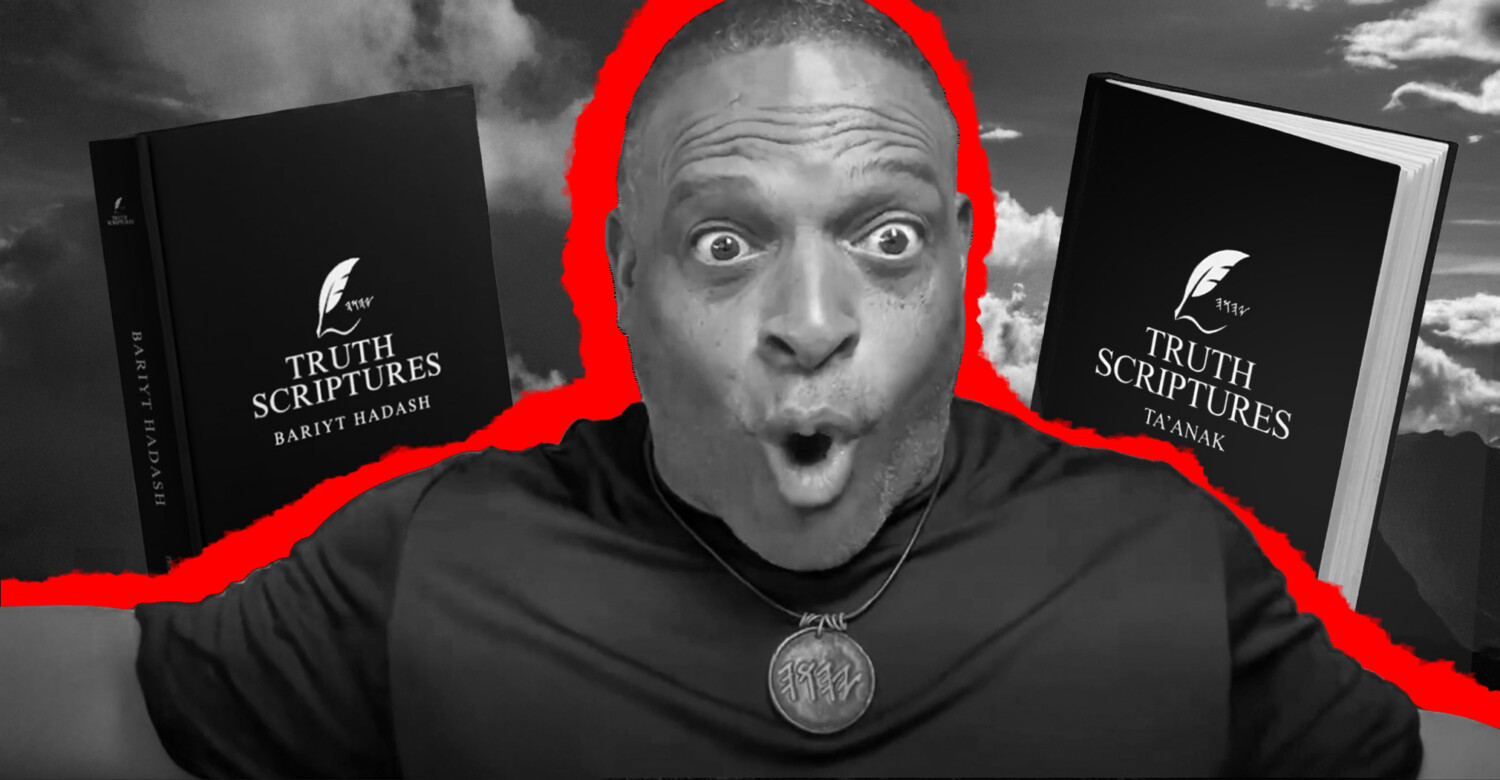
James “Jay” D. Noland has spent more than two decades shifting identities – from multilevel marketing entrepreneur to motivational coach to spiritual reformer – but the underlying pattern of his ventures has changed remarkably little. His latest focus, Promote the Truth, is an online ministry built around livestream teachings and a proprietary Bible translation he calls the “Truth Scriptures.” For casual observers, this project may appear to be an ambitious religious undertaking. Yet a closer look reveals strikingly close echoes of the deceptive practices and schemes that have defined Noland’s business career for more than 20 years.
Noland’s prior ventures ultimately led to tangles with courts and law enforcement culminating, most recently, in a late 2025 decision by the Ninth Circuit Court of Appeals affirming findings that Noland has repeatedly operated pyramid schemes, misled consumers with false earnings representations, lied under oath and violated a federal court order that was specifically designed to prevent him from scamming consumers (again).
Noland first caught the attention of the FTC in 2000 – just five years after he started his “entrepreneurial career” – when it charged Noland and others with operating an illegal pyramid scheme based in Arizona known as Bigsmart. The complaint alleged that Noland was a leading salesman in an internet-based business opportunity scheme that lured consumers with deceptive claims that participants could make substantial amounts of money. Noland settled the case with the FTC in 2002. The settlement included a judgment of more than $100,000 and a consent order prohibiting Noland from engaging in any future pyramid schemes or misrepresenting the potential earnings, benefits or sales of any MLM program.
In 2017, Noland (and others) started a new MLM: Success by Health (SBH), which purported to sell coffee, tea and nutraceuticals. When business at SBH began to slow around 2019, Noland and his team started yet another MLM to offset SBH’s losses called VOZ Travel, a travel discount service that never got off the ground but still generated net revenues of more than $1 million through recruitment. In total, SBH and VOZ Travel generated net revenues of more than $7 million. These MLMs again captured the attention of the FTC and in 2020 the agency sued Noland, along with his wife and several others, for operating pyramid schemes, marketing the schemes with deceptive income claims, and violating the 2002 consent order that Noland had agreed to prohibiting him from engaging in such behavior.
This time around, Noland did not settle with the FTC – instead, his case went to trial and in 2023 the Arizona District Court found that Noland had enticed participants to joining SBH and VOZ Travel by promising extraordinary profits that participants never realized. The court found that in order to recruit his victims, Noland frequently positioned himself as a millionaire capable of teaching others the secrets to financial freedom. The court ruled that Noland’s false claims about his own wealth were “outrageous.” For example, Noland told recruits that, “I’ve been financially free, completely time and money free since I was 36.” In fact, the court found that at 36, Noland “was living (or was about to start living) off credit cards.”
Such deception also included false claims about luxury assets Noland never owned – such as an oceanfront property in Panama that he and his wife held out as proof of their wealth. At his deposition for the case, Noland laid his actual financial situation bare as he could not recall a time when he didn’t carry a negative net worth. But this did not stop Noland from assuring his followers that they could replace their incomes within months or even achieve fantastical benchmarks like a million dollars per month with SBH and VOZ Travel. These promises were critical to fueling the schemes because, as the trial court found, the businesses were not driven by legitimate retail sales but by the relentless recruitment of new members. Participants were urged to purchase expensive starter packs, attend high-priced training events and maintain monthly buying requirements – not because these purchases reflected consumer demand, but because they kept the financial engine of the schemes running.
The court also documented high-pressure tactics that encouraged recruits to finance their participation in the schemes through credit cards, loans and even home equity. These pressures, combined with the unrealistic income claims, misled participants into believing they were investing in a viable business opportunity rather than an illegal pyramid structure. And the district court’s opinion makes clear that Noland carried out these activities in direct violation of the permanent injunction he entered into in 2002. As a result, the district court held Noland in contempt of court for violating multiple provisions of the injunction, concealing evidence and continuing to run the schemes even after the FTC had sued him. The Ninth Circuit subsequently upheld both the contempt findings and the more than $7.3 million in civil penalties imposed against Noland and his associates, along with a permanent ban against Nolan and his wife (and others) from participation in multilevel marketing.
The district court’s findings also extended to Noland’s personal conduct during the litigation. The court found that Noland engaged in at least 10 discrete acts of dishonesty, including deliberately switching communications to encrypted platforms for the express purpose of concealing evidence from the FTC. When confronted at trial, Noland was not forthcoming. Instead, the court found that he “feigned confusion and then lied,” testified untruthfully under oath, attempted to coach witnesses and then sought to hide evidence of that witness-coaching – conduct the court described as “deeply troubling” and “an outrageous maneuver that raises a strong inference of bad faith.” The court further found that Noland intentionally deleted evidence in violation of the court order, concluding that Noland’s actions reflected a calculated decision to break the law when it suited his tactical interests. Unsurprisingly, the court concluded that Noland was not a credible witness and that his repeated dishonesty undermined the entirety of his testimony, raising a fundamental question that lay at the heart of the FTC’s case: whether Noland could ever be trusted to follow the rule of law and court orders.
It is against this backdrop that Noland’s latest career – as a religious teacher and translator – must be understood. Noland’s Promote the Truth now positions itself as a corrective response to supposed distortions in traditional teachings of Christianity, with Noland once again casting himself as the authority with access to hidden or suppressed truths. Noland presents himself as someone restoring the “true” word and name of the Creator, YAHUAH, asserting that mainstream biblical texts are fundamentally flawed due to misinterpretations of languages in previous translations. The narrative and financial structure of Promote the Truth closely mirror Noland’s prior schemes, in which he positioned his offerings as exclusive (but costly) solutions unavailable through conventional channels. Central to this mission is the Truth Scriptures, a proprietary translation of the Bible that Noland claims is the “most accurate” ever produced, despite having no independent linguistic, scholarly or theological validation for his assertions.
In an effort to bolster the credibility of this venture, Promote the Truth makes the sweeping claim on its YouTube page that “[o]ver 30 years of research has been put into making our content.” Noland has echoed this assertion personally, stating in a March 2023 Instagram post that he spent more than three decades conducting “scripture research,” including more than three years devoted to studying words for up to 10 hours a day, culminating – he says – in becoming an “etymologist.” This would be a remarkable accomplishment if true, particularly given that etymologists typically undergo extensive formal training in historical linguistics, language evolution and related disciplines, and often earn advanced degrees. Noland attended Central Florida Community College before pursuing a professional baseball career from 1989 to 1995.
Notably, the origins of Promote the Truth, which was originally based in Florida but has recently been relocated to Manchester, England, also reflect a far more conventional Christian orientation than Noland now appears eager to embrace. Some 20 years ago, Noland and his wife used the Promote the Truth website to “spread the truth” and form “Strategic Partnerships” with individuals interested in disseminating the message of Jesus.
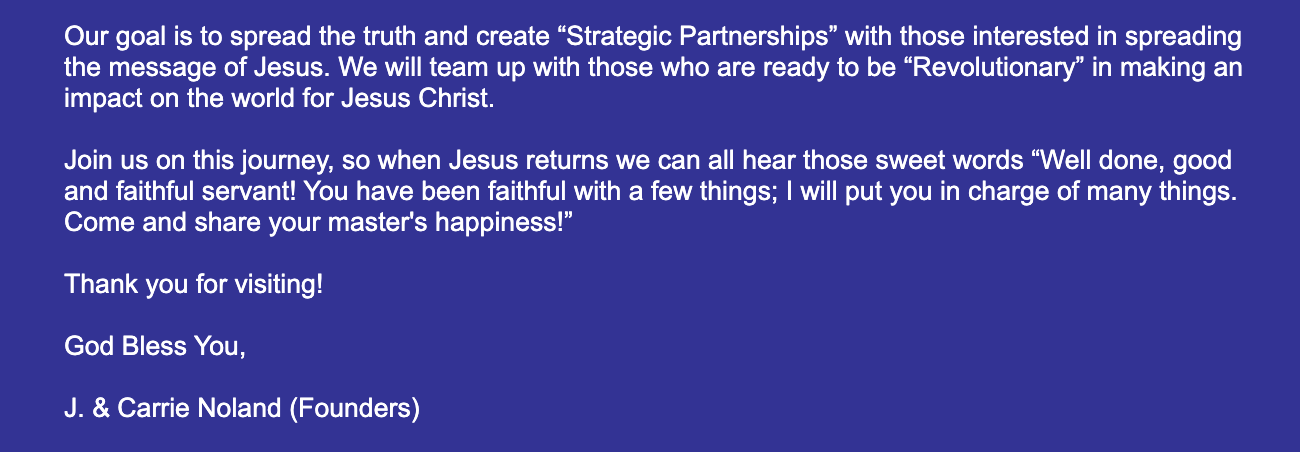
Around 2008, the site pivoted toward promoting an alternative interpretation of the Bible. For more than a decade thereafter, from 2008 through 2020, the Promote the Truth website remained largely dormant. That changed in 2021, when – while the FTC’s lawsuit against Noland was pending – the site underwent a substantial overhaul, emerging in a form more closely resembling its current iteration. Around the same time, Promote the Truth expanded its reach by launching a coordinated presence across multiple social media platforms, including Instagram, YouTube, TikTok, Facebook and Telegram.
To finance Promote the Truth’s endeavors, Noland endlessly solicits financial support from donors through a tiered contribution system that mirrors the structural upselling at the heart of his earlier schemes. Noland’s first donor campaign focused on the creation of new translations of the Old and New Testaments of the Bible – books now known as the “Truth Scriptures,” which can be purchased for $47 and $77 respectively plus shipping costs.
His latest campaign titled “Unleashed” aims to finance the marketing and sales of Truth Scriptures to a worldwide audience. And to date, individuals have given well over $100,000 to the cause. Donors can enter at levels ranging from $300 for the “Brass Package” to $10,000 for the “Black Diamond Package,” each level associated with escalating perks, including hardcover editions of the biblical translations, access to retreats, branded merchandise and even private Zoom calls with Noland himself.
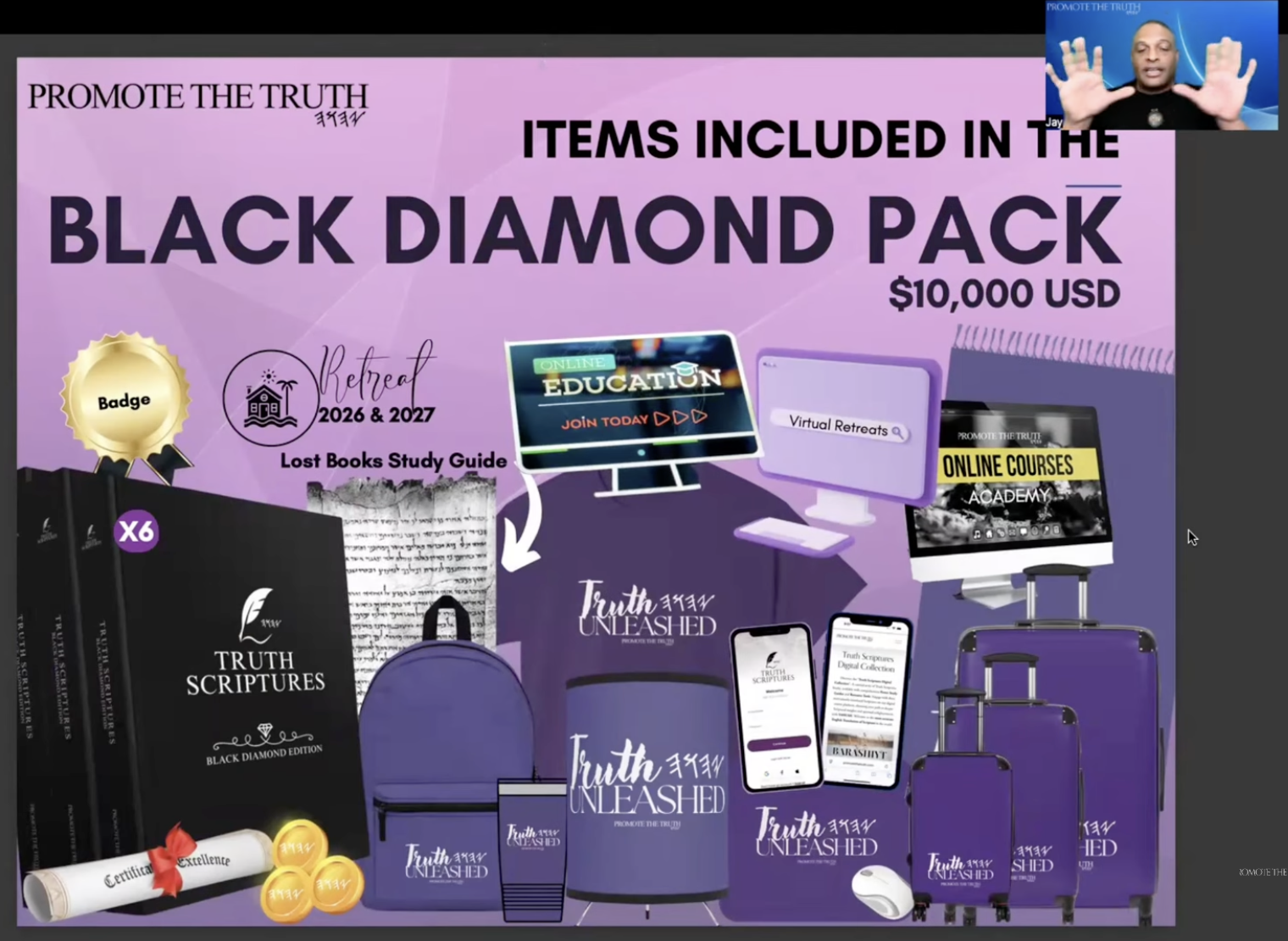
The campaign’s structure raises familiar concerns. Instead of focusing on spiritual study or transparent charitable aims, the donor tiers create a ladder of status and exclusivity, encouraging followers to “upgrade” over time, which always involves spending more money. The use of precious stones and valuable metal labels to mark one’s financial donations within each campaign closely resembles the hierarchical incentive structures that the courts identified as central to Noland’s prior pyramid schemes. Meanwhile, financial contributions to Promote the Truth are explicitly non-refundable and non-tax-deductible, leaving donors with little if any financial recourse. Indeed, there is no publicly available accounting of how funds are used or allocated.
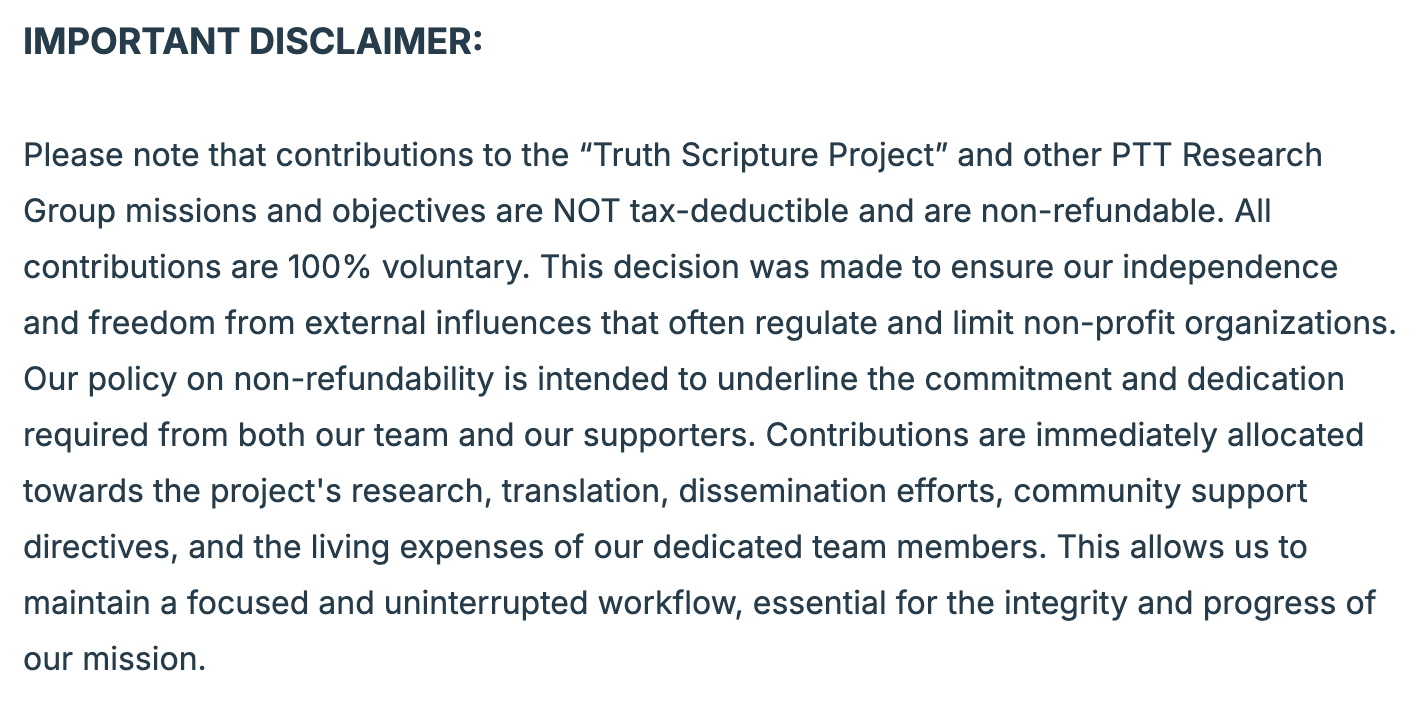
And Noland’s messaging continues to rely heavily on emotional and spiritual urgency, portraying financial participation as both an act of devotion and an opportunity to be part of an historic revelation.

Alongside the distribution project, Noland promotes an array of religious merchandise, including a $59 necklace and other emblematic items that he positions as spiritually significant. Across multiple social media platforms for Promote the Truth, Noland maintains tight control over messaging, constructing a cohesive ecosystem in which he serves simultaneously as spiritual authority, translator and financial guide. This level of concentrated influence, paired with a documented history of deceptive conduct, heightens the risk that followers may be drawn into financially or emotionally exploitative dynamics under the banner of faith.
In response to a request for comment, Promote the Truth said that it is “a religious educational initiative and is not connected to any prior business ventures.” The company said donor levels “do not provide any right to earn money, do not confer participation in any business venture and do not involve recruitment incentives.” Promote the Truth said donor funds are used “to support the production and distribution of the Truth Scriptures Project and related operating costs,” which, according to a website disclaimer the company cited in its response to our inquiry, include the “living expenses” of team members (which presumably include Noland).
Regarding Noland’s qualifications for calling himself an etymologist, the company said Noland “has stated multiple times that he is a ‘rogue scholar,’ meaning he is a non-institutional scholar.” Following our inquiry, Promote the Truth modified the “most accurate translation” claim on its website to clarify that the claim is based on the company’s belief, not fact.
Finally, addressing Noland’s “prior legal matters,” Promote the Truth cast Noland as a victim of the FTC’s “atrocities” and said he “continues to pursue lawful appellate remedies, including an upcoming Supreme Court filing.”
Alongside Promote the Truth, in the early 2020s with the FTC hot on his trail, Noland launched a host of other businesses, including a publishing company, which published “The Science of Getting Rich,” an “Audiomersion” platform called Confidence Tones claiming to be “the fastest, most advanced, most powerful, and most effective subconscious reprogramming and manifestation modality ever developed,” authored four books, including “The Power of a Woman from the Perspective of Real Men,” and started two coaching platforms: XP Mentor and Jay Noland Mastery. On these platforms, Noland promotes himself as, among other things, a certified life coach, a life confidence coach and a NLP practitioner, and lauds his credentials of creating multimillion-dollar companies in promotional videos while withholding the damaging truth that these companies were actually illegal pyramid schemes that fleeced a multitude of victims out of millions of dollars.
Given Noland’s extensive history of using misleading income claims to recruit consumers into illegal schemes and his court-documented deception, the emergence of his coaching platforms and programs raise additional red flags. While framed as empowerment and education, the platforms rely on the same aspirational promises and centralized control that have repeatedly landed Noland’s previous ventures in legal jeopardy. For consumers evaluating Confidence Tones, XP Mentor and Jay Noland Mastery, these parallels warrant careful scrutiny – particularly in light of Noland’s demonstrated inability to separate self-promotion from deceptive financial inducement.
When Noland’s more than 20-year record of scamming victims is taken seriously – as it must be – it becomes difficult to view Promote the Truth as a benign spiritual project. Time and again, court findings depict a man who has made extraordinary claims without substantiation, pressured followers into precarious and escalating financial commitments, ignored federal court orders and lied to protect his own self-interest. The structural and psychological tactics evident in Promote the Truth, including hierarchical contribution tiers, exclusivity-based incentives, emotionally charged appeals and the absence of meaningful oversight, mirror Noland’s earlier ventures far too closely to be dismissed as coincidence.
Consumers and donors evaluating Noland’s current enterprises would be wise to proceed with extreme caution. New names, mission statements and platforms cannot erase the long and well-documented history of deception that trails Jay Noland. And until he demonstrates a willingness and genuine commitment to operate with openness and transparency, the best protection for the public is vigilance and distance.
At least 115 current or former LuLaRoe distributors have filed for personal bankruptcy since 2016.
Different name, same inappropriate marketing claims.
New lawsuit calls Jeunesse a pyramid scheme while taking aim at product line.