MLMs Continue to Recruit with Deceptive Earnings Claims
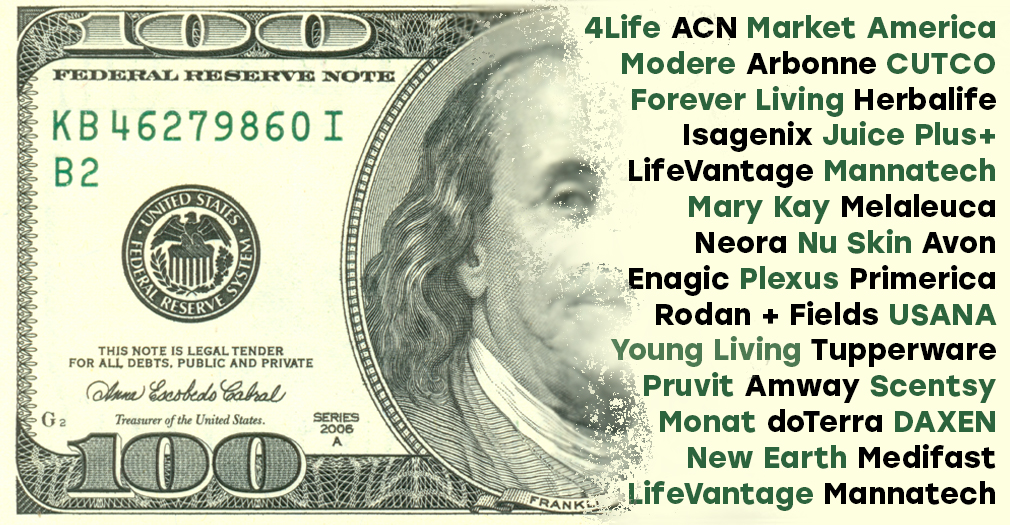
TINA.org investigation finds 98% of MLMs using misleading income claims.
Agency alleges MLM misled recruits about earnings, pressured distributors to buy products and encouraged fake retail sales.
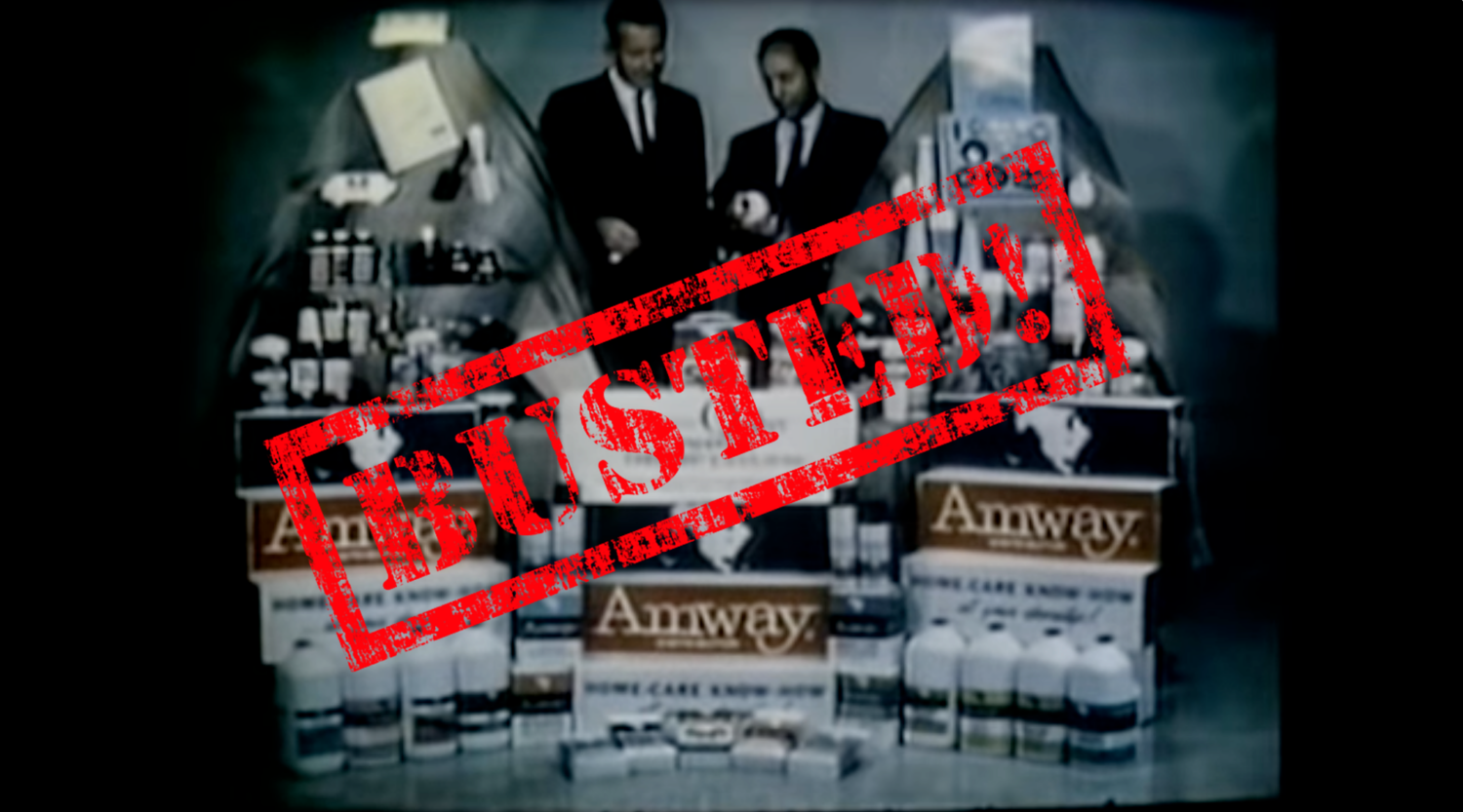
For years, the multilevel marketing (MLM) industry has maintained that its business model is fundamentally about selling products to everyday Americans, not recruiting participants and inducing them to buy products themselves. But a sweeping new lawsuit against Direct Selling Association (DSA) member Amway, one of the country’s largest and oldest MLMs, challenges that narrative in dramatic fashion.
The FTC and Washington state attorney general have accused Amway and two of its largest affiliated training organizations, World Wide Group (WWG) and Leadership Team Development (LTD), of operating a deceptive MLM system that misled consumers about their prospects for financial success while pressuring them to purchase Amway products they did not want and were unlikely to resell – a tactic commonly referred to as inventory loading. Under a proposed settlement, the defendants will pay $225 million – the largest monetary recovery ever obtained in an FTC action against an MLM – with nearly all of the money earmarked for consumer redress.
According to the 83-page complaint, prospective Amway distributors, known as Independent Business Owners or IBOs, were recruited with claims of being able to achieve substantial financial success. Amway-affiliated groups allegedly presented the business as an opportunity to earn $40,000 a year, while recruiters allegedly told prospects that following their “system” could enable them to replace their full-time income, pay off debt or retire early. The reality, however, as alleged in the complaint, tells a very different story.
In 2023, the median Amway bonus before expenses was $139, according to the complaint. Fewer than 1,600 of the company’s more than 241,000 IBOs – approximately 0.7% – received $40,000 or more in bonuses that year. The FTC alleges that among IBOs who joined WWG and LTD between 2020 and 2023, both average and median bonuses were less than the corresponding amounts participants spent on Amway products and training through March 2024.
The complaint also alleges that defendants created a misleading aura of exclusivity around the business opportunity. Prospects were purportedly made to believe that they were being carefully selected for access to successful mentors when, according to the FTC, the opportunity was generally available to anyone who followed a recruiter’s instructions and the people directly mentoring new IBOs typically were not the highly successful entrepreneurs prospects had been led to expect. Specifically, the complaint states:
To entice people to sign up with Amway, WWG and LTD IBOs use a variety of deceptive tactics. Instead of being told about Amway, its products, or a multi-level marketing opportunity, many prospects are initially lured in with deceptive claims about an exclusive opportunity to be mentored by a person or couple who made so much money they were able to stop working in their 20s or 30s.
Deceptive earnings claims, however, are only part of the FTC’s case. At its core, the complaint alleges that affiliated training groups instructed IBOs to purchase a specified amount of Amway products every month, regardless of whether they could resell the products or even wanted them for personal use. Participants were then encouraged to recruit additional IBOs and teach them to duplicate the same purchasing behavior. As the complaint states:
Despite its claims that IBOs can make money by selling Amway products to customers, Amway’s products are priced at premium levels and therefore are difficult to sell to non-IBOs. As one of Amway’s highest-ranking executives put it in a slide presentation he prepared in 2019, IBOs who are new find that “[s]elling to customers is not rewarded, not taught by leaders and difficult.”
The scale of the alleged internal stockpiling by distributors is striking. According to the complaint, in recent years more than three-quarters of Amway products sold in the United States were purchased by Amway’s own IBOs. The FTC alleges that most IBOs eventually stopped pursuing the business after realizing that their monthly product costs generally exceeded the bonuses they received – and that the vast majority stopped purchasing Amway products after leaving the business.
Meanwhile, Amway’s own company-approved recruiting materials allegedly demonstrated just how dependent the business opportunity was on recruiting. In one WWG example purporting to illustrate how an IBO could generate roughly $40,000 annually, less than $1,000 came from retail margins while more than $38,000 – 96% of the revenue – resulted from points generated by recruits, according to the complaint. These allegations closely mirror concerns the FTC has previously identified in its MLM guidance: participant purchases become problematic when they are driven not by genuine consumer demand but by compensation incentives, rank advancement or pressure from an upline.
There are also alarming allegations in the FTC’s complaint concerning what happened when Amway attempted to demonstrate that products purchased by its distributors were actually being resold to retail customers. The FTC alleges that Amway expanded a system in 2021 under which IBOs reported customer sales – a system that Amway employees themselves allegedly described as “easy to manipulate.” According to the complaint, leaders of affiliated training groups then instructed IBOs on a widespread basis to falsely report that they had resold most of their purchases to customers or otherwise fake customer sales.
The complaint alleges that Amway wanted IBOs to report sufficient retail sales “to create the data we will need to defend the business when necessary.” And because failure to report sufficient customer sales could reduce bonuses not only for the distributor but also for their uplines, the system allegedly created a financial incentive for uplines to ensure that their downlines reported retail sales whether they were real or not. Such allegations strike at an issue that has long been central to the legal scrutiny of MLMs: whether product purchases reflect genuine retail demand or are instead generated by participants pursuing rewards available through the business opportunity.
The FTC’s latest action against Amway is particularly notable given the company’s place in the history of MLM regulation. More than 50 years ago, in 1975, the FTC brought a five-count administrative complaint against Amway alleging, among other things, that the company was an illegal pyramid scheme. What followed was a years-long legal battle involving 150 witnesses, more than 1,000 exhibits and a trial transcript spanning nearly 7,000 pages. It was not until 1979 that the commission issued its final decision concluding that Amway was not operating a pyramid scheme.
Central to that conclusion were three safeguards Amway maintained to supposedly prevent distributors from buying products merely to qualify for compensation: an inventory buy-back policy, a “70 percent rule” requiring distributors to resell at least 70% of the products they purchased each month to qualify for performance bonuses and a “10 customer rule” requiring sponsoring distributors to document sales to at least 10 different retail customers each month to earn certain bonuses. Importantly, the FTC found as a matter of fact that Amway actually enforced these safeguards and that they prevented inventory loading and encouraged retail sales. It was on that record that the commission distinguished Amway from the pyramid schemes it had previously condemned.
The 1979 decision became enormously influential. The safeguards became known as the “Amway Rules,” and similar provisions found their way into many MLM distributor agreements throughout the industry. But the significance of the decision was not simply that Amway had rules on paper. It was that the FTC found the rules were actually enforced and functioned to prevent inventory loading and promote retail sales to consumers. Subsequent authorities have cautioned that merely adopting the Amway safeguards does not immunize an MLM from pyramid scheme scrutiny if those safeguards are ineffective or unenforced.
Against this history, the allegations in the FTC’s new complaint against Amway are incredibly meaningful. Nearly half a century after the commission relied on Amway’s 70% rule and other retail-sales safeguards in finding that the company was not a pyramid scheme, the FTC has alleged that Amway distributors were pressured to purchase products they did not want or could not resell and that some were instructed to fake the very retail sales that purportedly demonstrated consumer demand. The current settlement requires Amway to impose a 70% resale requirement – this time as part of a proposed federal court settlement. The proposed order also requires documentation of customer sales, substantially reduces compensation when recruits purchase products without reselling them and requires Amway to terminate distributors who fake sales or teach others to do so.
The historical parallel between these two FTC actions is difficult to miss. In 1979, actual enforcement of Amway’s retail-sales safeguards helped persuade the FTC that purchases within the organization were not simply inventory loading undertaken to obtain bonuses. In 2026, the agency alleges that the economic incentives within parts of the Amway organization encouraged precisely the behavior those safeguards were supposed to prevent – participant purchasing untethered to genuine retail demand – while allegedly generating unreliable retail-sales data to obscure the problem.
The FTC’s allegations also raise serious questions for the DSA, the national trade association for the direct selling industry, which has long held out its Code of Ethics as evidence that the industry can effectively police itself.
The DSA requires member companies to abide by its code as a condition of membership and has repeatedly characterized the code as imposing rigorous ethical and consumer protection standards. Among other things, the code prohibits deceptive recruiting practices and requires representations concerning the business opportunity to be truthful and accurate.
Yet TINA.org has long questioned whether the DSA’s self-regulatory system actually delivers on those promises. Our examination of decades of DSA self-regulation found a persistent disconnect between the association’s public commitment to stringent ethical standards and the conduct of its members. Further, TINA.org investigations have repeatedly found DSA-member companies using inappropriate health and earnings claims despite their obligation to comply with the code.
Against this backdrop, the FTC’s allegations against Amway are particularly significant. Amway is not a peripheral member of the DSA. Andrew Schmidt, Amway’s Regional President for West Markets, is currently chairman of its board of directors, and another Amway executive, Mike Tellinga, also sits on the board. The DSA announced Schmidt’s election in August, stating that its board guides the association’s strategic direction, advances its mission and works to strengthen industry standards.
Amway’s leadership roles at the DSA create an uncomfortable juxtaposition. At the same time that an Amway executive leads the board of an organization that holds out industry self-regulation and its Code of Ethics as important consumer safeguards, federal and state regulators allege that Amway and affiliated organizations engaged in conduct implicating some of the most fundamental consumer protection concerns surrounding MLMs: misleading earnings representations, inventory loading and allegedly fabricated retail-sales information.
Amway is hardly the FTC’s first MLM target in recent years. Agency actions include its 2019 case against AdvoCare, which resulted in a $150 million settlement and a ban on multilevel marketing; a 2020 action against Success by Health and its founder James Noland, which shut the company down and resulted in a permanent MLM ban and $7.3 million fine against Noland; its more recent 2025 litigation against IM Mastery Academy (later known as IYOVIA) which ultimately settled with principal defendants agreeing to surrender assets valued at nearly $90 million; a 2026 settlement with Forever Living, its CEO and President resulting in the company shutting down its U.S. operations and, just this spring, the FTC reached separate settlements with high-ranking MLM recruiters Stormy Wellington and Steven and Gina Merritt over alleged deceptive marketing of atypical earnings claims.
The FTC’s enforcement record mirrors what TINA.org has repeatedly found in its own investigations. In 2024, TINA.org reported that 98% of the 100 MLMs it examined – including Amway – had used atypical and unsubstantiated income claims to promote their business opportunities, documenting more than 2,000 examples. Where company disclosures provided sufficient data to calculate earnings, more than 80% of distributors at those companies made $1,000 or less annually before expenses, and at half of the companies, on average, more than 60% made nothing at all. TINA.org had previously notified Amway about deceptive income claims in both 2017 and 2024.
The significance of this most recent Amway action extends well beyond this one company. The complaint puts MLMs on notice that regulatory scrutiny is not limited to whether a company can point to some retail sales or produce policies that ostensibly encourage them. The FTC is examining what actually drives purchases: genuine consumer demand or the financial incentives, recruiting practices and pressures created by the MLM opportunity.
And the proposed settlement translates that genuine consumer demand principle into concrete requirements. Among other things, Amway distributors will now actually have to resell at least 70% of the products they purchase each month; compensation to recruiters will be substantially reduced when recruits purchase products without reselling them; customer sales will have to be documented, with receipts sent directly to customers; and Amway will have to terminate distributors who fake sales or teach others to do so. Independent audits will also provide an additional check on the accuracy of these records.
For an industry that has long defended participant purchases as legitimate consumer demand, these settlement provisions are significant. Coupled with the FTC’s recent pursuit of MLM companies and individual distributors over deceptive earnings claims, the Amway case signals increased attention to what happens behind the marketing pitch: who is actually buying the products, why they are buying them, whether claimed retail sales are real and whether the promised financial opportunity bears any resemblance to what typical participants actually experience. For MLMs, simply calling distributors “business owners,” characterizing their purchases as consumer demand and pointing to formal retail-sales policies is no longer enough when the underlying economic realities tell a different story.
TINA.org investigation finds 98% of MLMs using misleading income claims.

Supplement MLM takes down dozens of deceptive claims following TINA.org investigation.