




Eskiin
Send these marketing claims to the shower.
It sounds like something you might find in the pages of a fairy tale: a silk pillowcase with anti-aging powers. But that’s how Blissy markets its pillowcases, which the company touts as woven from “100% pure mulberry silk.”
Mother Gothel is listening.
But recently, the company’s anti-aging and wrinkle-prevention claims were the subject of an inquiry by the ad industry’s self-regulatory body, the National Advertising Division, which resulted in Blissy agreeing to discontinue them.
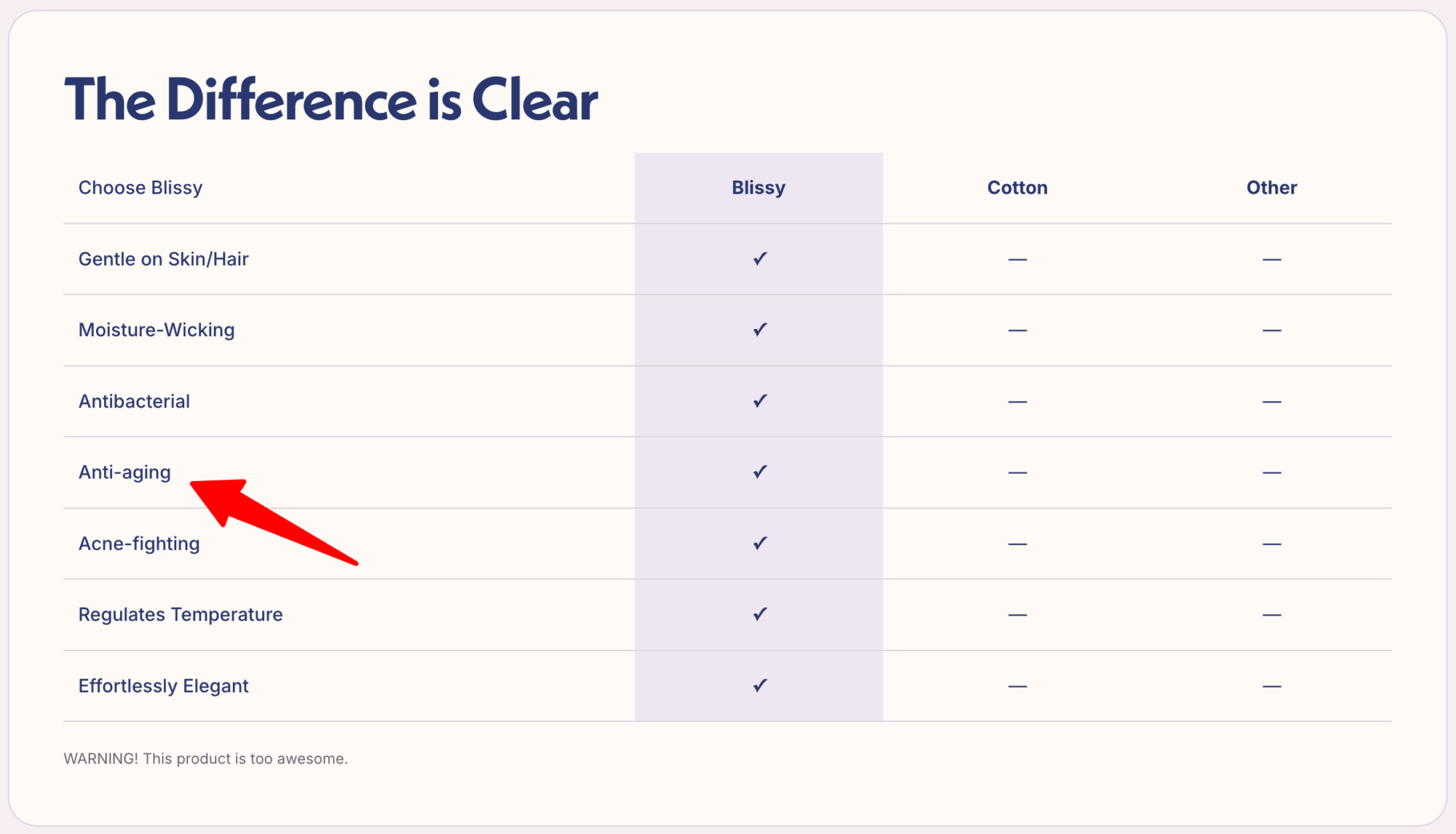
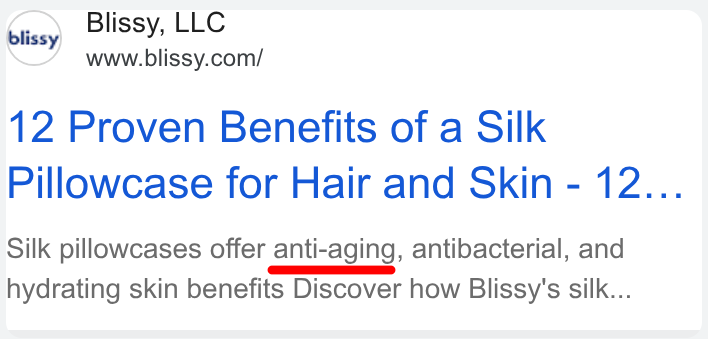
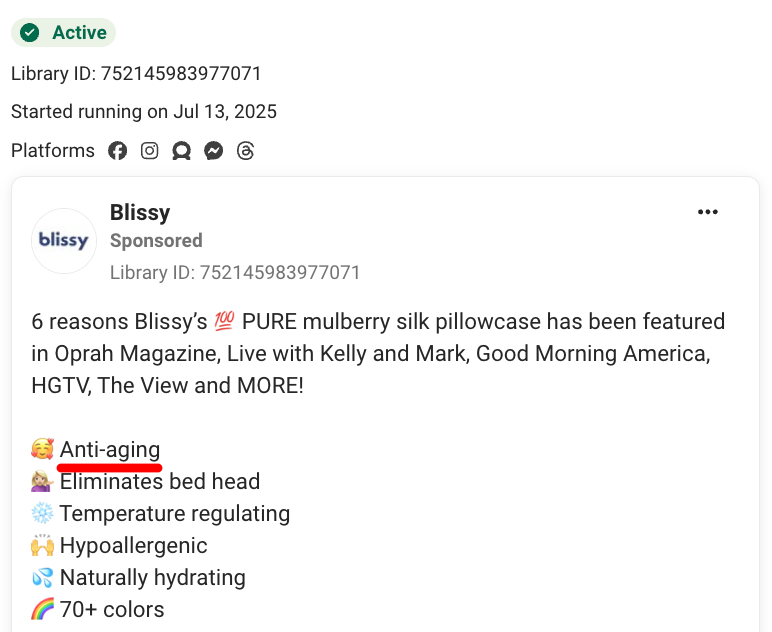
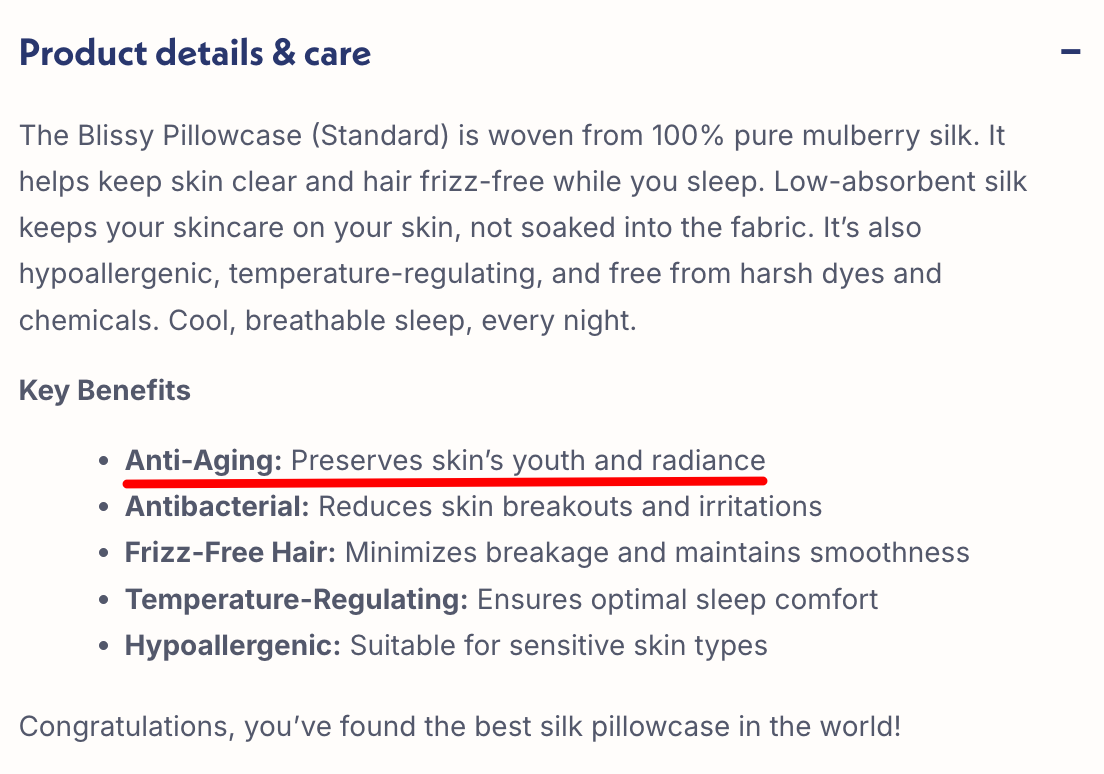
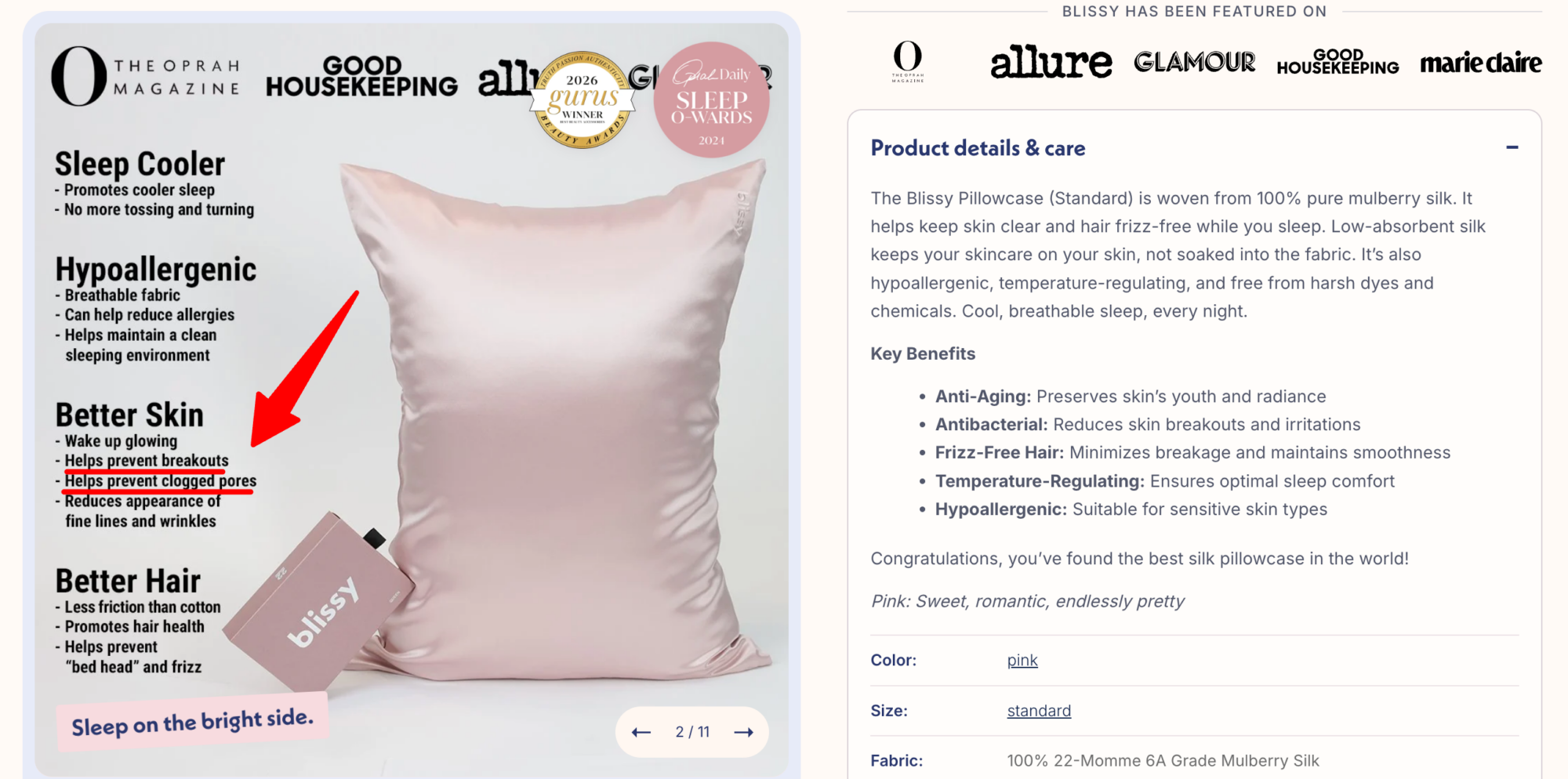
And yet, almost a month after NAD announced the decision, the claims remain on Blissy’s website and in its social media and search ads. Worse, TINA.org found the company has added new anti-aging and wrinkle-prevention claims to the mix – including in a Meta ad launched Oct. 22 that tells consumers to “Say goodbye to wrinkles” and a new list of “Key Benefits” on product pages that includes “Anti-Aging.”
NAD found that the studies Blissy provided in response to its inquiry weren’t sufficient to support its anti-aging and wrinkle claims. Among other things, NAD noted that they relied on self-reported results (as opposed to an objective assessment of wrinkles and fine lines), failed to account for participants’ continued use of other anti-aging products, lacked a control group and/or showed no “visually meaningful change” in wrinkles.
“Taken together, the studies’ results did not establish that any favorable result was attributable to the use of the Blissy pillowcase,” NAD wrote in its 16-page decision.
NAD recommended that Blissy drop the claims and stop conveying the message that Blissy silk pillowcases prevent new wrinkles. The company agreed to make the changes.
But wait, there’s more.
NAD also found that the single study Blissy submitted in support of its “acne-fighting” claims was similarly insufficient, noting that it “did not assess acne lesions or breakouts or evaluate whether sleeping on a Blissy pillowcase prevents or reduces acne.” NAD recommended that Blissy discontinue its “acne-fighting” claims and modify its advertising to avoid sending the unsupported message that Blissy pillowcases help prevent or reduce acne breakouts.
Again, Blissy agreed to comply with NAD’s recommendations. Yet Blissy still calls the pillowcases “acne-fighting” – the exact phrase NAD said to drop – and still states that its “natural antimicrobial properties … help prevent bacterial growth that can lead to acne and breakouts,” language the company told NAD it would permanently discontinue. Product images also claim the pillowcases help prevent “breakouts” and “clogged pores,” the leading cause of acne.
Finally, NAD recommended that Blissy discontinue or modify endorsements by four dermatologists to avoid conveying the unsupported message that their “expert evaluation established that Blissy’s clinical testing reliably supported the advertised claims,” including that “90% of people had … fewer blocked pores” after using Blissy pillowcases. Despite agreeing to implement the changes, the expert endorsements and the “90%” claim remain in publication on the Blissy site.
It has been more than six weeks since the NAD closed its inquiry into Blissy and a month since the self-regulatory organization published a release regarding its findings and yet the company, despite agreeing to make the recommended changes, has thus far failed to do so.
In response to a request for comment, NAD Vice President Phyllis Marcus said in a statement to TINA.org:
Compliance with National Advertising Division’s (NAD) recommendations is an important component of the self-regulatory forum and NAD has a formal compliance mechanism whereby it can review whether an advertiser is complying with its recommendations. All NAD proceedings, including compliance inquiries, are confidential until such time as the results are published. Compliance inquiries can be initiated by a challenger, the NAD, or by a third-party.
Blissy did not respond to TINA.org’s request for comment.
This is not the first time TINA.org has reported on a sleep product making unsubstantiated health claims (see MyPillow). But the deception goes well beyond pillows and pillowcases.
Consumers should be cautious when evaluating health claims. Claims that sound too good to be true often lack robust scientific support, even if that is what is required by law.
Find more of our coverage on health claims.
Our Ad Alerts are not just about false and deceptive marketing issues, but may also be about ads that, although not necessarily deceptive, should be viewed with caution. Ad Alerts can also be about single issues and may not include a comprehensive list of all marketing issues relating to the brand discussed.
Send these marketing claims to the shower.

Pet-safe and eco-friendly claims may be streaky.
Are there really any benefits to drinking alkaline water?