
Best Reader Tips of 2025
Consumer complaints worth remembering.
Why regulators need to step in and what's at stake.
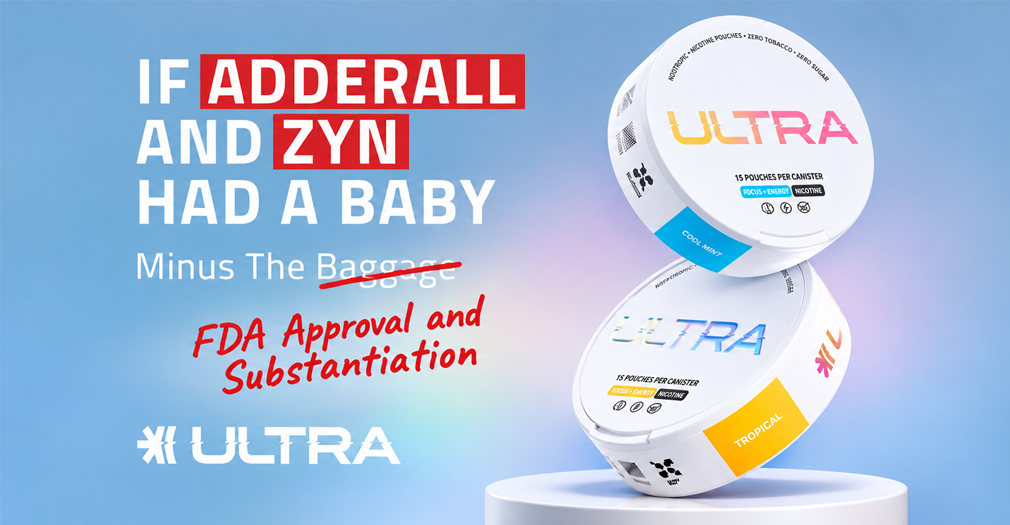
Nicotine pouch use among U.S. high schoolers nearly doubled between 2023 and 2024, with teen boys among the most likely users. At the same time, ADHD diagnoses and prescriptions for stimulants like Adderall have continued to climb. One startup has found a way to cash in on both trends at once. The company: Ultra.
The Brooklyn-based company, owned by Nuro Pouches, Inc., advertises its Focus Pouch, which it claims is a “[c]lean, plant-based nootropic,” as a substitute for both Zyn (the leading nicotine pouch brand) and Adderall (an FDA-approved ADHD prescription drug). In fact, its pitch – made by cofounder Nicola Cantini in a YouTube ad viewed more than 32 million times – is: “This is like if Zyn and Adderall had a baby.”
After a reader sent TINA.org a tip that this Ultra ad was running before YouTube videos likely to appeal to young viewers, TINA.org investigated. We found that Ultra is not only marketing its Focus Pouch as a substitute for prescription medication to treat ADHD, but also as a source of instant focus and mental clarity – all without FDA approval or competent and reliable substantiation.
To make matters worse, Ultra doesn’t confine its marketing to adults: it also directs marketing to minors even though the company warns that the product should not be consumed by children – a fact that only seems to be reflected in an inconspicuous warning on the back of its containers. Its marketing contradicts that warning in other ways too, encouraging use well beyond its recommended limits. And to top it all off, the company enrolls consumers in autorenewing subscriptions that are inadequately disclosed and hard to cancel.
On Tuesday, TINA.org filed complaints with the FTC, FDA and New York state and city consumer protection officials urging the agencies to investigate and take enforcement action.
Ultra CEO Eric Drymer and Cantini launched the company in 2025, and sales took off fast. The company says it sold one million Focus cans in its first six months and calls itself the “#1 nicotine-free pouch brand in the world.” In January, it announced an $11 million Series A round with backers including NFL quarterbacks Joe Burrow and Dak Prescott.
Users tuck the Focus Pouch between their gum and lip so the ingredients can be absorbed into the bloodstream. Ultra markets the product as “caffeine-free” and says its key ingredient, synthetic paraxanthine, clears the body faster than caffeine and is less likely to disrupt sleep. But paraxanthine is caffeine’s primary metabolite and a central nervous system stimulant that behaves much like caffeine: it can raise blood pressure and research has shown the two compounds are cleared from the bloodstream at similar rates and with similar half-lives. Each pouch contains 100 mg of paraxanthine – roughly what the body produces from 135 to 154 mg of caffeine – more than the daily caffeine limit experts and pediatricians recommend for 12- to 18-year-olds.
Ultra has since added an Energy Pouch (with 180 mg of caffeine) and a Sleep Pouch to its lineup. The pouches, which come in flavors like Cool Mint, Blue Razz, Watermelon and Black Cherry, are currently sold online through Ultra’s website, Amazon, TikTok Shop and Faire, but the company reportedly has its sights set on convenience stores and major retailers, like Walmart and Target.
Ultra doesn’t bury its Adderall marketing comparison. It headlines it.
For example, one Instagram story ad tells viewers, “ADDERALL NEEDS A PRESCRIPTION. THIS DOESN’T.” YouTube Shorts tell viewers its Focus Pouch is “Adderall without the noise.” In an Instagram Reel, Cantini approaches a student who says he takes “a bunch of Adderall” and urges him to “try a natural alternative that’ll get you locked in like the Adderall but won’t f*** your sleep.”
Ultra affiliates – who promote the pouches on social media and earn commissions on sales – have run with the message, calling the pouches “natural Addy” and “upper deck addy.” One post reads: “do you struggle w adhd? no. im actually really good at it,” with the affiliate then showing off his Ultra Focus canister. And when TINA.org searched YouTube for “how to survive high school with adhd,” an “ADHD Student Guide” video came up – preceded by an Ultra Focus ad.
Other Ultra marketing is packed with claims of “instant focus,” “mental clarity,” “enhanced memory” and a “clinically proven formula” that delivers “immediate, intense focus … in as little as 5 minutes.” Brand partners like UFC fighter Nate Diaz and Dallas Cowboys quarterback Dak Prescott, among others, have helped spread the word.
The problem? Claiming that a product can treat ADHD or replace Adderall is a disease claim that renders it a drug requiring FDA approval. And the FDA has repeatedly cited claims of improved focus, mental clarity and memory – for products that, like Ultra’s pouches, are not dietary supplements (regardless of what the product label may say) – as evidence that a product is an unapproved new drug. Ultra has no such approval. TINA.org has catalogued more than 100 examples of Ultra’s inappropriate health and disease-treatment claims.
In barely legible print on the back of its canisters, Ultra warns that the Focus Pouch is not recommended for children or people sensitive to caffeine, should be limited to four servings a day, and should not be used with caffeine or other stimulants.
Ultra’s marketing ignores those warnings.
A company TikTok video shows a user with 10 or more pouches crammed into his mouth – adding up to at least 1,000 mg of paraxanthine, roughly the amount the body produces from ingesting 1,350 to 1,540 mg of caffeine – more than the amount of caffeine the FDA has warned can cause toxic effects such as seizures. Cantini tells viewers he has used up to five pouches a day for over a year, and in one video runs the numbers on using six a day, despite acknowledging the suggested max is four. Ads and Ultra affiliates also promote pairing the pouches with coffee and energy drinks. One affiliate tells viewers that if they haven’t tried “taking two of these [Focus Pouches] at once with an energy drink in the morning, you are doing yourself a disservice.”
Despite warning that children should not use the Focus pouches, Ultra’s ads tell consumers its pouches are “not 18+.” In one company Instagram post, a mother who finds pouches belonging to her daughter is relieved to learn she’s “not on Zyn,” and approves their use. The caption: “With Ultra, even moms approve.”
Ultra affiliates go even further. “Even a 13-year-old can have these,” says one. “Yes, you can bring these to school,” says another. And to the question of whether a 15-year-old can use a Focus Pouch, an affiliate says: “Hell no. Because you should be taking two.”
Ultra also sponsors a youth soccer association and gaming YouTubers popular with young audiences. Ryguyrocky, a Minecraft creator with nearly 4 million subscribers, told viewers in a sponsored video viewed more than 775,000 times that the pouches are “100% safe,” improved his memory and cleared up his brain fog.
Ultra says its pouches are “clinically proven” and consist of ingredients that have been the subject of “100+ published studies” (or “>50 published studies,” depending on where on the website you look). Elsewhere, it claims its pouches are backed by “6 published and 3 ongoing studies.” Whatever the number, Ultra doesn’t name, cite or link to any of them, and TINA.org is not aware of any published studies testing the Focus Pouch’s effects on focus or cognition.
What Ultra does seem to rely on are consumer perception surveys, which are not sufficient to substantiate health and disease-treatment claims, as they lack control groups, are not placebo-controlled and rely on subjective self-reports, among other issues. Nor is there any indication as to whether the surveyed participants had an ADHD diagnosis or any other history of focus or attention issues.
Studies of individual ingredients don’t fill the gap either because they don’t take into account the product’s specific blend of ingredients, dosages and delivery method. In fact, TINA.org is not aware of any studies examining the efficacy of paraxanthine – Ultra’s key ingredient – when absorbed through the lining of the mouth, as is Ultra’s delivery mechanism. And despite Ultra’s claims that one of its main concerns is the safety of its products, TINA.org is also not aware of any published studies examining the product’s (or paraxanthine’s) safety for minors.
As if all that weren’t enough, Ultra sells its pouches through an autorenewing monthly subscription that it fails to adequately disclose. On the product page, the only hint of a subscription above the “Try It Now” button is small gray print reading “3 Cans delivered every 4 Weeks.” On the payment page, vague subscription references are tucked away in a drop-down menu shoppers must click to open. Nowhere during checkout does Ultra make clear that charges recur indefinitely until consumers cancel; that information only seems to appear in a 500+-word Subscription Policy linked at the very bottom of the site.
Ultra also hurries shoppers along with a fake countdown clock, “ONLY A FEW LEFT” warnings and claims it may “sell out.”
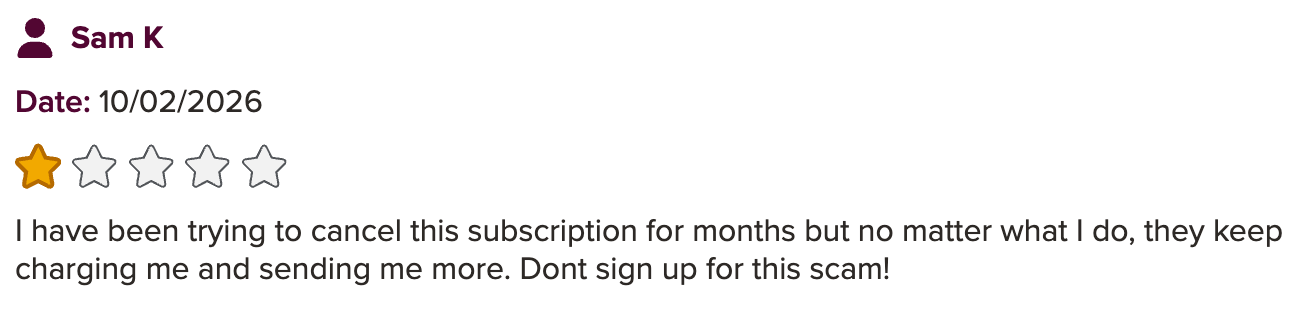
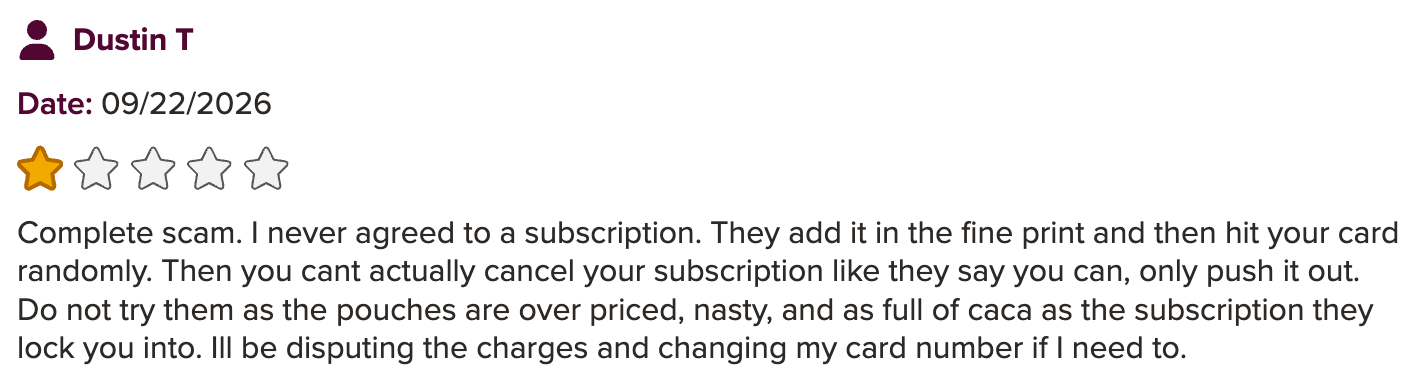
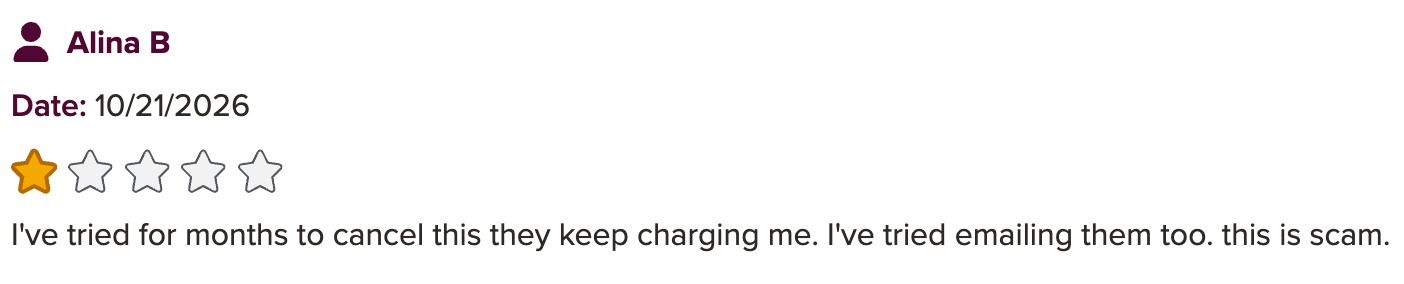
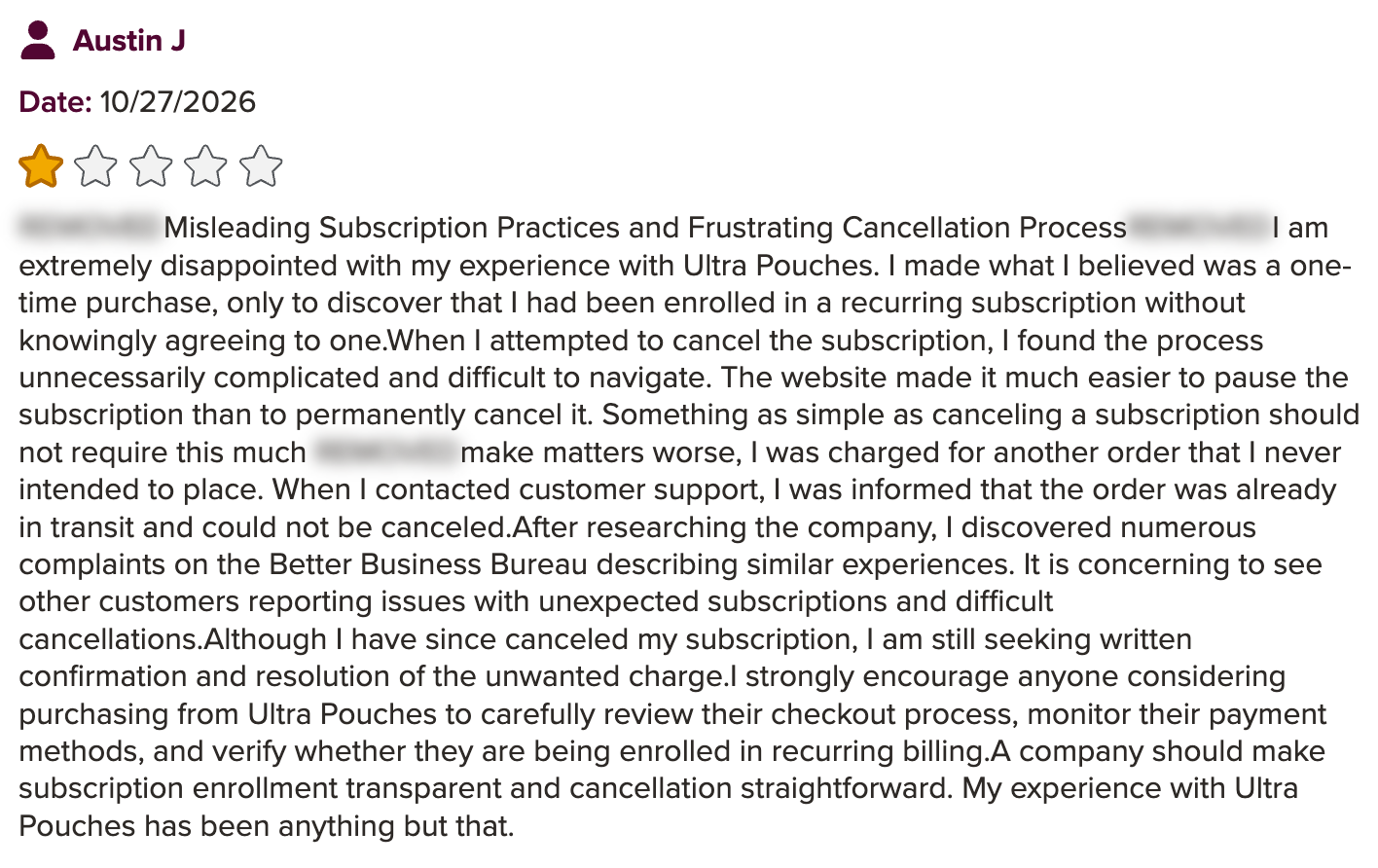
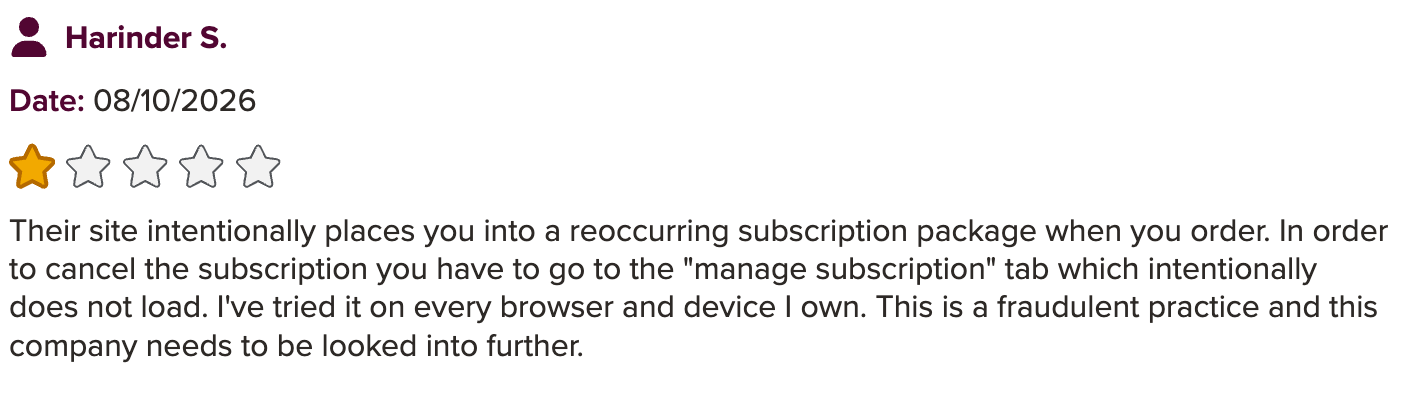
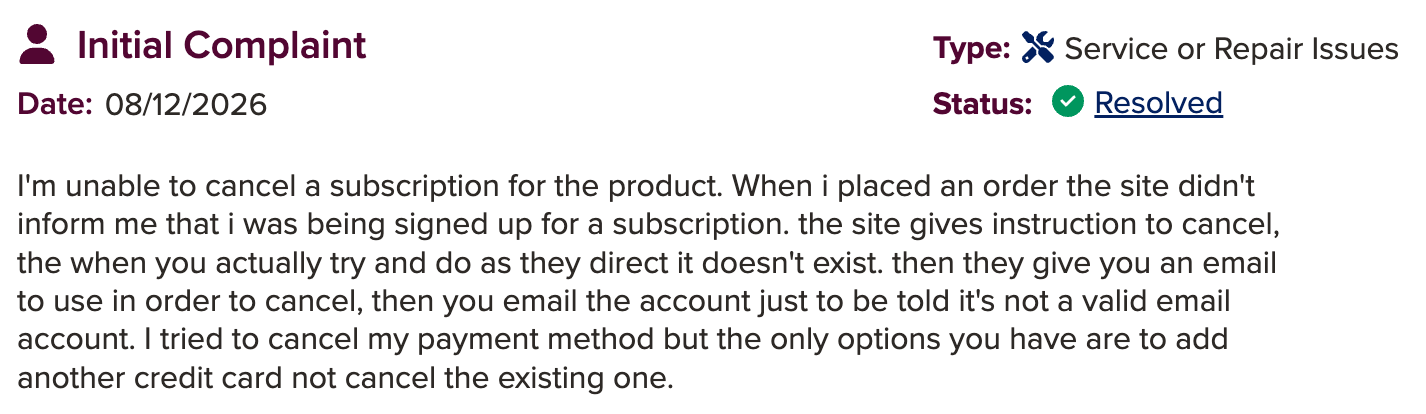
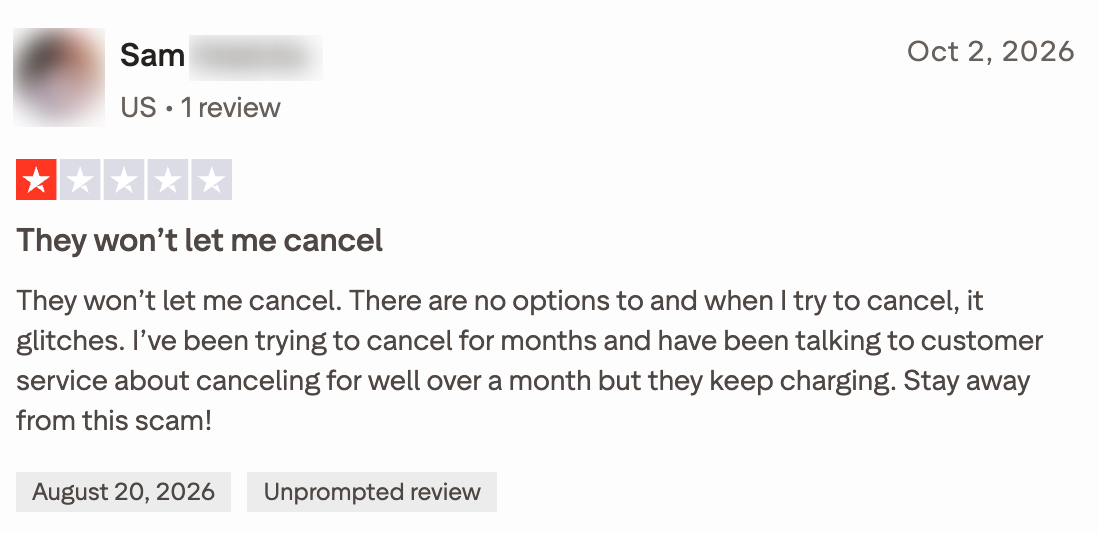
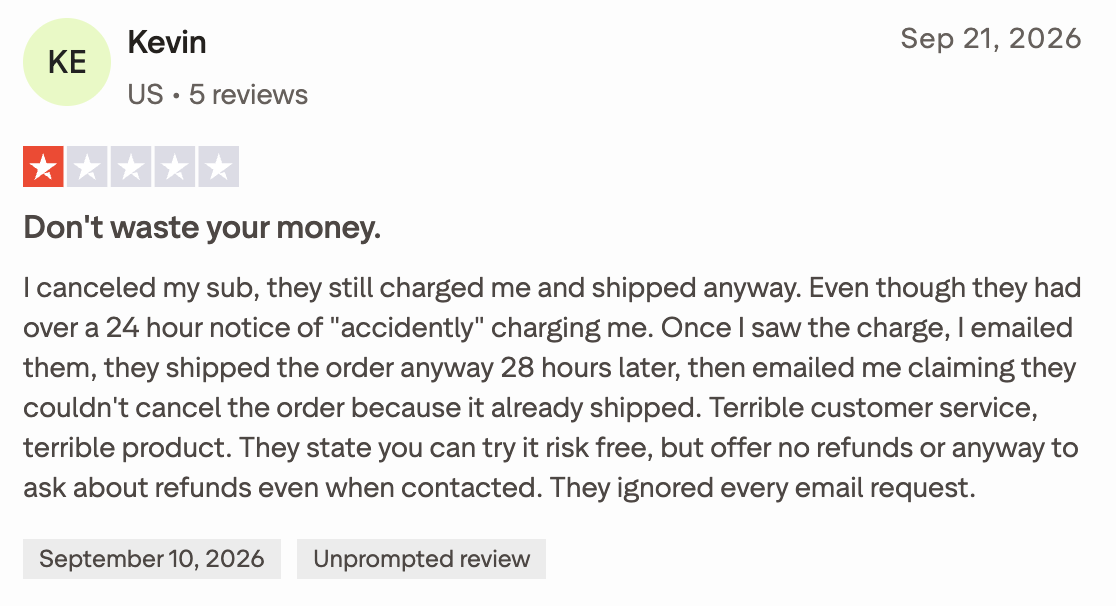
And while Ultra says customers can cancel at any time, consumers report otherwise:
Ultra did not respond to a request for comment.
Ultra is selling a stimulant pouch as a clinically proven ADHD treatment and a prescription-free Adderall substitute without FDA approval or appropriate science to back it up. And it’s encouraging consumers, minors among them, to use the product in ways its own fine-print label warns against, and making it easy to sign up and hard to leave. Regulators need to step in before Ultra’s ambitions land its deceptively advertised pouches on convenience store shelves nationwide.
Find more of TINA.org’s coverage on deceptive health claims.
Consumer complaints worth remembering.
A closer look at what we’ll be monitoring in the new year.
These definitions are a joke.