
CATrends: Deceptive Influencer Marketing
It’s a hot sponcon summer.
Fast-fashion retailer’s alleged fake discounts are just the beginning.

Shein has built one of the world’s fastest-growing fashion empires by advertising unbeatable prices and irresistible deals. But a closer look reveals a different picture.
Here’s what you should know about Shein.
Two class-action lawsuits are taking the shine off of Shein’s advertised discounts.
The lawsuits, filed just last month, accuse the fast-fashion behemoth of engaging in false reference pricing, misleading consumers into thinking they are getting a bigger bargain than they actually are. In reality, the merchandise “is rarely, if ever, offered for sale anywhere at the original reference price,” one of the complaints allege.
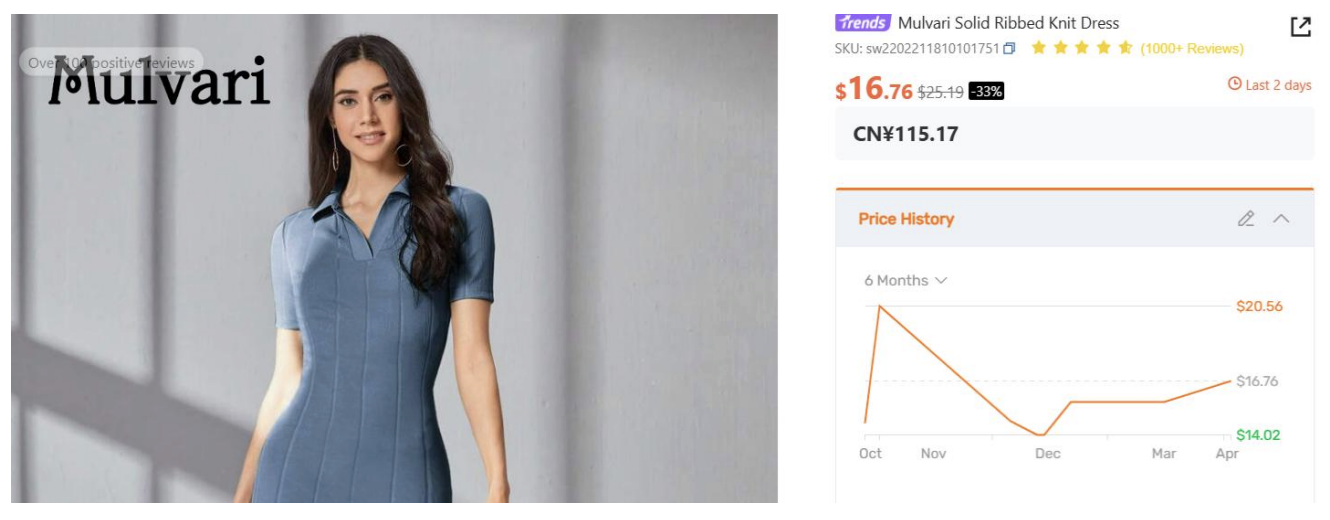
The lawsuits focus on advertised discounts for a number of Shein’s exclusive clothing brands, including Mulvari, DAZY, MOTF and INAWLY. On product listings, Shein displays the sale price next to a crossed-out reference price and a percentage indicating how much shoppers are purportedly saving.
One of the lawsuits references historical pricing data from AliPrice.com, a price-tracking tool. It provides the following example of a Mulvari dress that was on sale for $16.76 but that never came close to its reference price of $25.19 in the six months preceding the sale.
Both of the lawsuits were filed in California and cite violations of a state law that prohibits retailers from advertising an original or former price unless it was the prevailing market price within three months preceding the sale.
This isn’t the first time Shein’s advertised discounts have been challenged.
In May 2025, the European Commission warned Shein that several of its practices violate the law, including its alleged use of fake discounts. Two months later, France fined the company 40 million euros ($47.17 million) after an investigation found that the company misled consumers about the “authenticity” of its price reductions.

On its sustainability page, Shein claims that it is committed to being “more responsible” for its environmental impact. To that end, the company lists a number of “strategic priorities for the planet,” from reducing carbon emissions to sourcing responsible materials to protecting nature and biodiversity. (Shein also recently acquired Everlane, an apparel brand known for its sustainability ethos, for a reported $100 million.)
But according to several international entities, the company’s environmental commitments – which it makes as part of its “evoluSHEIN strategy” – have not translated into meaningful actions and its practices continue to harm the environment and people.
A recent report by Greenpeace Germany stated:
As the world’s most-visited fashion platform, Shein drives young customers into a shopping frenzy, fueled by up to 10,000 new designs daily and manipulative social media marketing. However, the supposedly low price tag comes at a heavy cost — paid for by hazardous chemicals in the clothing and the ruthless exploitation of both people and the environment.
The report found that out of 56 garments tested, 18 (or 32%) contained hazardous chemicals exceeding European Union limits. Among the chemicals detected were per- and polyfluoroalkyl substances (PFAS), which don’t break down naturally, earning them the nickname “forever chemicals.”
Greenpeace said that consumers are exposed to PFAS and other chemicals through skin contact, sweat or inhaled fibers, and that the hazardous substances enter rivers and the soil when garments are washed or discarded. In 2023, the U.S.-China Economic and Security Review Commission similarly reported that products on the Chinese fast-fashion platform pose health hazards and environmental risks (in addition to alleging the company violated forced labor laws and exposed the data of 39 million users in a cyberattack it mishandled, among other things.)
Meanwhile, as part of its action against Shein last July, France also accused the company of misleading consumers about the “scope” of its environmental commitments. And in August 2025, Italy fined the company 1 million euros ($1.16 million) for disseminating misleading environmental claims.
Among the garments that Greenpeace found contained hazardous chemicals exceeding EU limits were several items of children’s clothing, including a mermaid dress testing revealed to contain more than eight times the allowable limit of formaldehyde.
At the same time, U.S. consumer safety officials have raised concerns about deadly baby and toddler products being easy to find on Shein and other foreign-owned platforms.
On its website, Shein advertises “Free SHIPPING & Free RETURNS” but this marketing leaves out a couple key facts. For starters, Shein requires consumers to pay for return shipping – at a cost of $7.99 per return – if it is not their first return. In addition, the company does not refund consumers the original cost of shipping.
As for the advertised free shipping, Shein requires that shoppers spend over $29 to get the perk, an amount that far exceeds the cost of many of the products for sale on its website, including all but two of the items recently listed on its homepage.
And while Shein claims that more than 70% of orders arrive in seven business days or less, last year the company agreed to pay $700,000 to settle charges in California related to unlawful shipping delays. (The European Commission also cited a failure to “process returns and refunds in accordance with customers’ relevant rights” as a violation of EU law.)
Shein is also facing allegations that it engages in deceptive influencer marketing.
In February 2025, a class-action lawsuit was filed against the company and seven of its influencers over undisclosed social media ads like the one below from Anastasia Karanikolaou, who currently has 10 million Instagram followers.
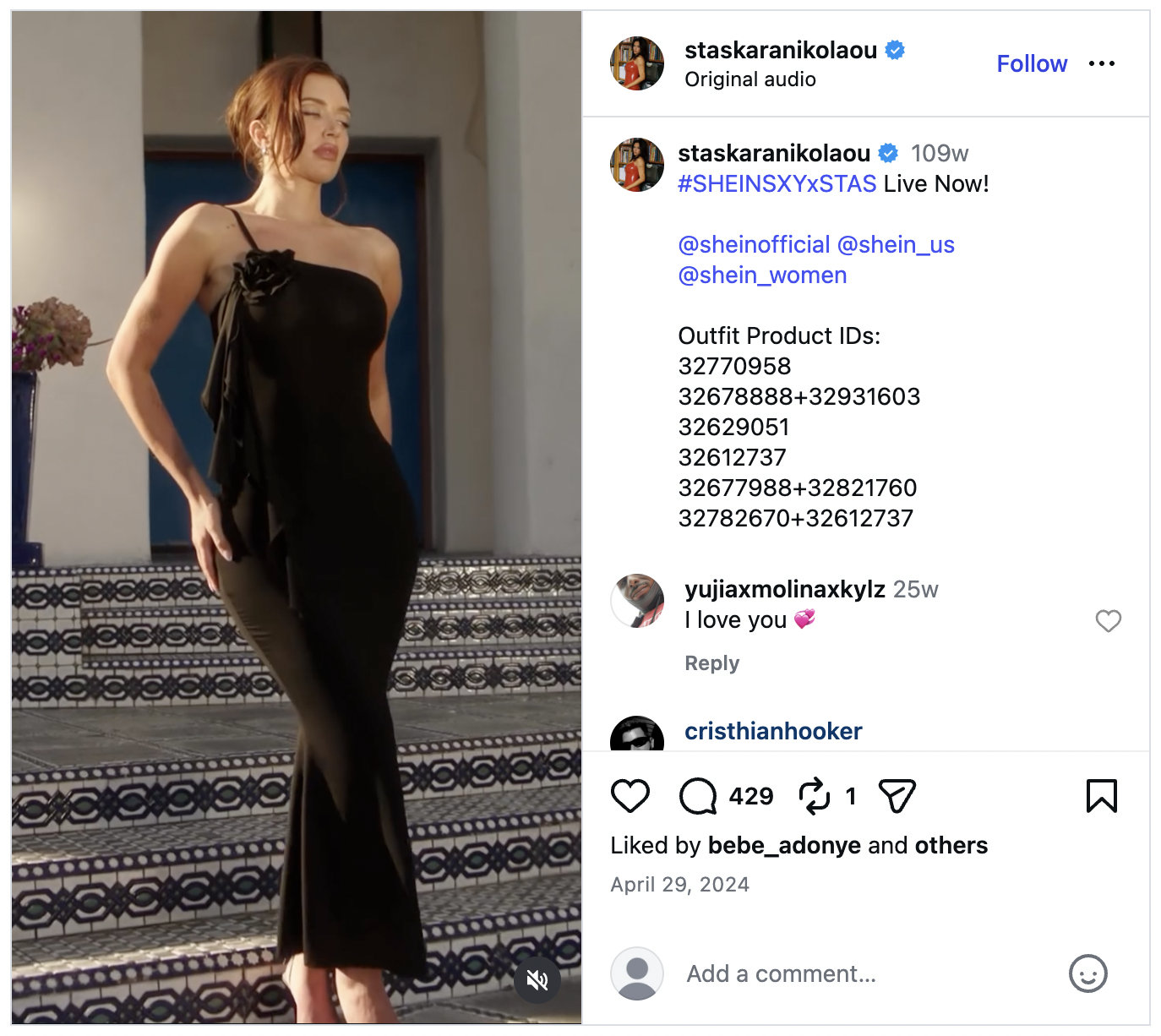
While claims against four of the influencers were voluntarily dismissed and default judgments were entered against the remaining three, the claims against Shein remain pending.
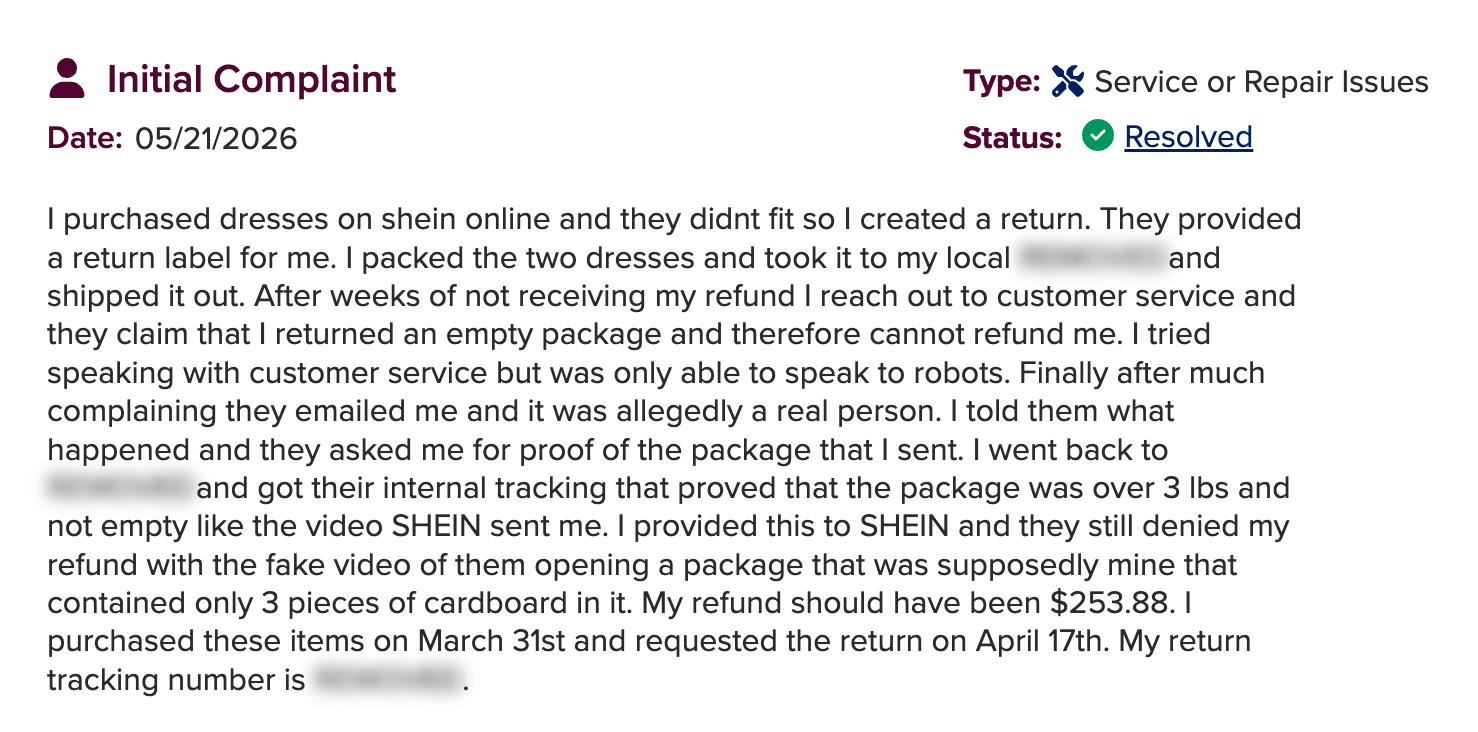
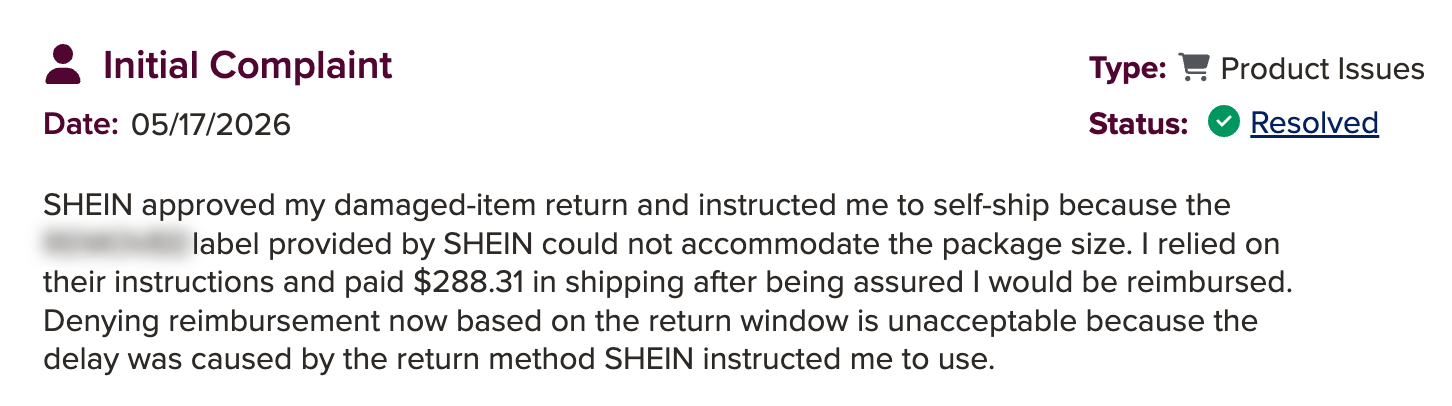
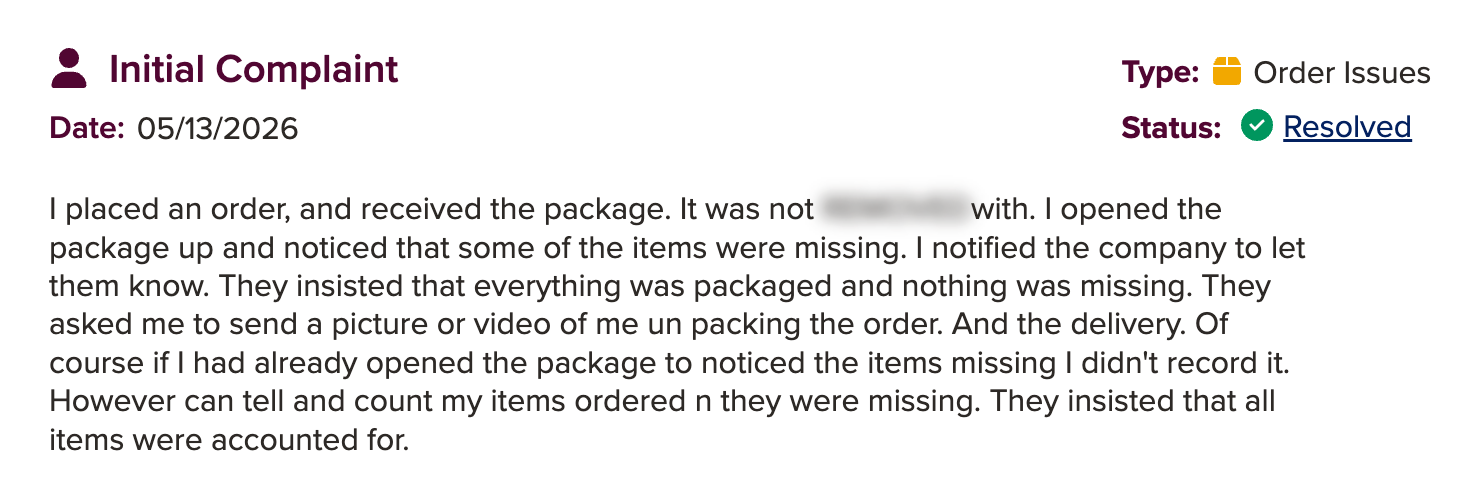
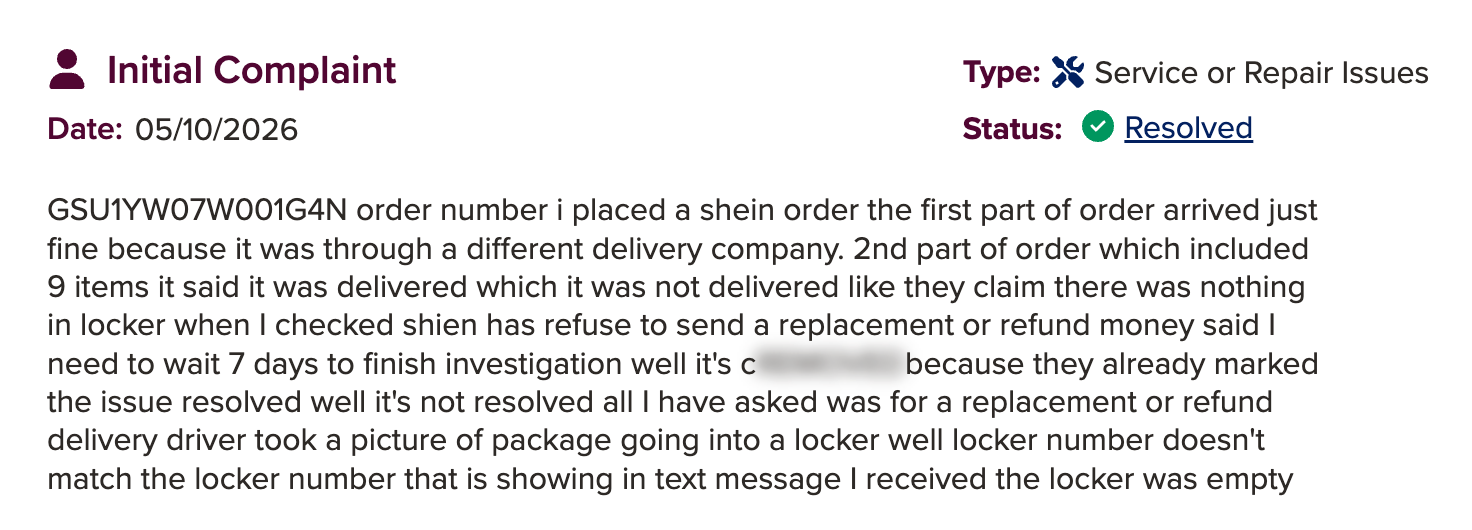
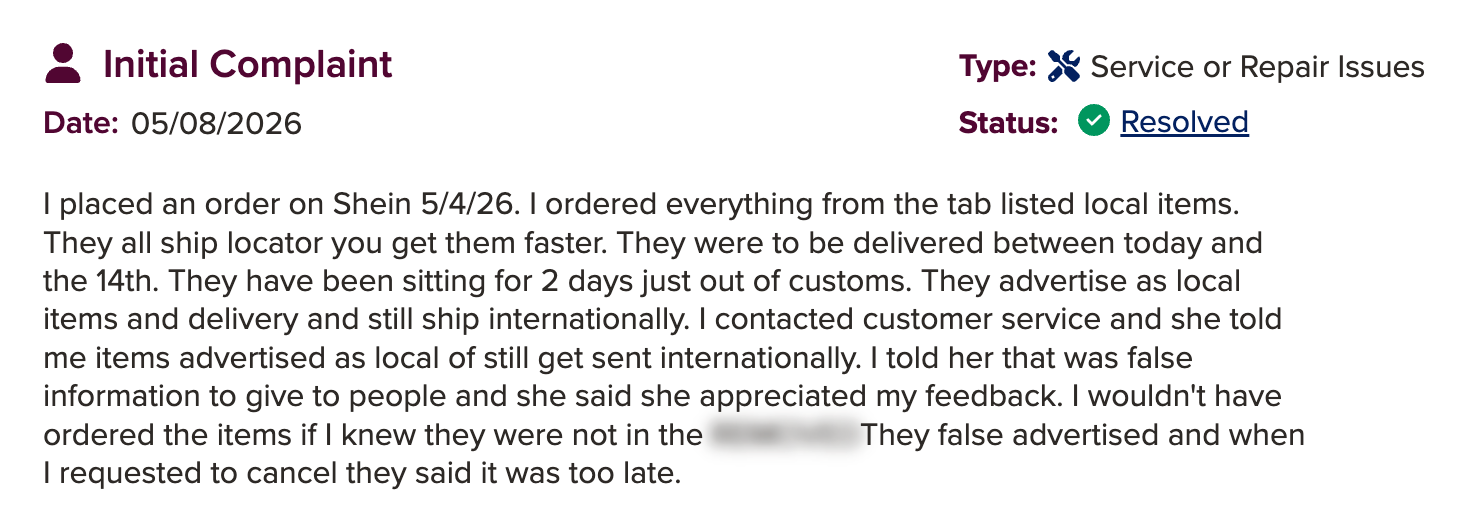
At this point, it may come as no surprise to learn that in the last three years, more than 7,000 complaints have been lodged against Shein with the BBB. Consumers have complained about a range of issues with the company, from problems returning items and obtaining refunds to shipping delays and being sent the wrong item. A sampling of recent BBB complaints follows.
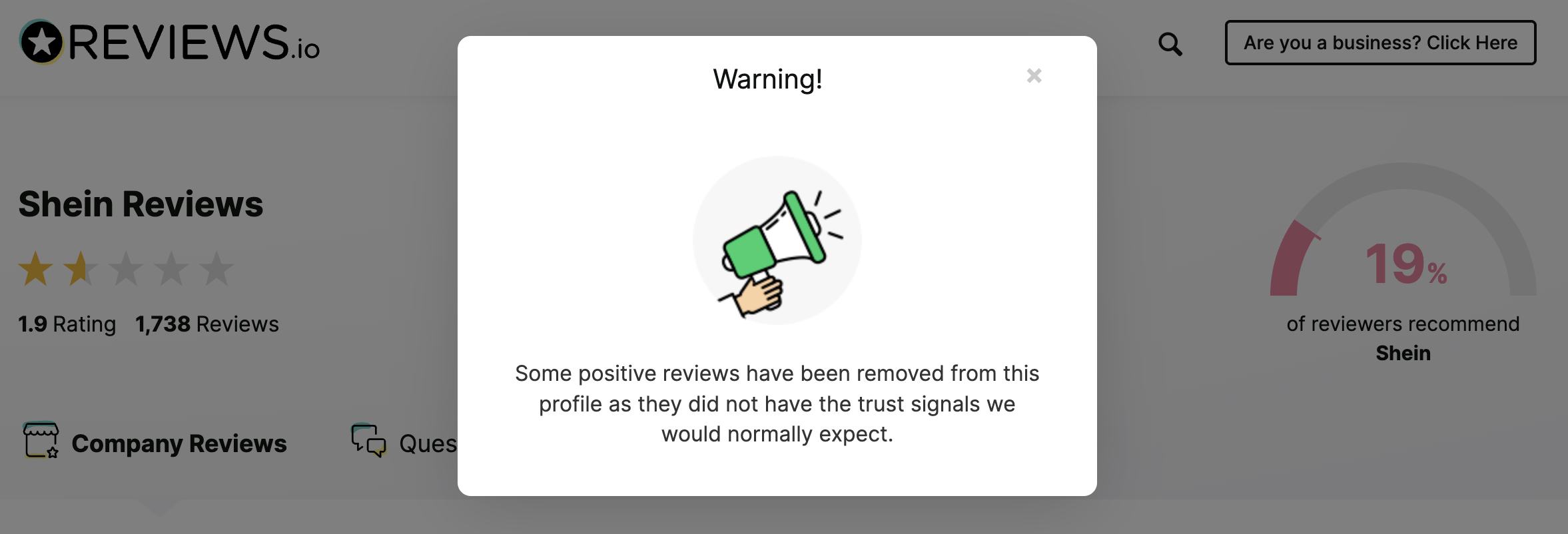
Shein has an average customer review rating on the BBB of just over 1 star. Of note, the company also has 1.9 stars on Reviews.io after having positive reviews removed from its profile “as they did not have the trust signals [the platform] would normally expect.”
Similar consumer complaints can be found on the company’s Trustpilot page (where – curiously – the company is rated 3.9 stars).
In response to a request for comment, Shein addressed some of the issues outlined above. Regarding the deceptive discount class actions, the company said that while it doesn’t comment on pending litigation, it is committed to compliance. Shein said it has “an easy returns process” and that terms related to its “free returns” offering “are communicated to customers at key points throughout the shopping and returns experience.”
According to a multitude of class-action lawsuits and regulatory actions, this fast-fashion retailer is playing fast and loose with the law. And further digging reveals misleading claims of free returns and free shipping, along with a plethora of customer complaints regarding a number of issues, among other things consumers should watch out for.
As a general rule, beware of the lure of low prices. And if you want to know more about a company before making a purchasing decision, reading reviews on a variety of third-party sites can be helpful.
Find more of our coverage on online shopping.
It’s a hot sponcon summer.

A closer look at what we’ll be monitoring in the new year.

TINA.org offers some tips on how to avoid a shopping mishap this season.