



Carvana’s ‘7-Day Money-Back Guarantee’
Is it still a money-back guarantee if you end up paying hundreds of dollars?
TINA.org discovers some roadblocks to unlocking this purportedly free offer.
Some consumers say that buying a used car is riskier than eating gas station sushi. But unlike roadside tuna, a vehicle’s history can be traced with VIN reports, which often include information on past accidents, prior owners, odometer readings, safety recalls and more.
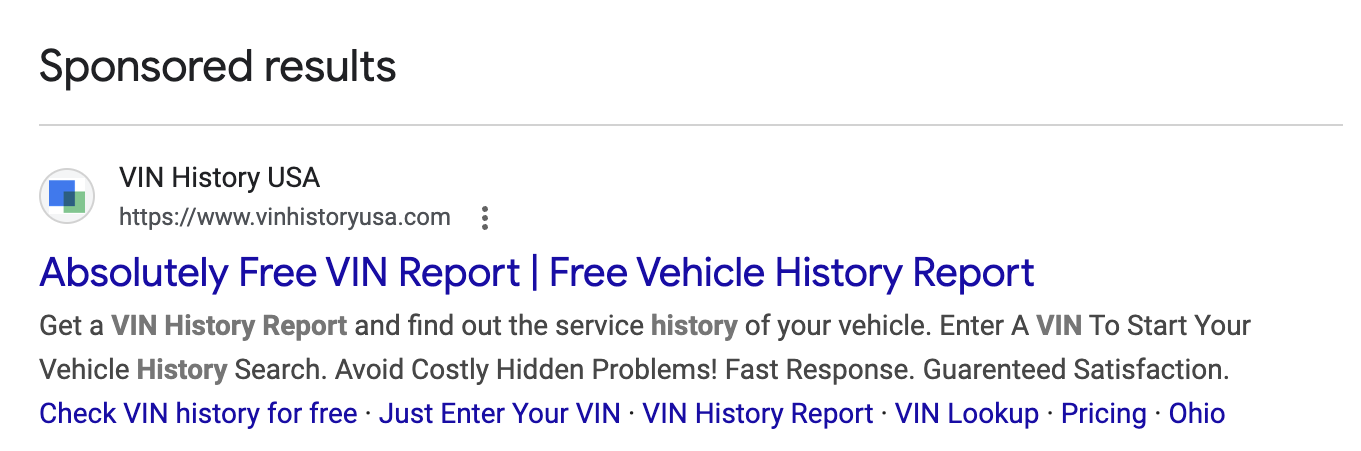
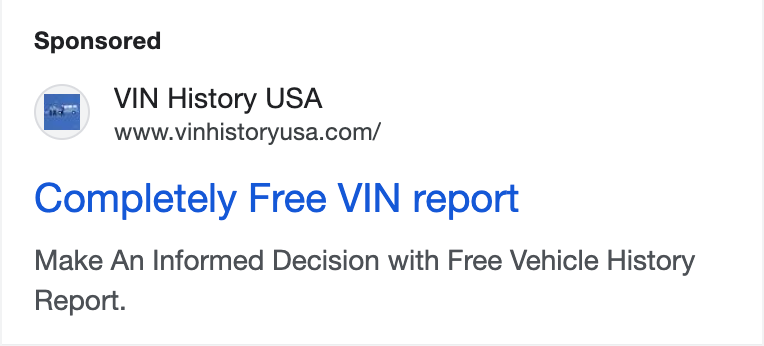
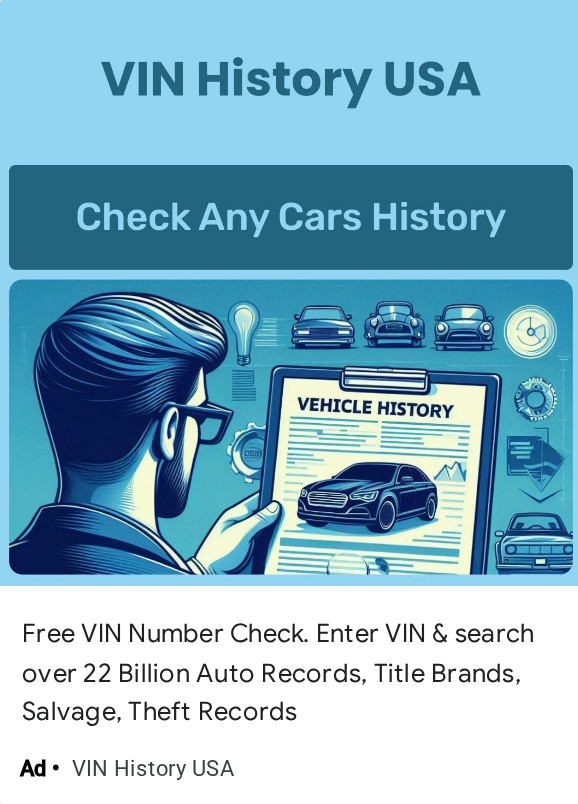
While these detailed reports usually cost money, VIN History USA claims in its Google ads that you can get one instantly for “absolutely” and “completely” free.
But after receiving a tip from a TINA.org reader, we discovered a few reasons why you may want to steer clear of this website.
The Google ads lead to the company’s website, where consumers are prompted to enter their 17-digit vehicle identification number or VIN to generate the “free” report. It isn’t until several steps into the process – after consumers provide their VIN, click “continue to report” multiple times and enter their email address – that the company informs them that the report will actually cost $1, which is what it says it charges to “keep our records up-to-date.” And after misleading consumers about their ability to obtain a “free” VIN report, the company warns that other sites that charge $40 for a VIN report “are just taking advantage of you.”
In fact, consumers could end up paying close to (or perhaps even more) than $40 for this “free” VIN report.
That’s because purchasing the VIN report automatically enrolls consumers into a monthly subscription that will begin charging them $30 a month if they don’t cancel within seven days. Where is this disclosed during the checkout process? At the bottom of pages, below a link to continue and fields to enter payment information.
Meanwhile, on the final checkout page the company features a countdown timer indicating when the page purportedly “expires.” In reality, though, when the clock hits zero, consumers are simply prompted to refresh the page.
In addition, while VIN History USA says its subscription provides “full history and service reports,” it charges consumers $4.95 extra for “detailed vehicle history records.” It’s unclear how these reports/records differ – in other words, what you’re actually getting for paying more. (Access to the owner’s name and a PDF or print version of the report cost an additional $1 each as well.)
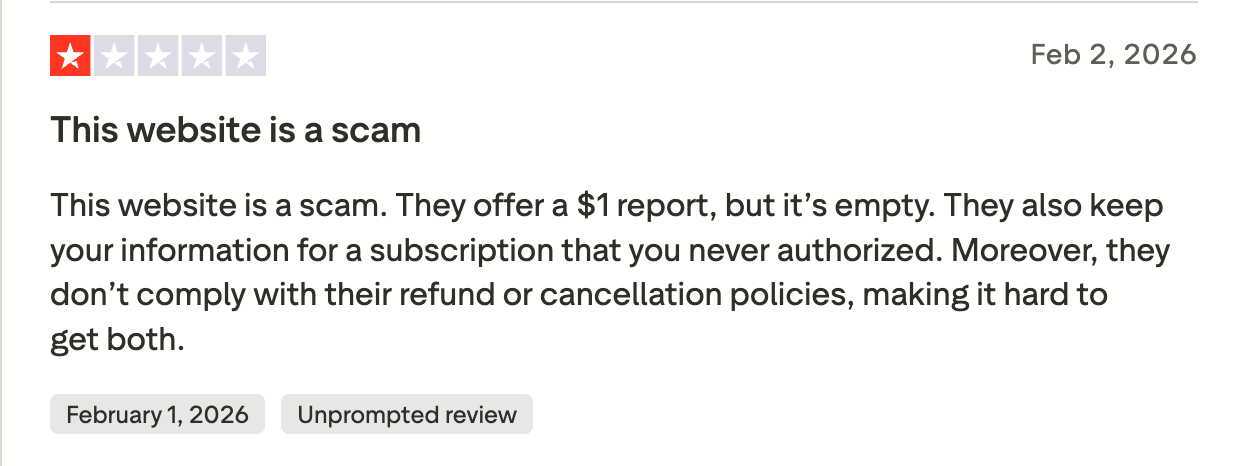
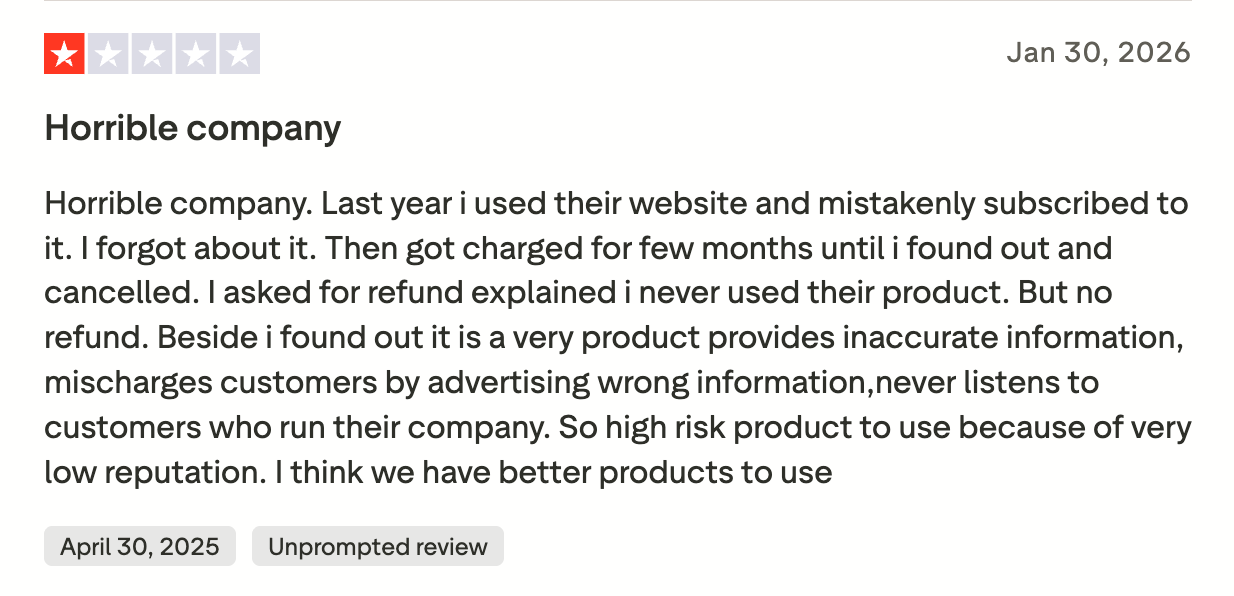
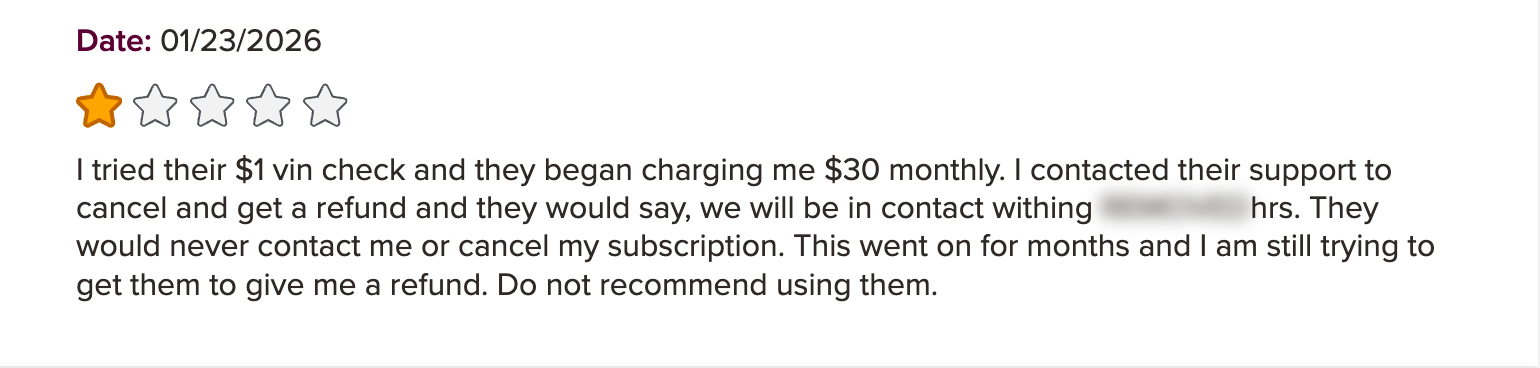
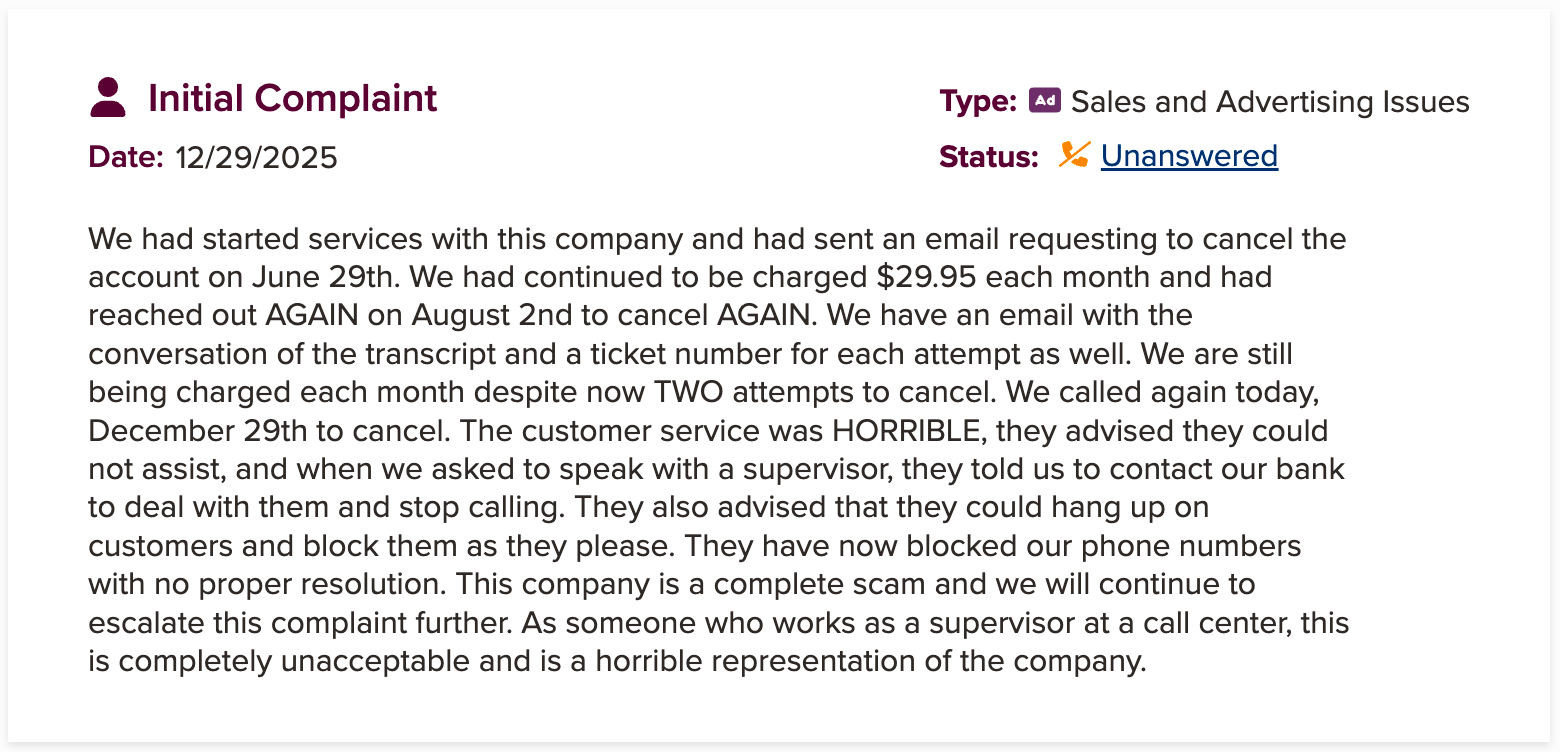
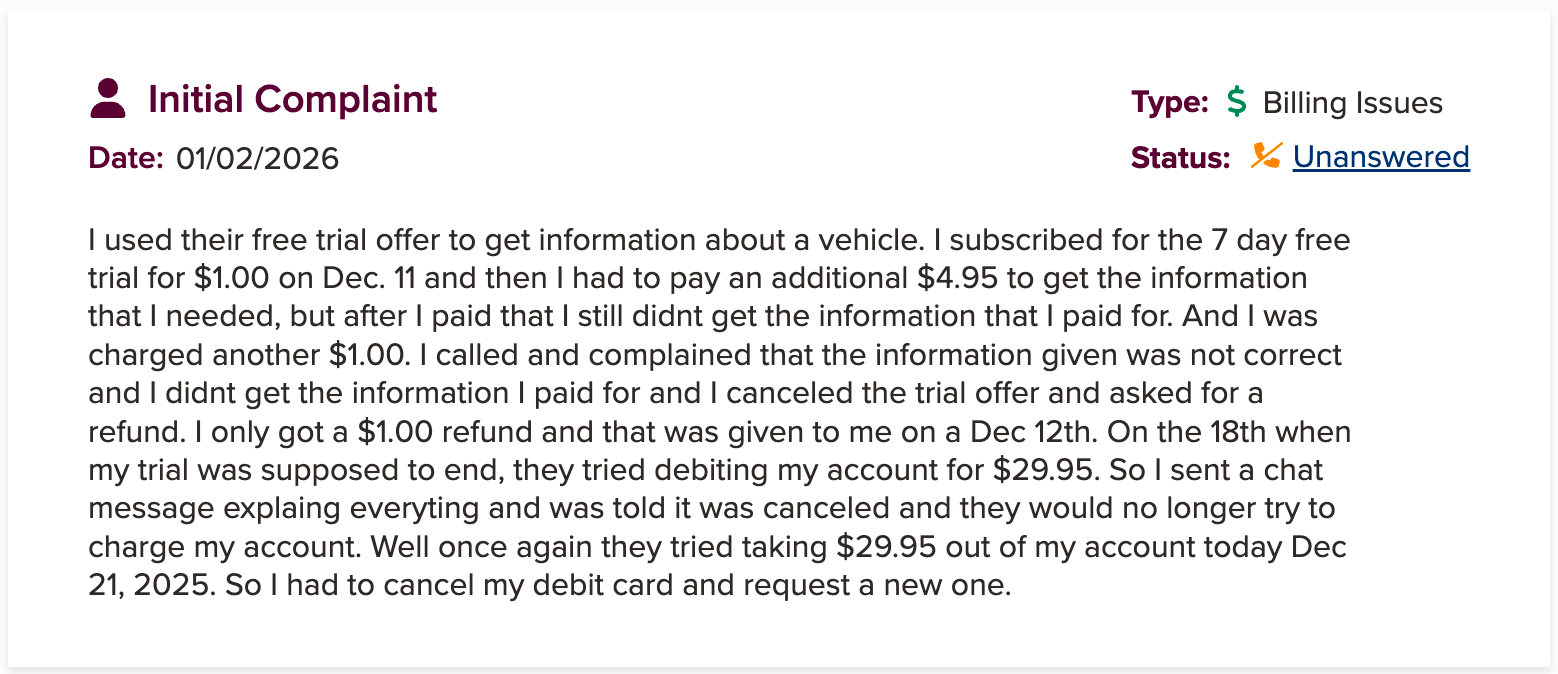
In recent months, consumers have reported a multitude of issues with VIN History USA on its BBB and Trustpilot pages, where the company has a 1 and 1.4 star rating, respectively (which is in stark contrast to the positive customer reviews and testimonials the company advertises as consumers are attempting to get their “free” VIN report).
Complaints range from being unknowingly enrolled in an autorenewing subscription and then being unable to cancel, to difficulties obtaining a refund (despite the company claiming to have an “immediate and no questions asked” refund policy and a “100% guarantee”), to receiving VIN reports with inaccurate or minimal data even after paying extra.
Of note, VIN History USA also claims to use “advanced, powerful tools” to access information from the National Motor Vehicle Title Information System (NMVTIS) – a government database of vehicles. But according to NMVTIS, only approved organizations can sell its data. And when TINA.org checked its list of authorized providers, VIN History USA wasn’t on it.
VIN History USA did not respond to a request for comment.
Consumers need not pay (or enroll in a costly subscription) for some of the information that VIN History USA purportedly “checks for.” The National Highway Traffic Safety Administration, for example, has searchable databases for vehicle specifications and safety recalls. The National Insurance Crime Bureau provides data on theft and salvage records. And some states, like New Jersey, offer free information on lemon checks.
If you’re shopping for a used car and are worried about its history, consider trying the free resources noted above before paying for a service. In the case that you need a full detailed VIN report, the FTC recommends going through an NMVTIS-approved provider.
Find more of our coverage on autos.
Our Ad Alerts are not just about false and deceptive marketing issues, but may also be about ads that, although not necessarily deceptive, should be viewed with caution. Ad Alerts can also be about single issues and may not include a comprehensive list of all marketing issues relating to the brand discussed.
Is it still a money-back guarantee if you end up paying hundreds of dollars?
If you can take the time to fill the tank yourself, don’t pay Budget to do it.
How a $19.95 rental can cost you more than $60.