
TINA’s Take: INFORM Consumers Act Goes Into Effect
New law aims to provide more transparency to online transactions and to deter online shopping fraud.
Why diabetes patients should research carefully before buying.
As technology continues to evolve, the idea of a truly noninvasive blood glucose monitor – one that can measure blood sugar levels without a finger prick or a sensor implanted under the skin – may sound like a dream come true for diabetes patients. Unfortunately, experts warn that while progress has been made, the science isn’t yet there.
The FDA isn’t there yet either. The agency still recommends that people with diabetes track their blood sugar using a blood glucose monitoring device (also known as a blood glucose meter or glucometer) that requires a small blood sample. The FDA has also “cleared” certain continuous glucose monitors (CGMs), which are devices that require the implantation of a sensor under the skin, for over-the-counter use. But with respect to devices advertised as able to measure blood glucose levels without piercing the skin, the FDA has warned that such products cannot be trusted to give accurate blood sugar measurements.
To put it another way, truly noninvasive monitors that can accurately measure glucose levels are not yet on the market. However, some major online marketplaces may make you think otherwise.
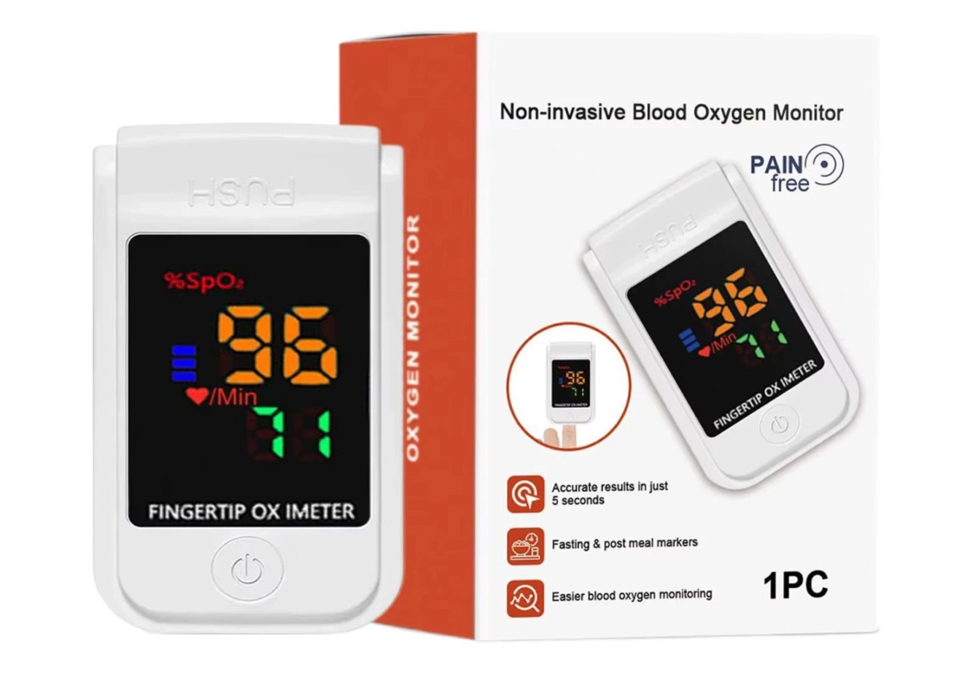
On eBay, for example, a search for “noninvasive blood glucose monitor” yields dozens of results. However, prompted by a tip from a reader, TINA.org found that the vast majority of the products that show up in search results for the term don’t measure blood glucose at all. That’s because they are actually blood oxygen monitors, also known as oximeters, which measure oxygen saturation levels in the blood, not glucose.
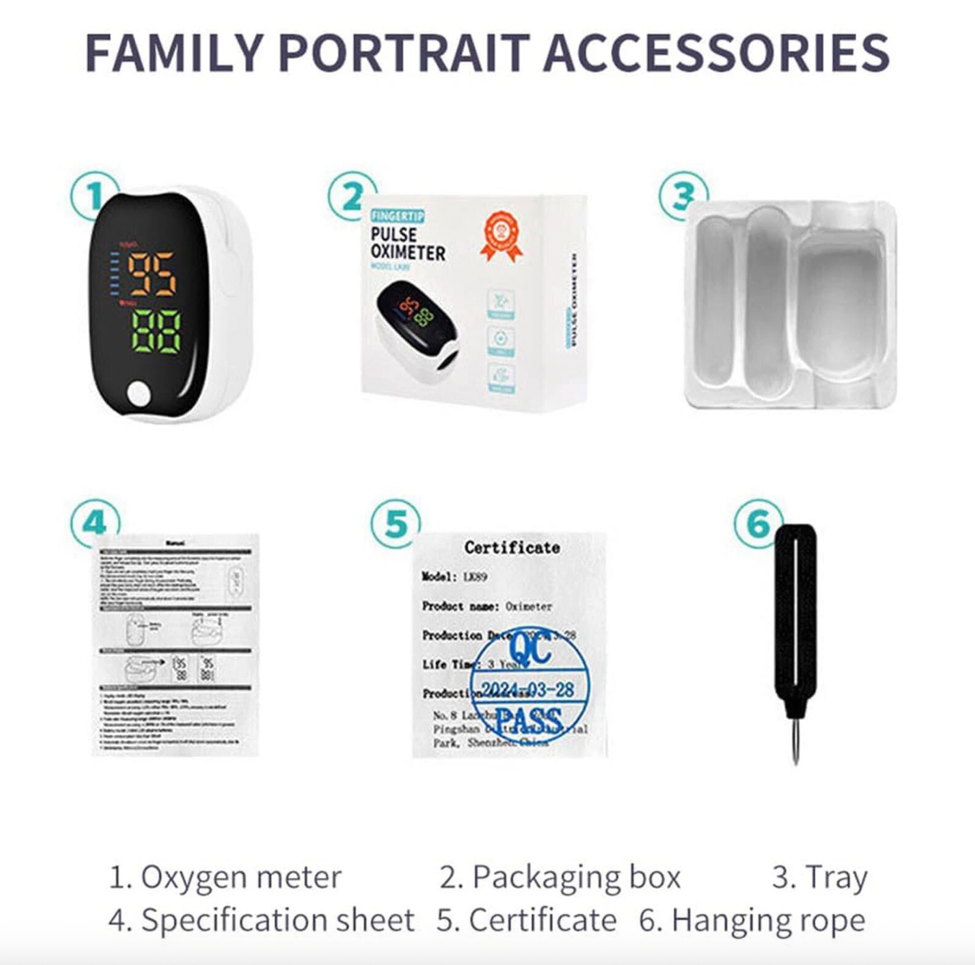
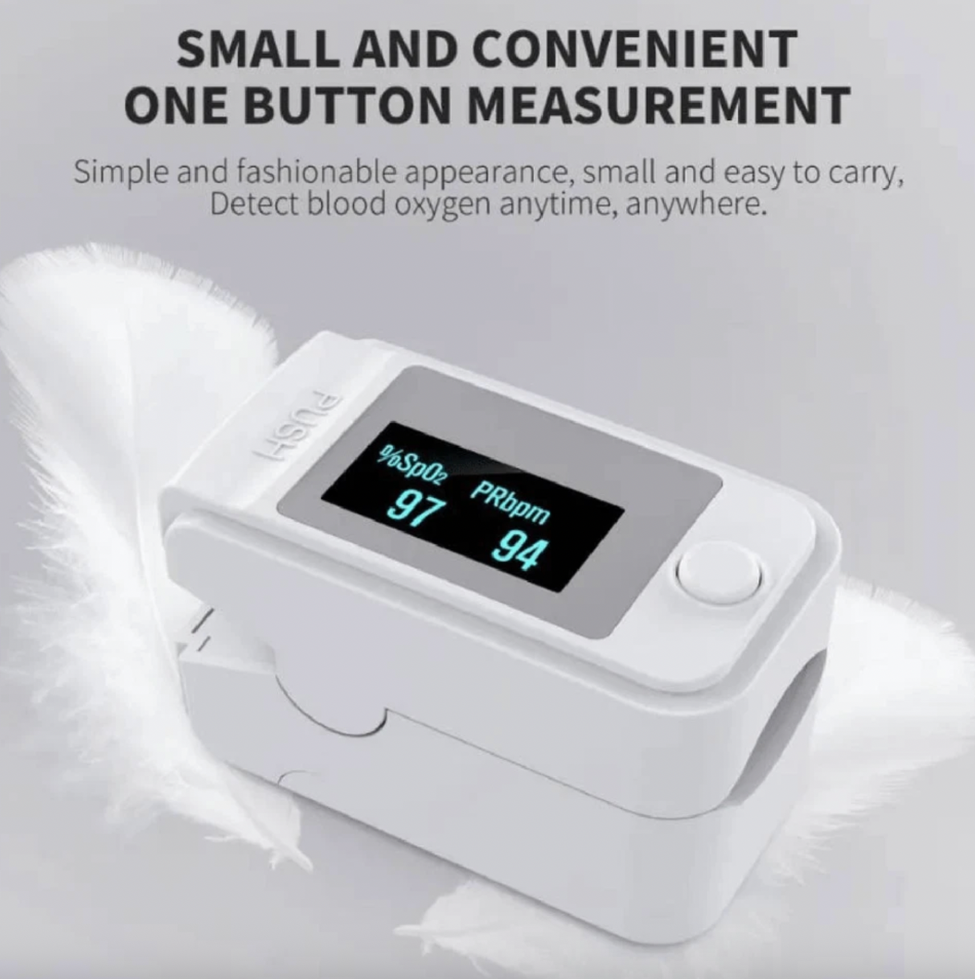
In fact, most of the products that appear in eBay search results for “noninvasive blood glucose monitor” – and under the category of “Diabetes Care” – are one of three oximeters:
Making matters worse, some of the oximeter listings on eBay are marketed with misleading terms like “blood sugar monitor” and “glucometer” in product descriptions, when that’s not what they are. For example:
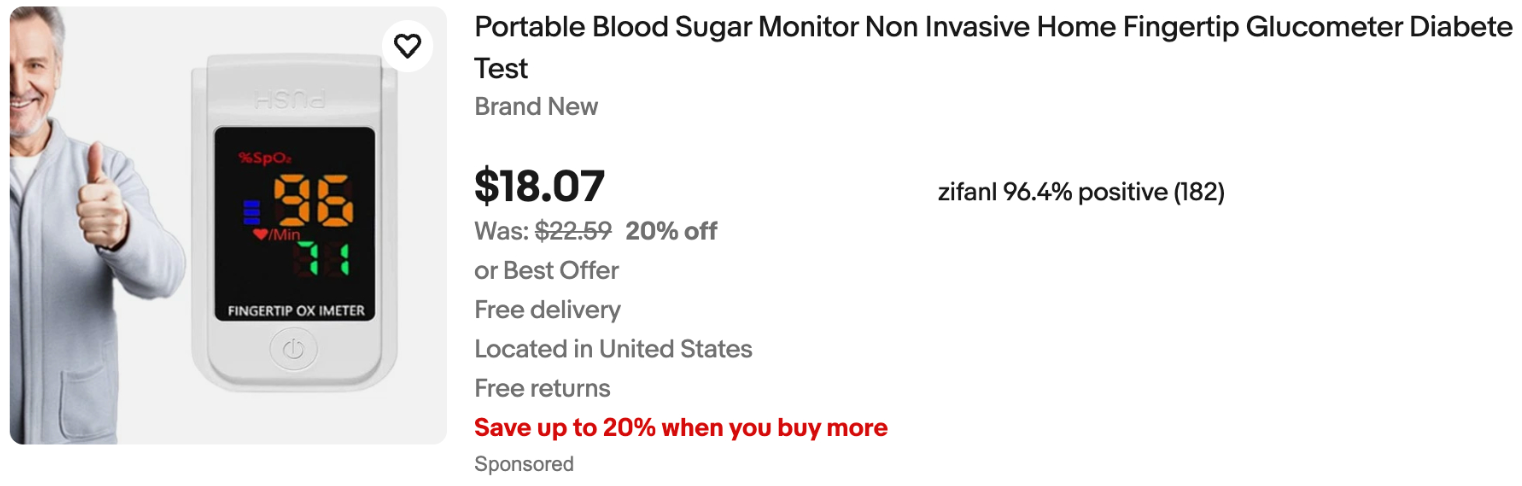
The reader that prompted TINA.org’s inquiry said he reported several listings for purported noninvasive glucose monitors to eBay “only to be told that they do not violate eBay’s standards.”
EBay did not respond to a TINA.org request for comment.
Amazon similarly pushes consumers toward oximeters in search results for “noninvasive blood glucose monitor,” which yields more than 150 product listings. When TINA.org entered the search term, six of the first 10 listings (i.e., the first listings Amazon shoppers see) were for oximeters:
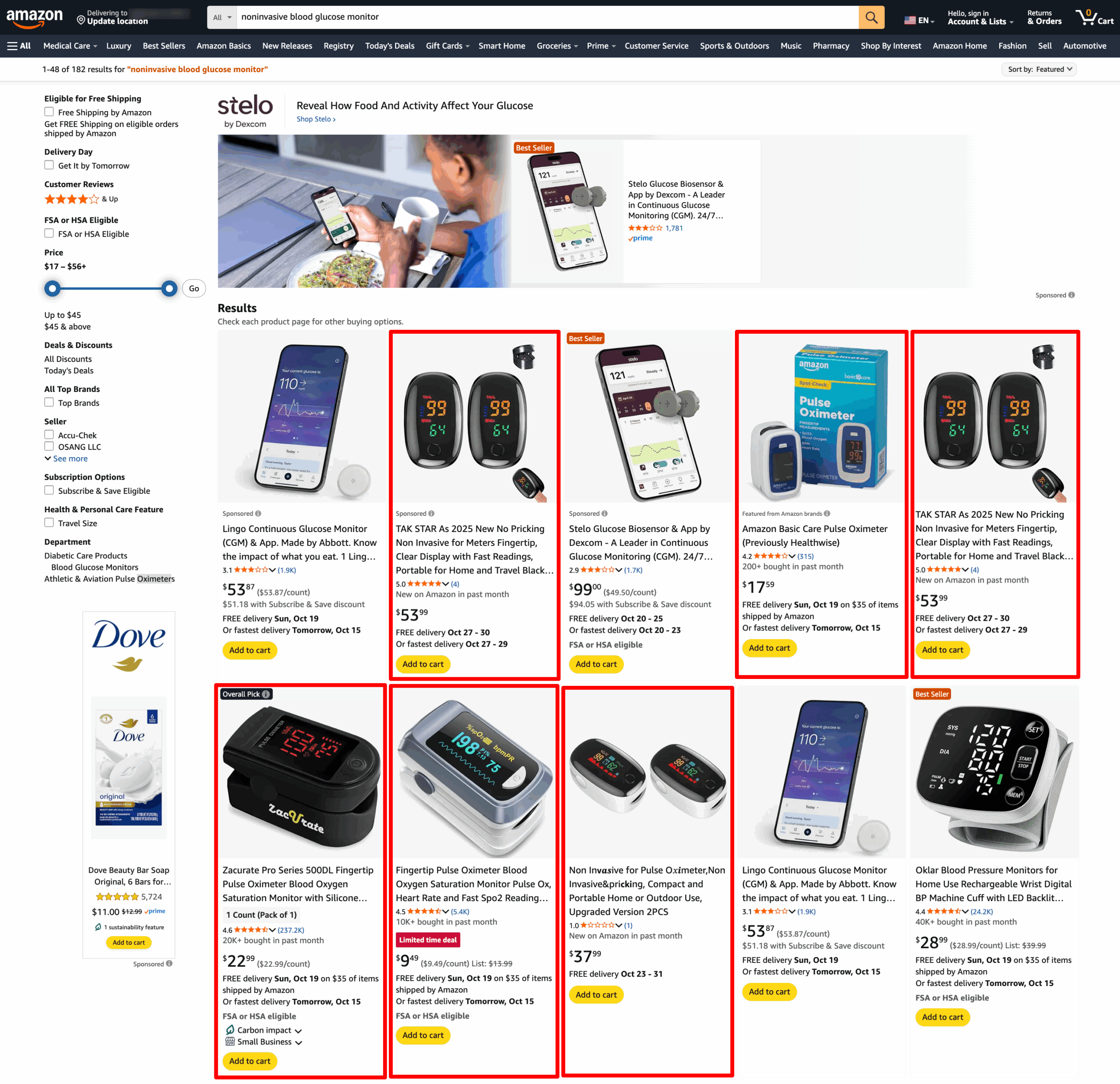
One of the oximeters was an Amazon branded product and another had been designated by Amazon as an “overall pick,” a classification the platform says it gives to products that are rated 4+ stars, purchased often and returned infrequently. The remaining four were CGMs and a blood pressure monitor.
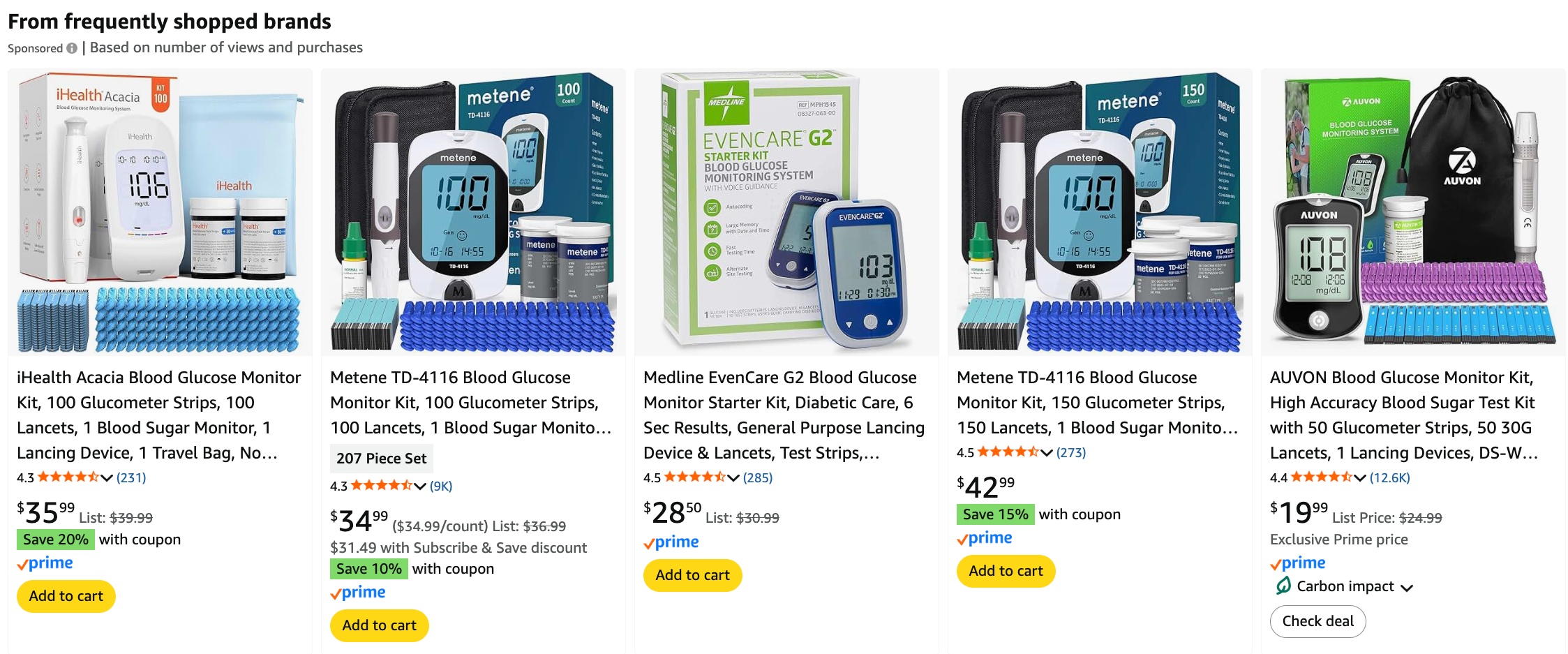
Further down in the search results TINA.org found plenty of Amazon listings for blood glucose monitor kits, all of which require a finger prick and therefore are not “noninvasive.”
Amazon also did not respond to a request for comment by TINA.org.
Another tech giant – Google – is adding to the confusion.
And among the sponsored search results in a recent Google query for “noninvasive blood glucose monitor” was a “non-invasive blood glucose monitoring smartwatch,” which is exactly the type of product identified in the FDA’s warning referenced above.
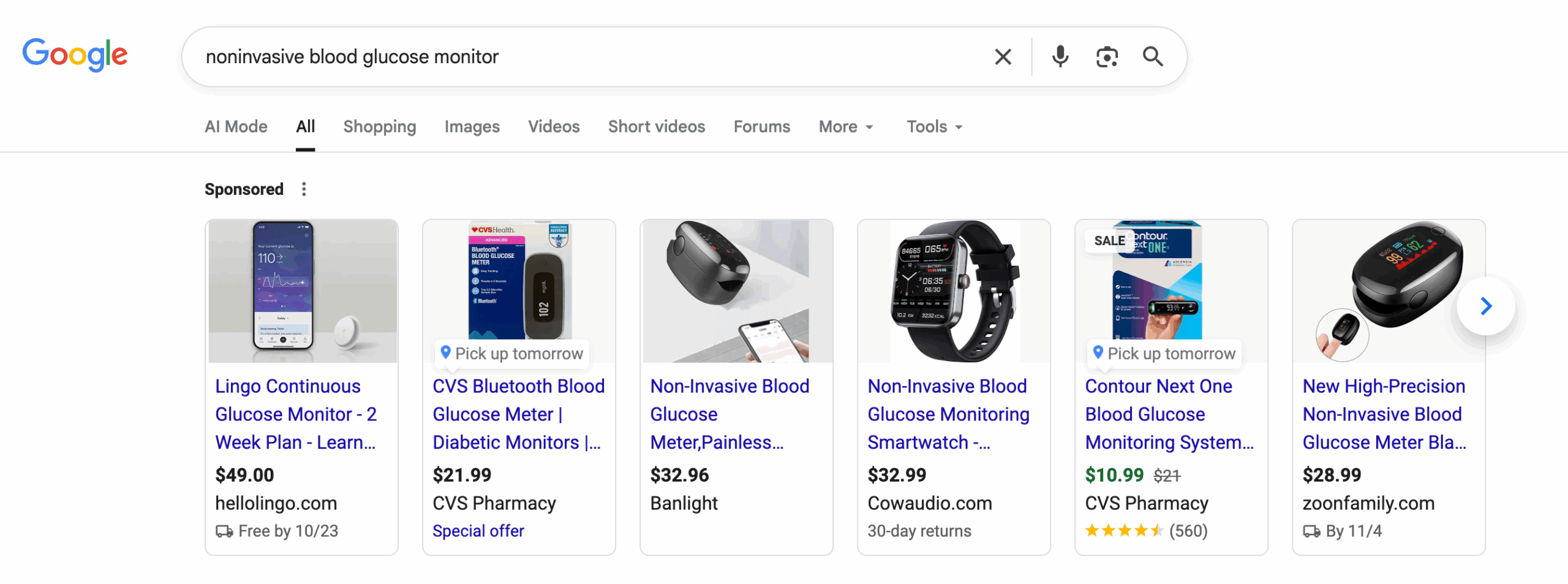
The sponsored Google search results also featured a “non-invasive blood glucose meter” and a “new high-precision non-invasive blood glucose meter,” both of which are in fact oximeters.
TINA.org reached out to Google and the sellers of these three products for comment. We did not receive a response from any of the companies.
While the future of diabetes care may look promising, consumers should remain skeptical of online claims and remember that the safest and most accurate glucose monitoring options are still, at best, minimally invasive. And as always, consumers should consult their health care provider on matters relating to their health.
Find more of our coverage on diabetes.
Our Ad Alerts are not just about false and deceptive marketing issues, but may also be about ads that, although not necessarily deceptive, should be viewed with caution. Ad Alerts can also be about single issues and may not include a comprehensive list of all marketing issues relating to the brand discussed.
New law aims to provide more transparency to online transactions and to deter online shopping fraud.

Class-action lawsuits target human and environmentally-friendly claims.

At issue is company’s distribution of products illegally marketed as drugs.