2025 Deceptive Ad Trends
A closer look at what we’ll be monitoring in the new year.
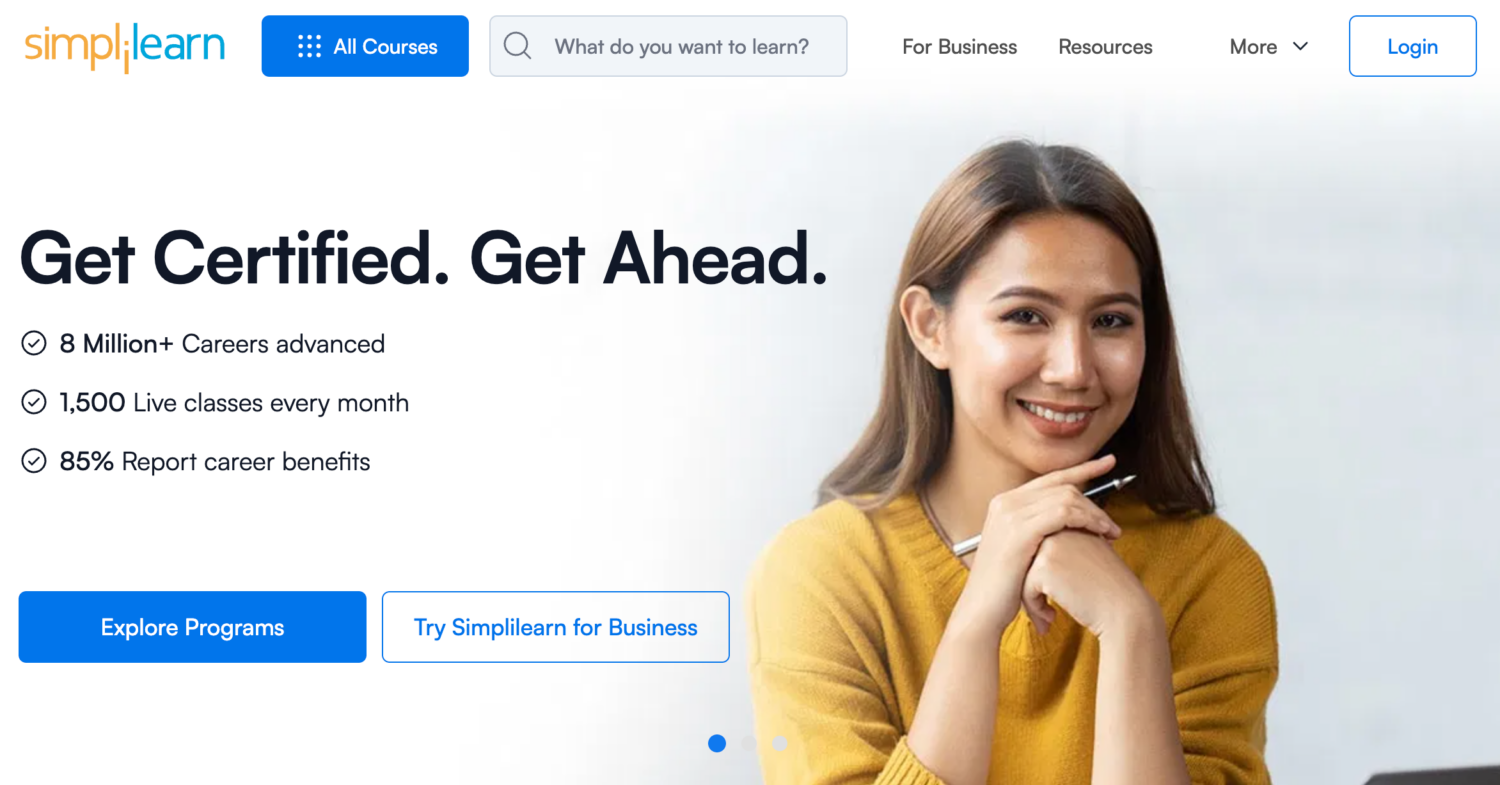
If you’re feeling stuck in your career, Simplilearn may seem like a way to get unstuck.
Touting partnerships with “the world’s leading universities and companies,” Simplilearn offers online courses in high-demand fields like AI, digital marketing and cybersecurity. The platform claims that it has advanced the careers of more than 8 million professionals with graduates of its programs earning 50% more on average.
But before you sign up, there are a few things you should know about this digital skills training provider.
Simplilearn first came on our radar due to a Trustpilot rating that didn’t seem to pass the smell test.
While Simplilearn advertises on its website that it has a 4.6-star Trustpilot rating, that is more than three stars higher than its rating on another third-party review platform, the BBB. There, the company has an average customer review rating of just over one star, as well as nearly 100 complaints and a BBB alert outlining a “pattern” of problems as reported by consumers alleging numerous issues, including difficulties obtaining refunds, questionable career advancement and income claims, and false claims of collaborations with universities (all of which are discussed in more detail below).
After we alerted Trustpilot to this ratings discrepancy back in October, the platform informed us that it found that more than a third of reviews posted in the past six months were “filtered by [its] detection technology for fabrication.” Among other things, Trustpilot said it found reviews submitted by the company’s own employees, which it said was a breach of its guidelines, and issued the company a warning.
Yet Simplilearn continues to advertise a 4.6-star Trustpilot rating (and did not respond to our request for comment). As for Trustpilot, which still shows the “excellent” 4.6-star rating on Simplilearn’s profile, the platform informed us that its “review integrity team is currently looking into further activity in line with our standard procedures.”
Simplilearn also touts its partnerships, and many of its online courses are branded with the names and logos of top U.S. universities. The word “partnership,” however, may be a bit vague so allow us to shed some light on these connections.
Let’s start with the platform’s Applied Generative AI Specialization course.
Despite bearing the name and logo of Purdue University (including on a “university certificate” participants receive upon completing the course), the $2,995 program is not a Purdue program. In fact, an FAQ at the bottom of the course page states:
This offering is not a Purdue University program. It is developed and delivered by Simplilearn and made available in partnership with Purdue University. Any learning experience, instruction, curriculum, or support services referenced within the program are provided by Simplilearn.
Other Simplilearn AI courses bearing the Purdue name and logo contain the same fine print about the school’s lack of involvement in the shaping and instruction of the course.
And while Purdue lists these and other Simplilearn courses on its website, the university notes that, “Simplilearn is the entity responsible for all sales and learner interactions. There are no credits awarded by Purdue as Simplilearn is the institution of record.”
One consumer who enrolled in the Purdue-branded Applied Generative AI Specialization course wrote in a Trustpilot review last month that he “expected a rigorous, well-structured program that reflected Purdue’s academic reputation, but the reality was far from that.”
Purdue did not respond to our request for comment.
The University of Michigan’s name and logo are also featured in connection with a Simplilearn AI program. According to an FAQ at the bottom of the course page, the curriculum has been “vetted” by university staff but “the instructors are not employees of the University of Michigan.”
In response to a request for comment, a University of Michigan spokesperson said that the school’s College of Engineering has “a non-credit certificate program executed through a partnership with Simplilearn” and that participants are required to sign a disclaimer to help “ensure transparency, clarifying that while courses are vetted by U-M faculty, they are not taught by U-M employees.”
“Quality assurance is maintained through a review by a College of Engineering faculty member, ensuring Simplilearn course outlines, instructor qualifications, and accessibility meet university standards,” the spokesperson added.
In the past, Simplilearn has also touted partnerships with other top universities, including the Wharton School and Caltech, which reportedly faced backlash for poor quality and lack of transparency about its involvement in the course. (After settling a class-action lawsuit, Caltech dropped its Simplilearn partnership.)
In addition to claiming on its homepage that graduates of its programs earn 50% more on average, Simplilearn’s website features testimonials from grads who report getting several job offers and massive salary hikes as a result of taking the company’s online courses.
According to the FTC, marketers should only advertise results that are “representative of what consumers will generally achieve with the advertised product or service in actual, albeit variable, conditions of use.”
And according to consumers who have complained to the BBB, Simplilearn advertises results that “may not be achievable by average consumers.”
We asked Simplilearn whether its touted results are typical of what its graduates achieve but it did not respond.
As noted earlier, another point of frustration among consumers is Simplilearn’s restrictive 7-day refund policy, which doesn’t begin when the course starts but rather the day you purchase the course.
As one consumer who — after attempting to get a refund when they were placed with a different instructor than the one that was advertised — complained to the BBB, “Expecting students to assess a course before attending is unethical and deeply misleading.”
Before signing up for online courses, consumers should do their research to make sure they understand what they’re getting. Carefully review the details of advertised courses, ask questions and consider what consumers may have to say on a variety of third-party review sites before enrolling.
Find more of our coverage on employment and education.
Our Ad Alerts are not just about false and deceptive marketing issues, but may also be about ads that, although not necessarily deceptive, should be viewed with caution. Ad Alerts can also be about single issues and may not include a comprehensive list of all marketing issues relating to the brand discussed.
A closer look at what we’ll be monitoring in the new year.
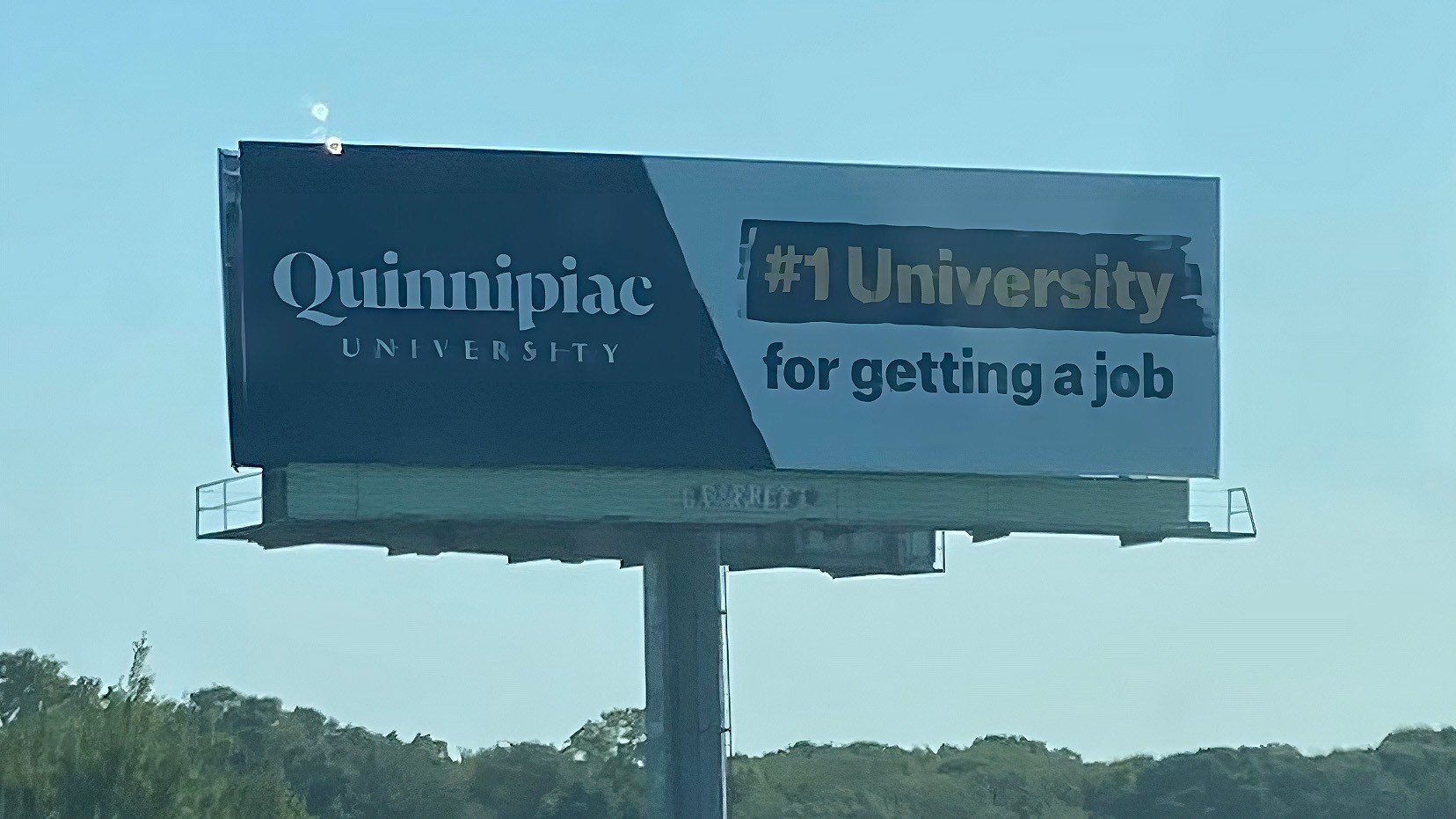
How is #1 defined?

Is this life coach writing checks she can’t cash?