To help protect against fraud in the passport courier industry, the State Department requires that private companies that deliver passport applications and pick up completed passports on behalf of consumers register with the department. The agency refers to these companies as couriers, or “passport expeditors,” and maintains a list of such companies registered with the department on its website.
But just because a courier is registered with the State Department doesn’t mean that the agency approves or endorses the company. It also doesn’t mean that the courier can get a passport processed any faster than going directly through the government on our own.
Many registered passport couriers would make you think otherwise.
A TINA.org investigation has found that the vast majority of active registered couriers have engaged in deceptive marketing, either by falsely claiming or misleadingly implying that they are affiliated with or endorsed by the government, making unqualified claims to turn around passports in days or even hours and/or advertising prices that omit mandatory government fees, shipping charges and other costs.
Of the 141 registered couriers TINA.org could confirm as active, 120 – about 85% – have engaged in one or more of these types of deceptive tactics.
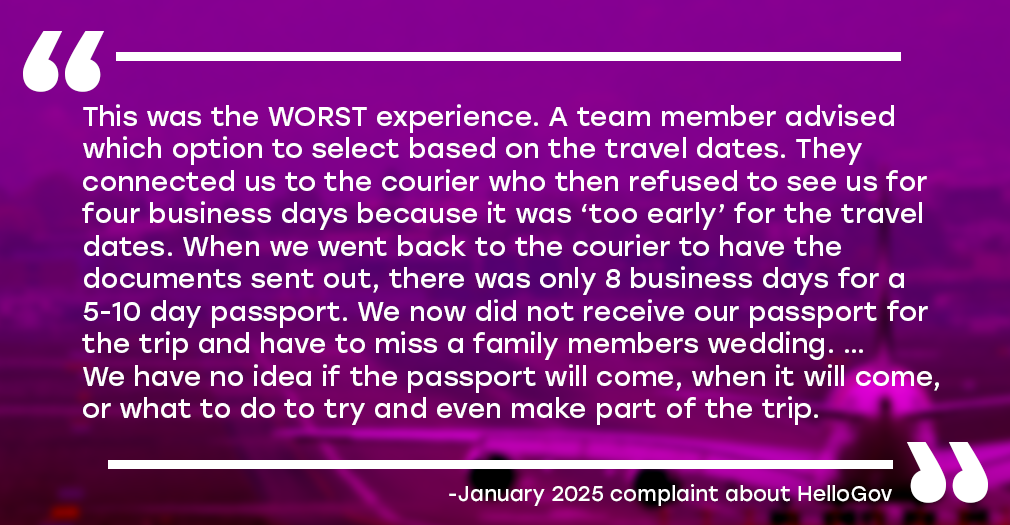
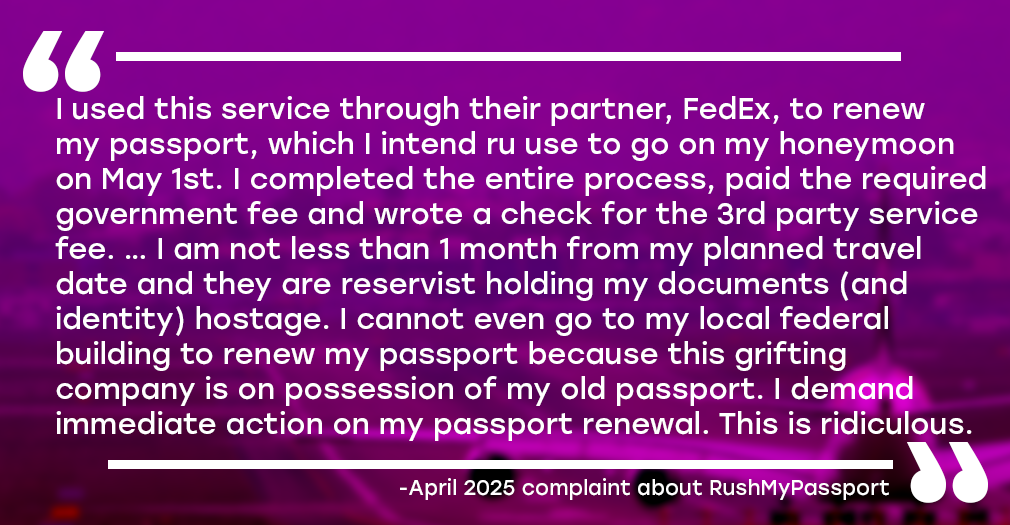
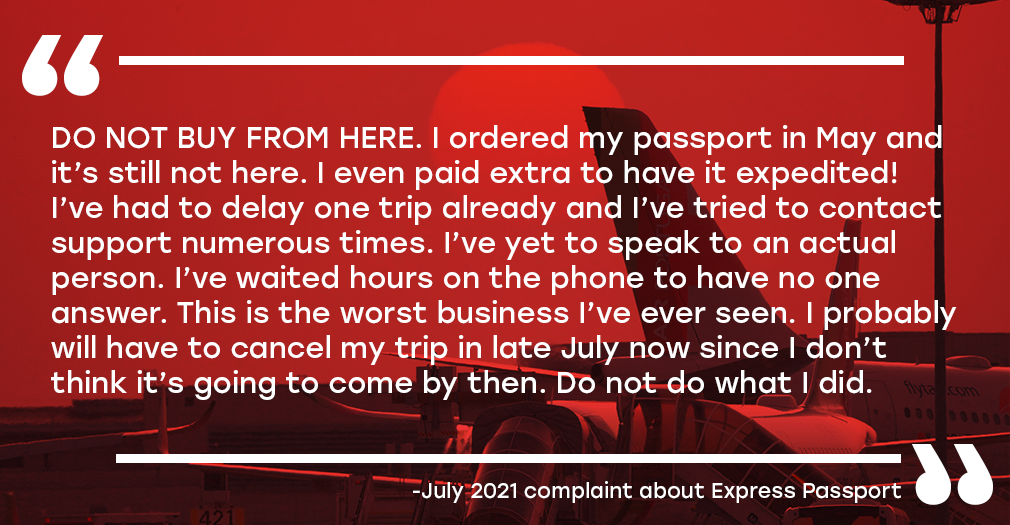
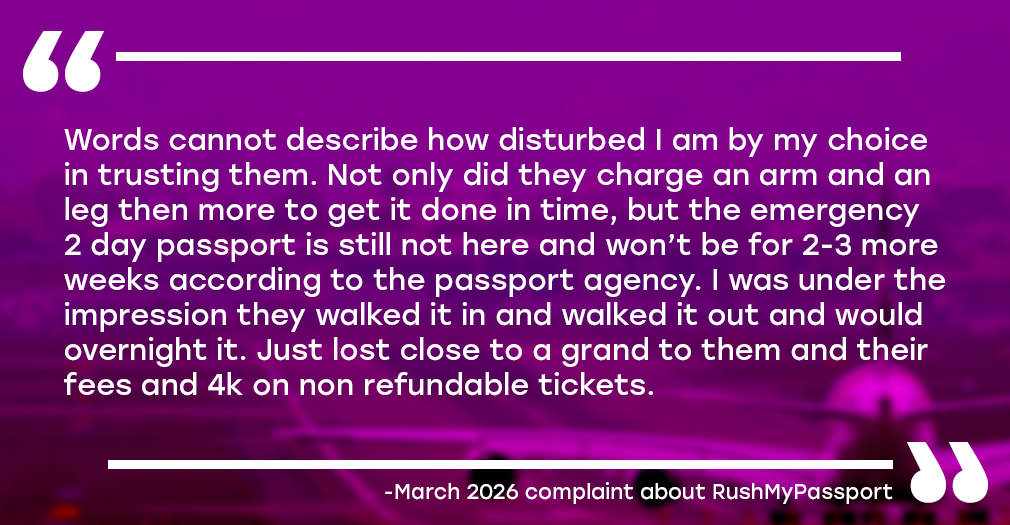
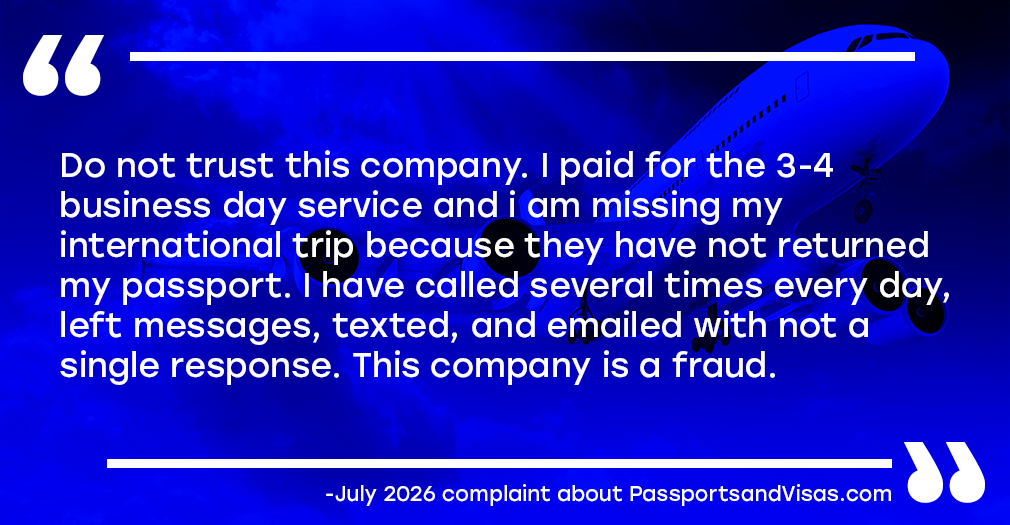
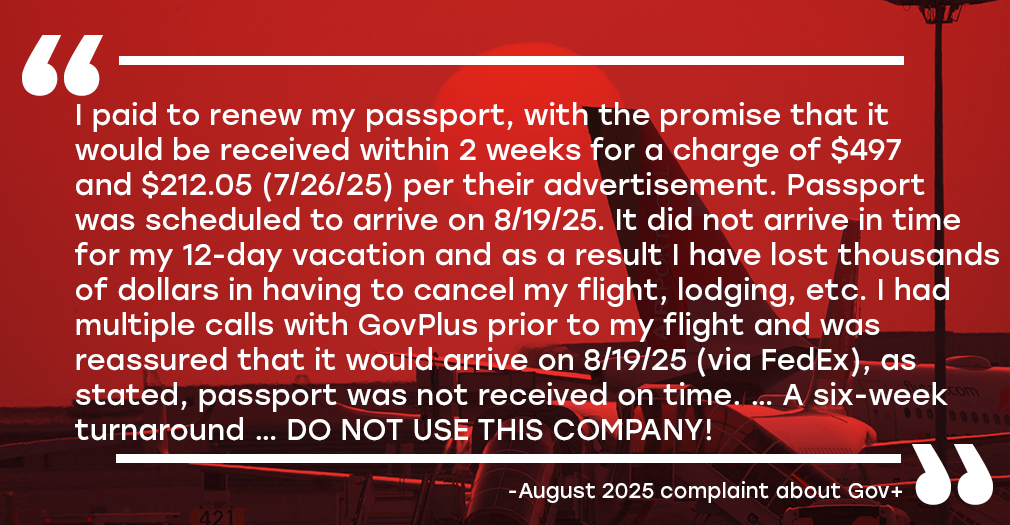
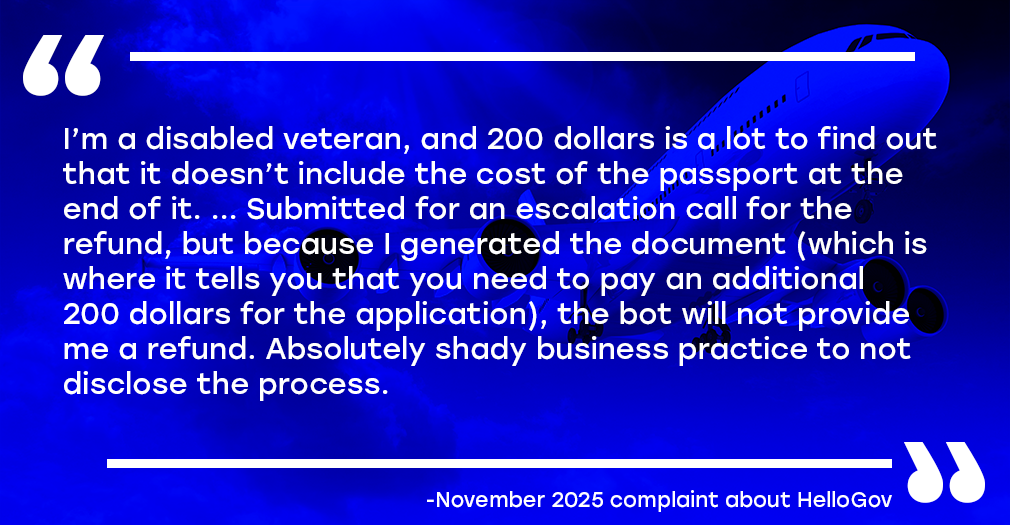
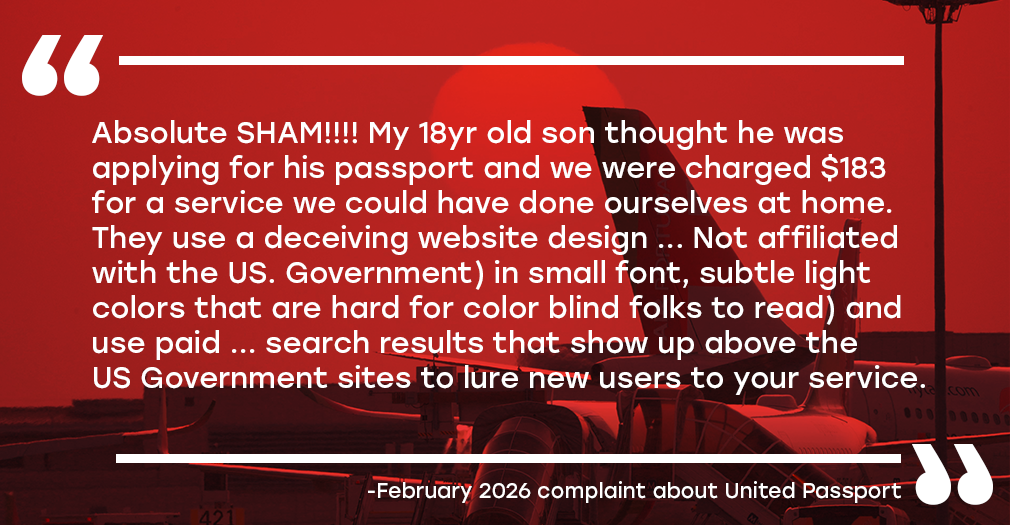
As part of our investigation, TINA.org reviewed thousands of consumer complaints about the deceptive practices used by registered couriers, resulting in unexpected charges, missed (and nonrefundable) travel, and stranded passports or identity documents.
Many consumers report that their first contact with a courier came after searching online for how to apply or renew a passport and seeing their services advertised at the top of search results. TINA.org found that “sponsored” search results – which may appear above non-sponsored search results for the State Department’s website – are just one of the ways these companies advertise to consumers. Passport couriers also advertise their services in internet banner ads, on social media and on their websites, which are often designed to look like official government websites. As one consumer, in a complaint against HelloGov, put it:
I accessed hellogov.com under the impression it was an official government site for US passport renewal. The websites design and the representative I spoke with … both claimed the company is a ‘government authorized vendor.’ After I completed the application and printed the forms, I realized this was a private third party. I immediately requested a cancellation, but was denied a refund of the $305.42 service fee on the grounds that I had already ‘printed the document.’
Consumers who turn to passport couriers often do so under significant time pressure, with little ability to independently verify the claims made to them – and some may not even realize they’re dealing with a private courier rather than the government itself. That confusion is exactly why couriers should clearly and conspicuously disclose that they are not the State Department or otherwise affiliated with the government.
Sounding the alarm
TINA.org is taking action to rein in the deceptive marketing of registered passport couriers.
TINA.org has filed a comment with the State Department in response to a proposed rulemaking detailing our investigative findings and urging the agency to make the necessary changes to its passport courier program so that it cannot be used as a marketing tool to mislead the very travelers it purports to serve.
Separately, TINA.org has alerted the FTC to the widespread deception among registered passport couriers, noting that our investigation echoes and builds upon previous concerns the agency has raised with private passport companies, as well as the thousands of complaints the FTC has received in recent years regarding just a handful of these companies, which TINA.org obtained via Freedom of Information Act (FOIA) requests filed with the agency.
TINA.org has also sent notification letters to the registered passport courier companies themselves alerting them to our findings and urging them to take prompt action to ensure that their marketing complies with the law.
There are severe limitations to what passport couriers can actually do – limitations that aren’t always disclosed to consumers in marketing materials.
These companies may be able to reduce mailing times by hand-delivering documents to passport agencies and completed passports back to applicants but they cannot:
Issue new passports.
Renew passports.
Waive the $60 fee the State Department charges for expedited processing, on top of the fee to obtain or renew a passport.
Impact the State Department’s passport processing time.
Only the State Department can issue new passports and renew passports. And if you are applying for a new passport, you still must appear in person either at an acceptance facility such as a post office or, depending on your travel situation, a passport agency, in order to execute your application (i.e., verify your identify, sign the application in front of an authorized agent, etc.) Couriers cannot execute applications for you.
Meanwhile, there are steps consumers can take on their own to reduce mailing times such as paying for Priority Mail shipping, which costs substantially less than what passport couriers typically charge for “expedited” processing. Also, while some couriers advertise their application form review and error-catching services, passport acceptance facilities, such as the U.S. Postal Service, already check for errors on applications – at no cost to consumers.
When an applicant needs a passport urgently and has proof of travel, they can either attend an in-person appointment at a passport agency themselves to obtain a passport quickly or, if they choose to use a courier for help, go to an acceptance facility to execute their application in person and then send the executed application (as well as proof-of-travel documents and payment to the government for expedited processing) with a courier to the agency appointment for them. But the State Department’s actual processing timeline is the same.
In fact, the State Department’s National Hand-Carry Procedures handbook states that couriers “may not imply, misrepresent, or mislead in speech, print, electronic or any other form of communication, that it can have an applicant’s passport processed more quickly than if the applicant applied directly at the passport agency.” This same messaging is echoed on its website.
The deceptive marketing
TINA.org’s investigation found that registered passport couriers deceive consumers on multiple fronts.
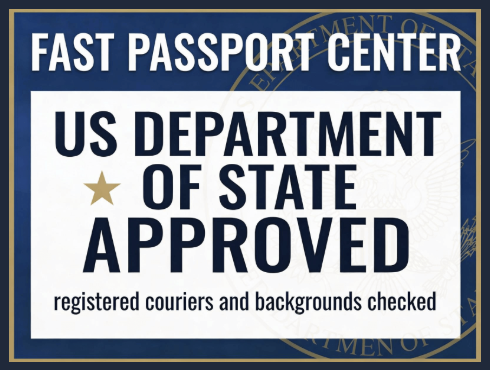
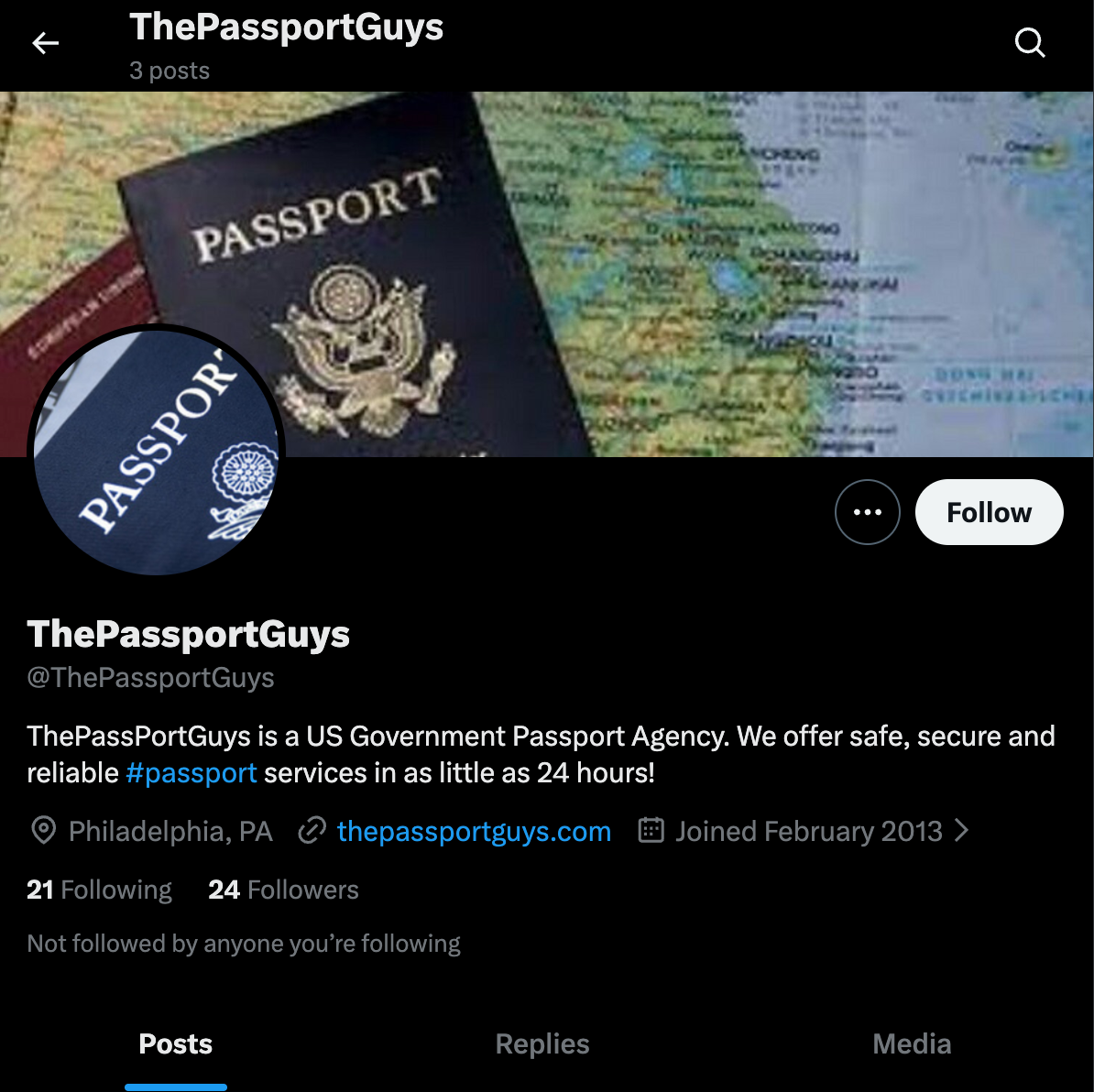
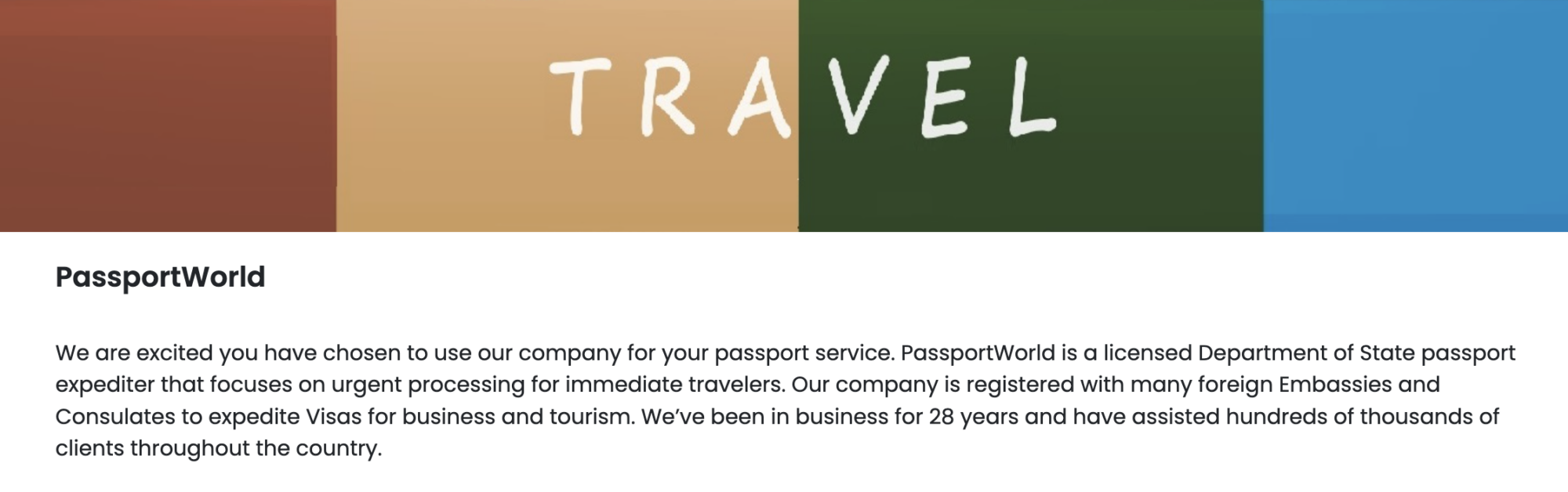
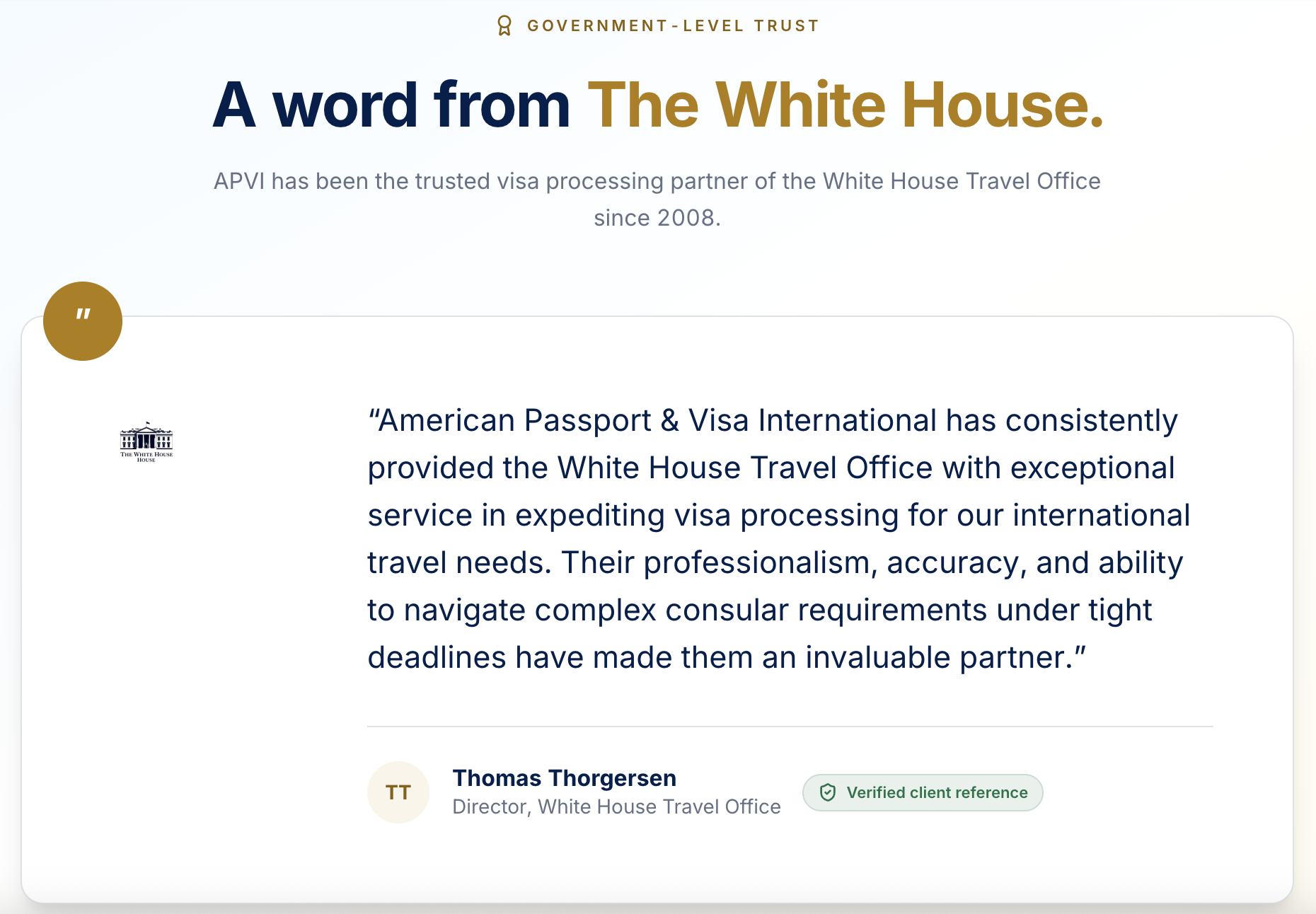
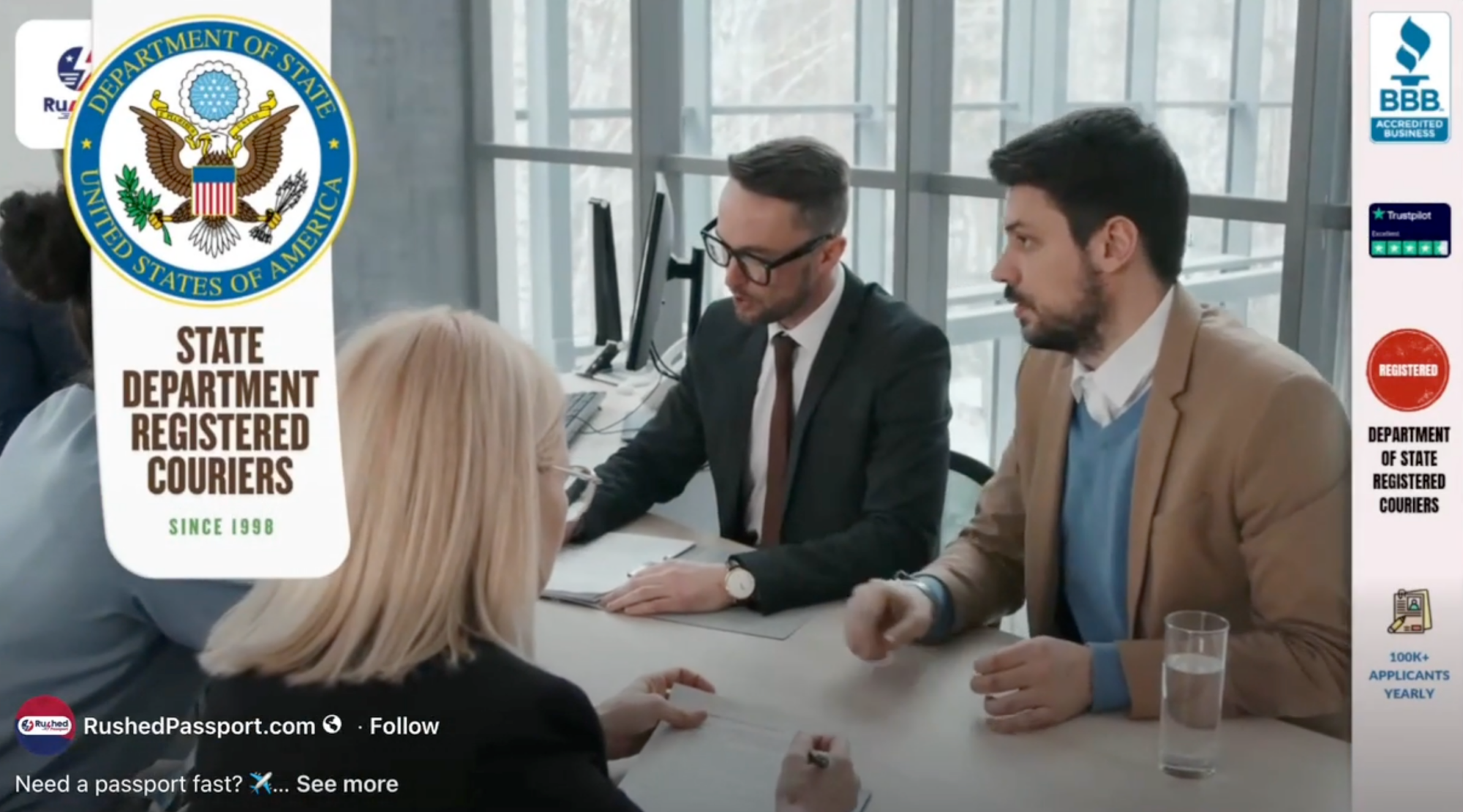
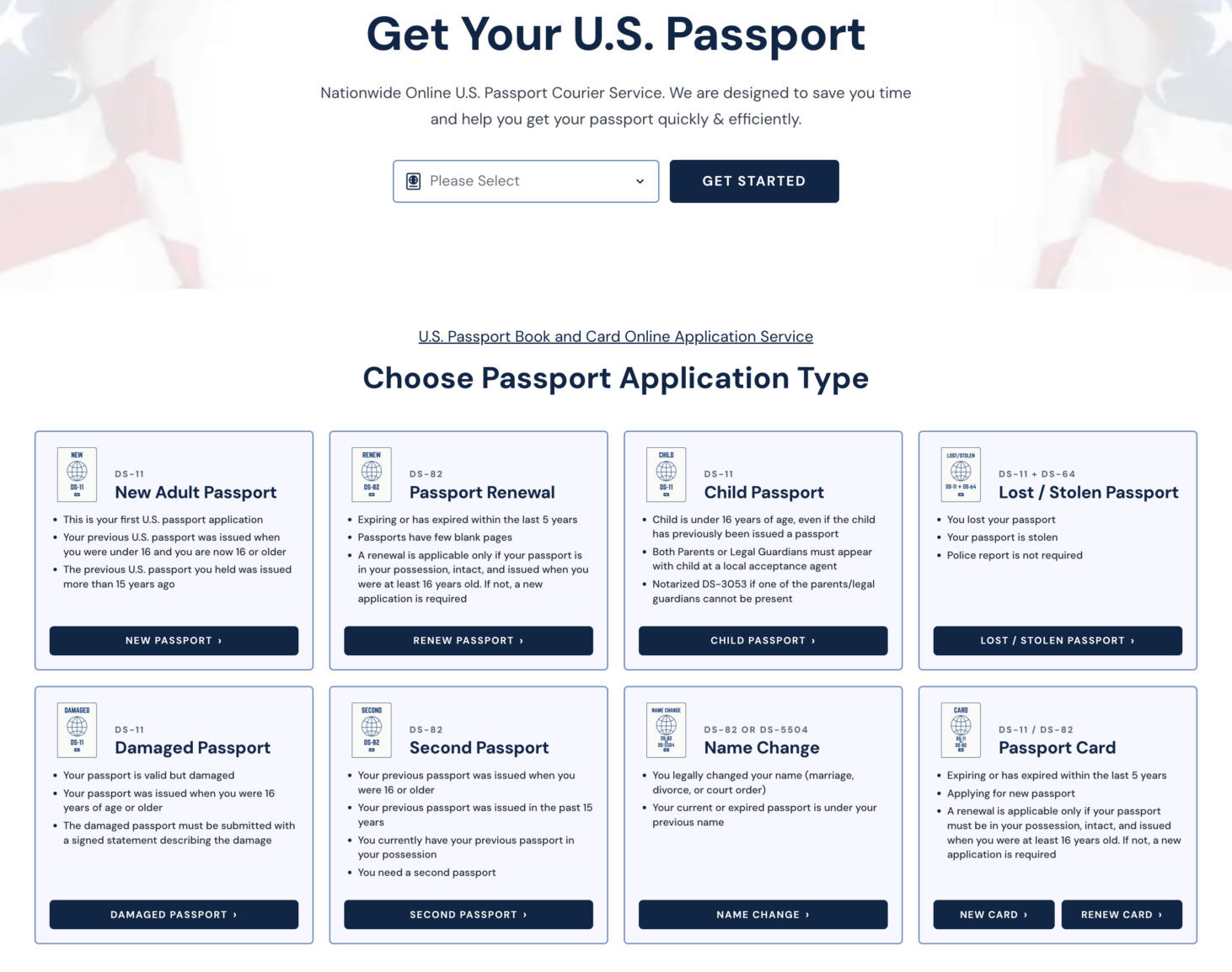
First, many couriers market themselves in ways that state or imply that they have an affiliation with or are endorsed by the government, while failing to adequately disclose that they are in fact private, for-profit companies that operate independently of the Department of State. (Note: Registering with the department simply means the courier is permitted to transport passport documents on behalf of applicants and the agency; it does not mean the courier is authorized, licensed, approved or otherwise affiliated with the government.) Examples include:
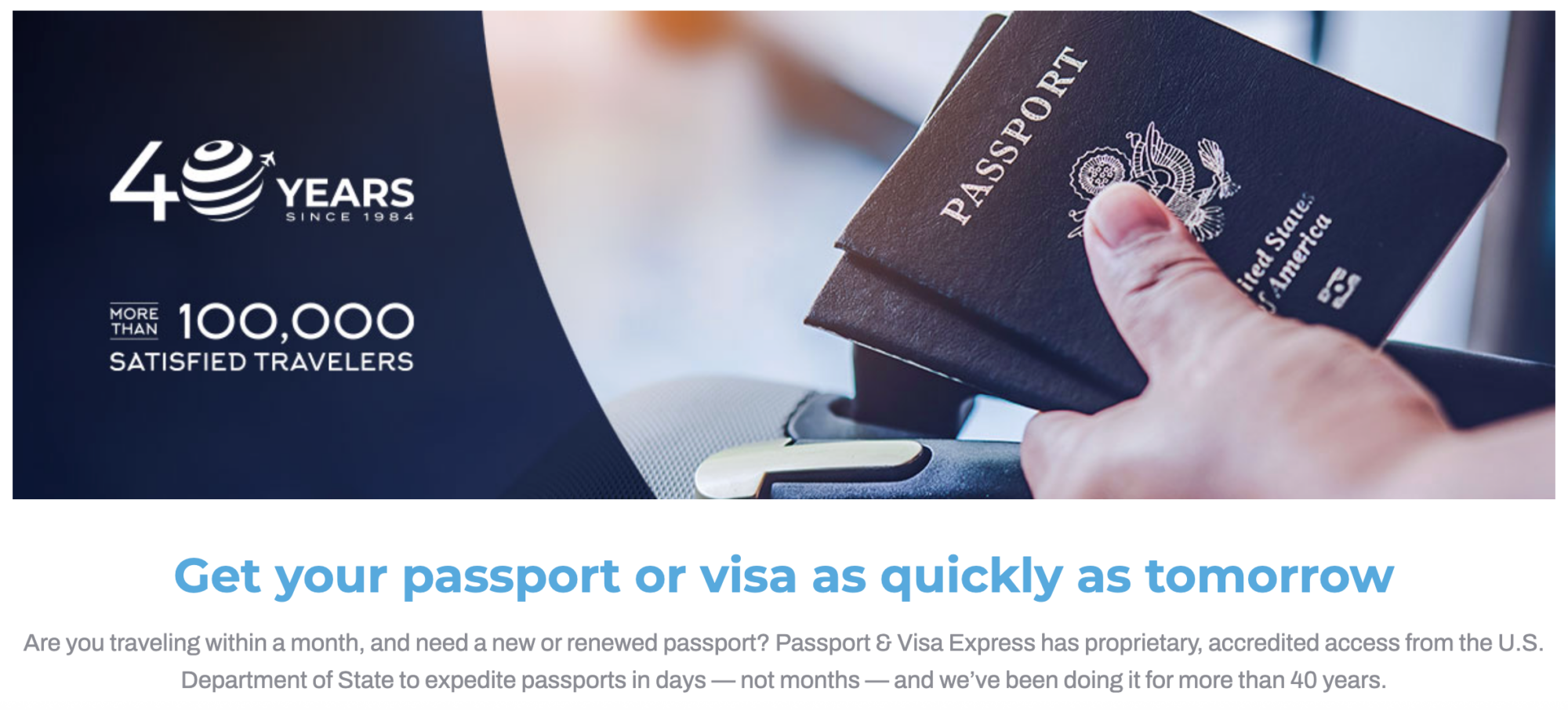
“US Department of State Approved”“ThePassPortGuys is a US Government Passport Agency.”“PassportWorld is a licensed Department of State passport expediter…”“Government-Level Trust … A word from The White House.”"Passport & Visa Express has proprietary, accredited access from the U.S. Department of State to expedite passports in days – not months – and we’ve been doing it for more than 40 years.”
1of5
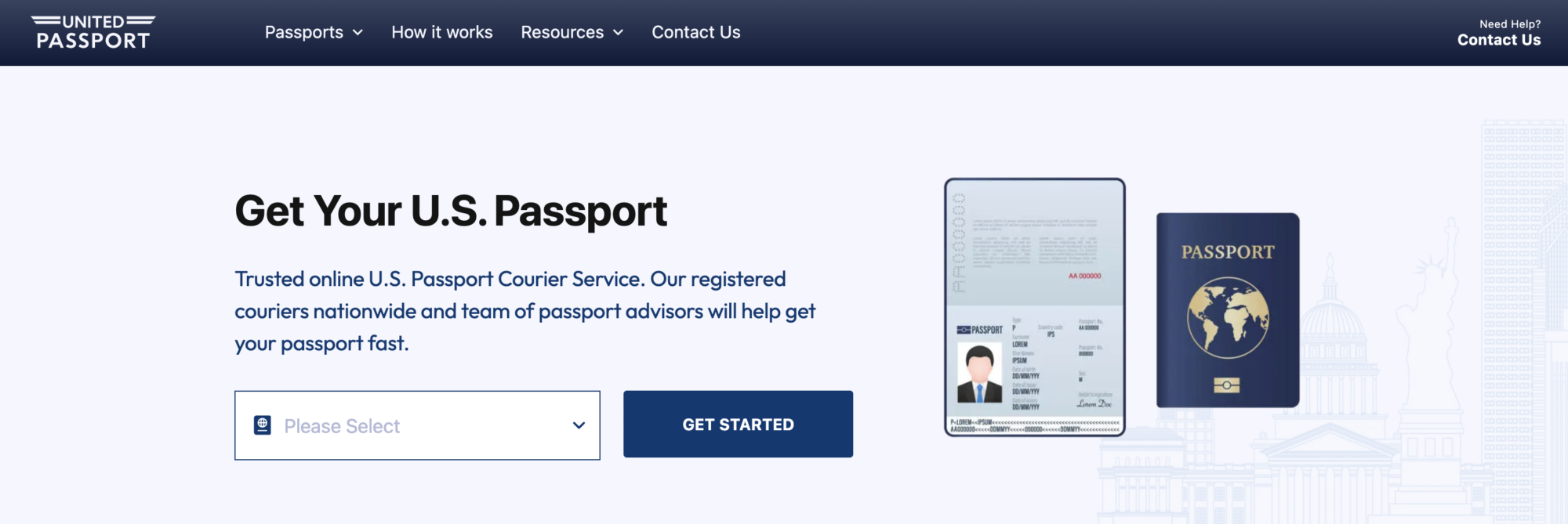
Even technically accurate descriptors like “government-registered courier” can mislead consumers when paired with official-looking branding or government-sounding company names (such as “US Passport & Visa,” “Gov+” or “The Passport Office”) and web addresses ending in “.us.” that may muddle their true identity as a private company. Official-looking logos, seals and website designs add to the deception:
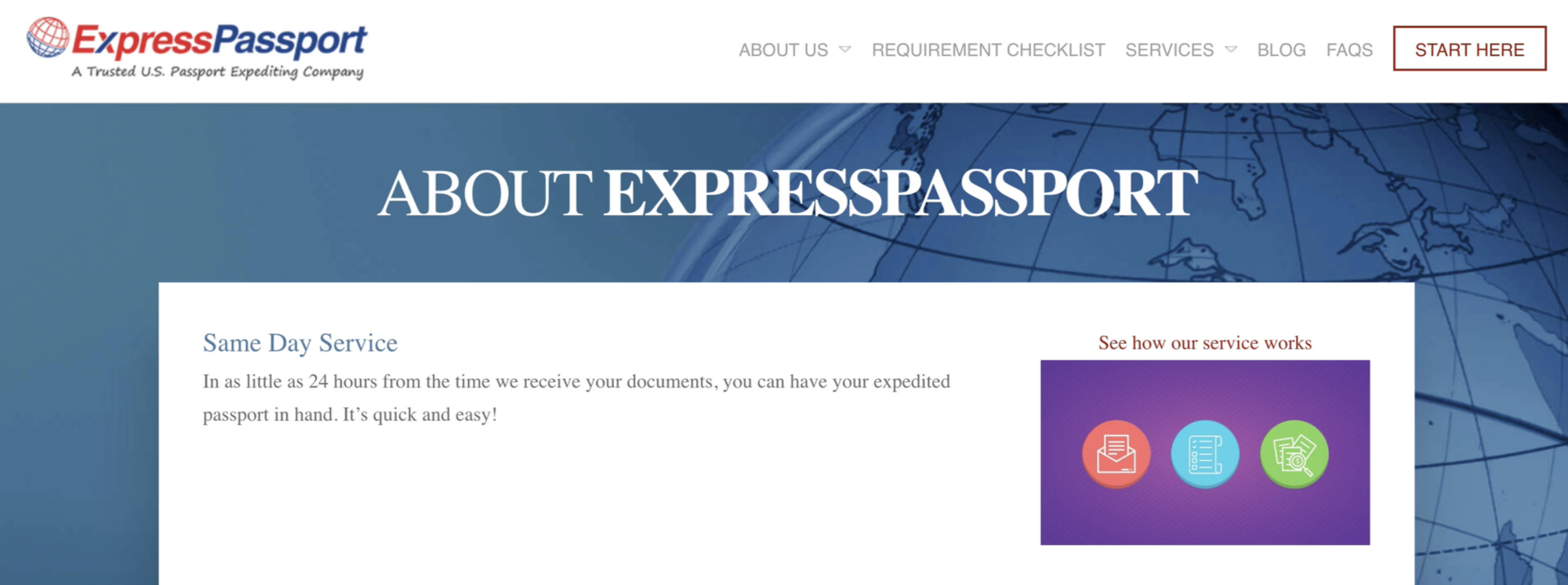
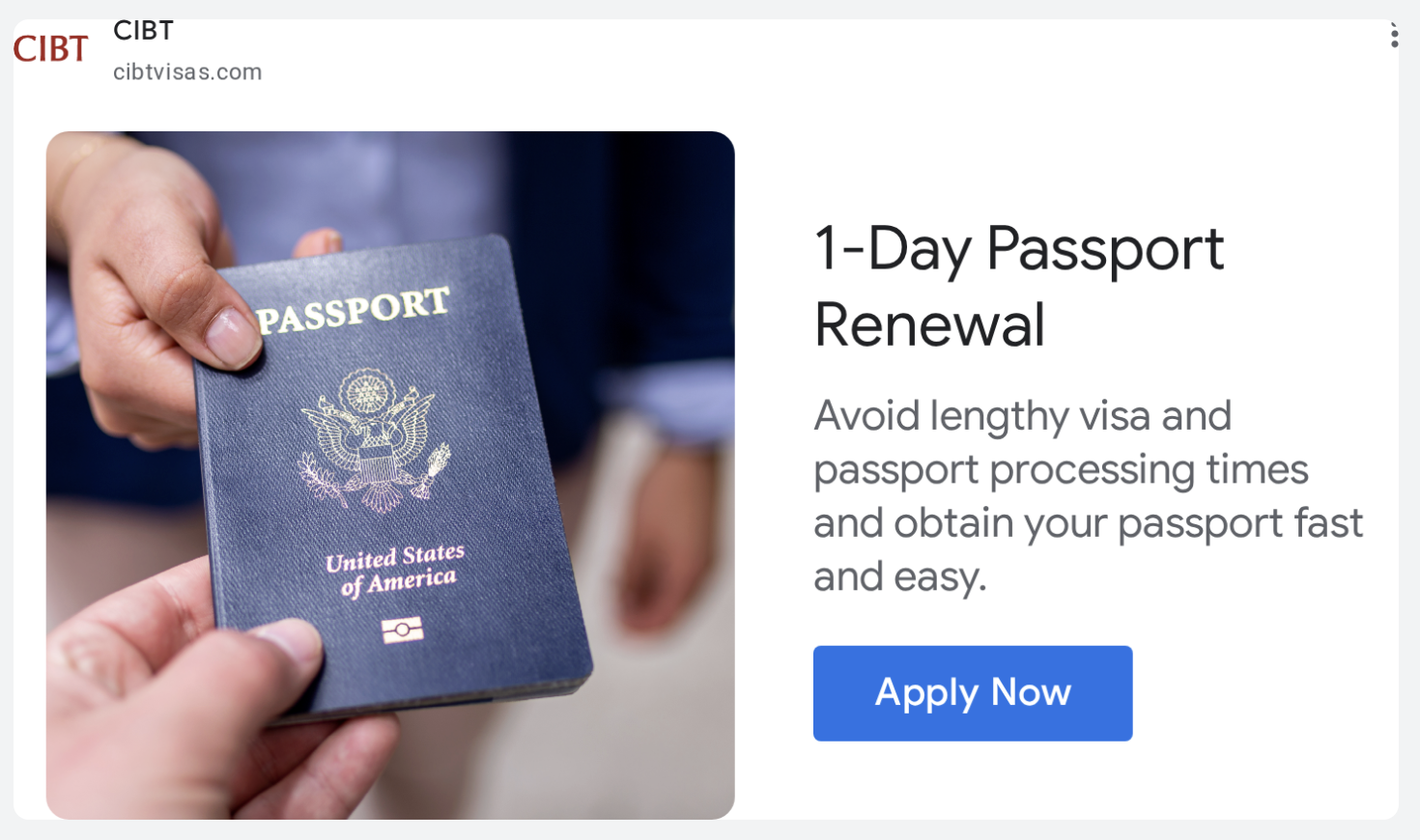
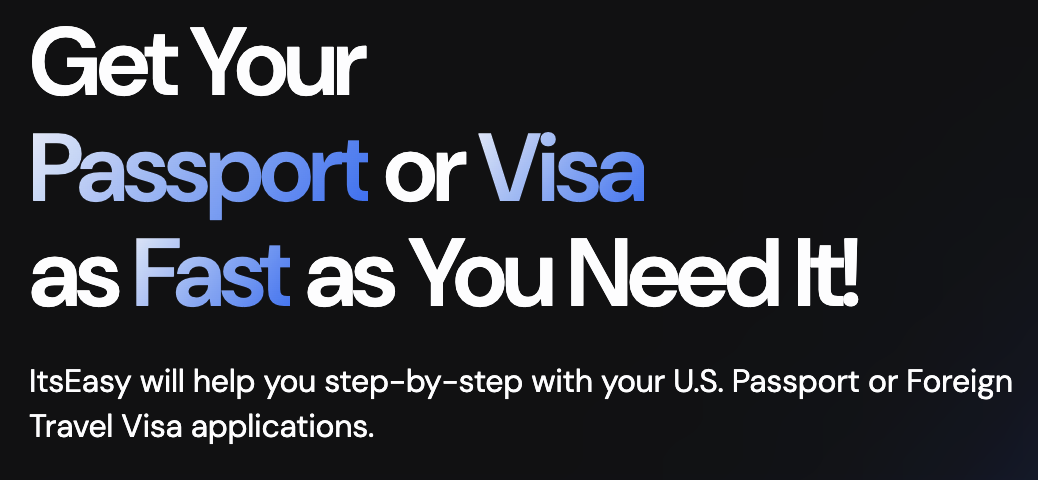
Second, a number of couriers refer to themselves as “expeditors” and claim they can get you a passport in days or even hours without adequately disclosing that they do not control the State Department’s processing time and that consumers must meet certain criteria to obtain expedited passport services. Examples include:
“Need a passport in a hurry? Expedited passport services in as little as 24 hours”“Same Day Service In as little as 24 hours from the time we receive your documents, you can have your expedited passport in hand. It’s quick and easy!”“Routine government processing takes 6-8 weeks. We get it done in days …”“1-Day Passport Renewal … Avoid lengthy visa and passport processing times and obtain your passport fast and easy.”“Get Your Passport or Visa as Fast as You Need It!”
1of5
Third, many passport couriers advertise prices that don’t account for mandatory government fees, shipping costs and other charges that are tacked on later in the checkout process.
CIBTvisas, for example, advertises $499 as the cost for obtaining a passport in “3-6 Days,” but then later tacks on a $190 “Government Agency Fee” and a $45 fee for “Passport Replacement Coverage,” among other previously undisclosed charges.
As a result of such deceptive pricing tactics, consumers have reported paying hundreds of dollars more than they expected.
Consumer harm
A multitude of consumers say they have had to delay or cancel travel plans, often resulting in losing significant sums of money in nonrefundable costs, when passport couriers failed to deliver on their “expedited” processing claims. One consumer said they missed a family wedding because the passport didn’t arrive in time, while another reported that their honeymoon was in doubt due to a courier holding their documents “hostage.”
1of8
These complaints, and many more like them, expose a fundamental failure of the courier program – rather than helping applicants obtain legitimate and reliable passport assistance, the program is causing considerable harm to consumers who are often pressed for time, unfamiliar with the passport agency system and particularly vulnerable to deceptive claims about the nature, speed and cost of courier services.
The State Department’s mixed messaging
The State Department’s website may also add to the confusion surrounding the services passport couriers can actually deliver.
On a webpage titled “Using a Passport Courier Company,” the agency warns that while couriers “can help you prepare your application,” they “won’t get your passport processed faster than you can on your own” by applying directly through the State Department. Yet the page, which contains the department’s list of registered couriers, refers to these companies as “passport expeditors” and appears under the heading “Get Your Passport Fast.”
In addition, the webpage states that:
Some companies may appear to be affiliated with the U.S. government because they use logos that look like official government seals. Check the list of courier companies to see if a company is registered with us.
This language may be misunderstood as indicating that couriers that are registered with the department – as opposed to those that are not – are affiliated with the government and are permitted to use official-looking government seals, neither of which is true.
Further, many registered couriers share common or similar names, but the department’s list of registered companies does not provide or link to their websites. This makes it difficult for consumers to determine whether a website they find through an independent search actually belongs to the registered company or to an unaffiliated copycat with a similar name. (In its comment, TINA.org is urging the department to hyperlink each courier’s name on the registry to its verified official website in order to close this gap and let consumers reliably confirm registration status, rather than guess based on a name alone.)
Misleading third-party partnerships
It’s not just the State Department that is lending credibility to passport couriers that mislead consumers about how fast they can get them a passport. Some companies also have the backing of several trusted national brands that consumers often turn to for travel and delivery services.
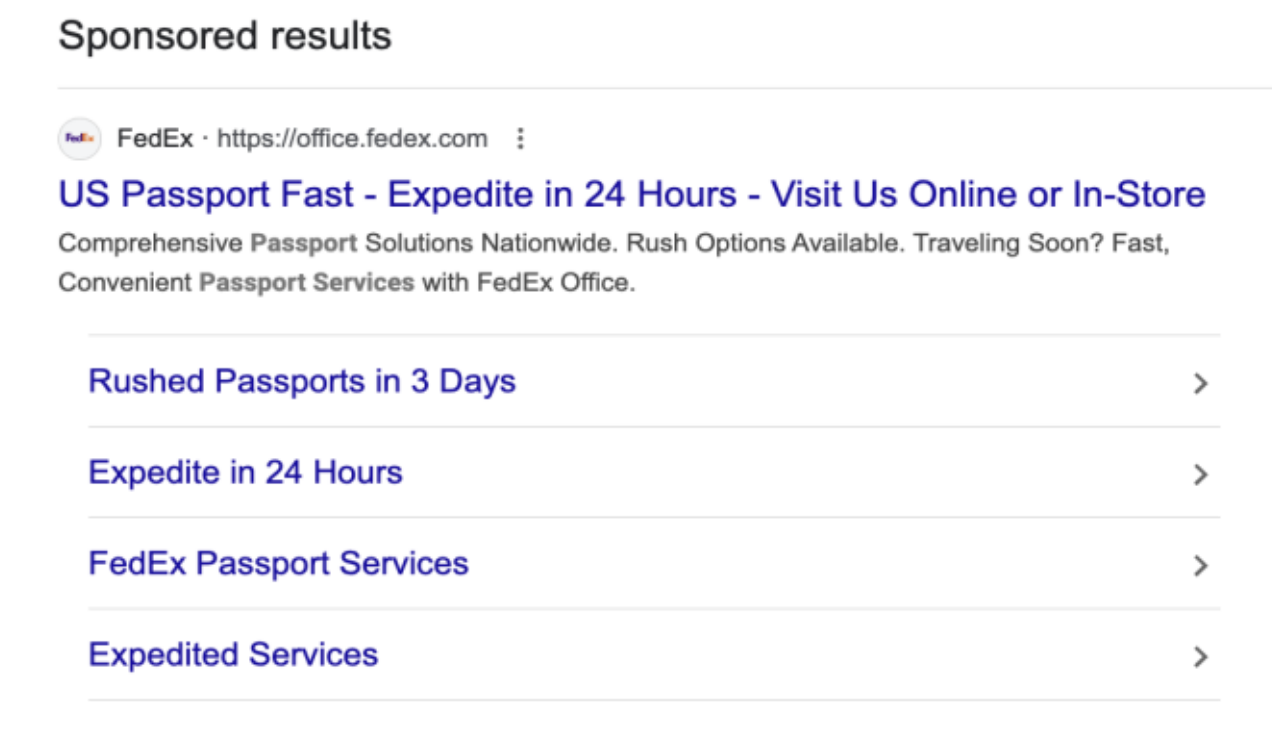
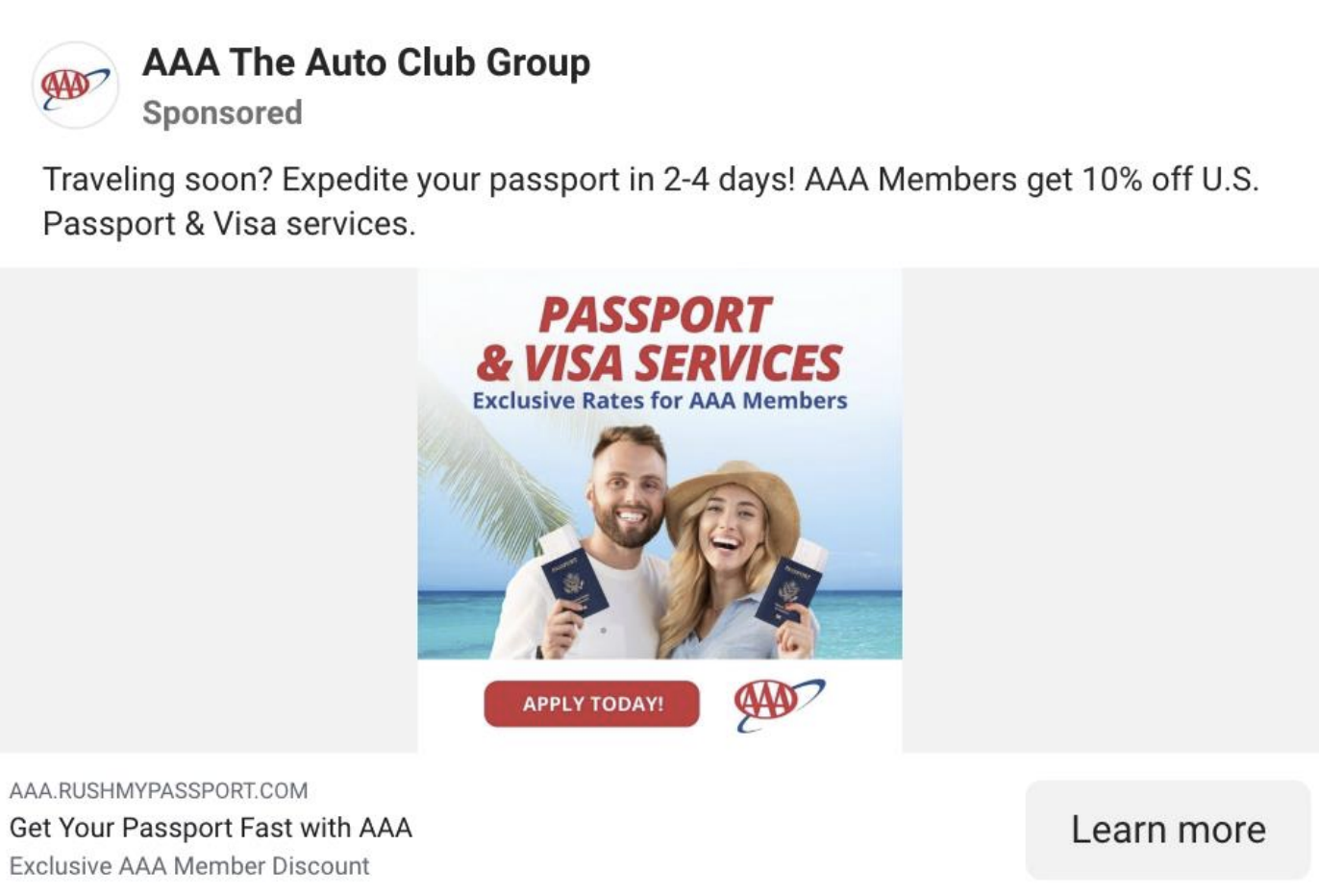
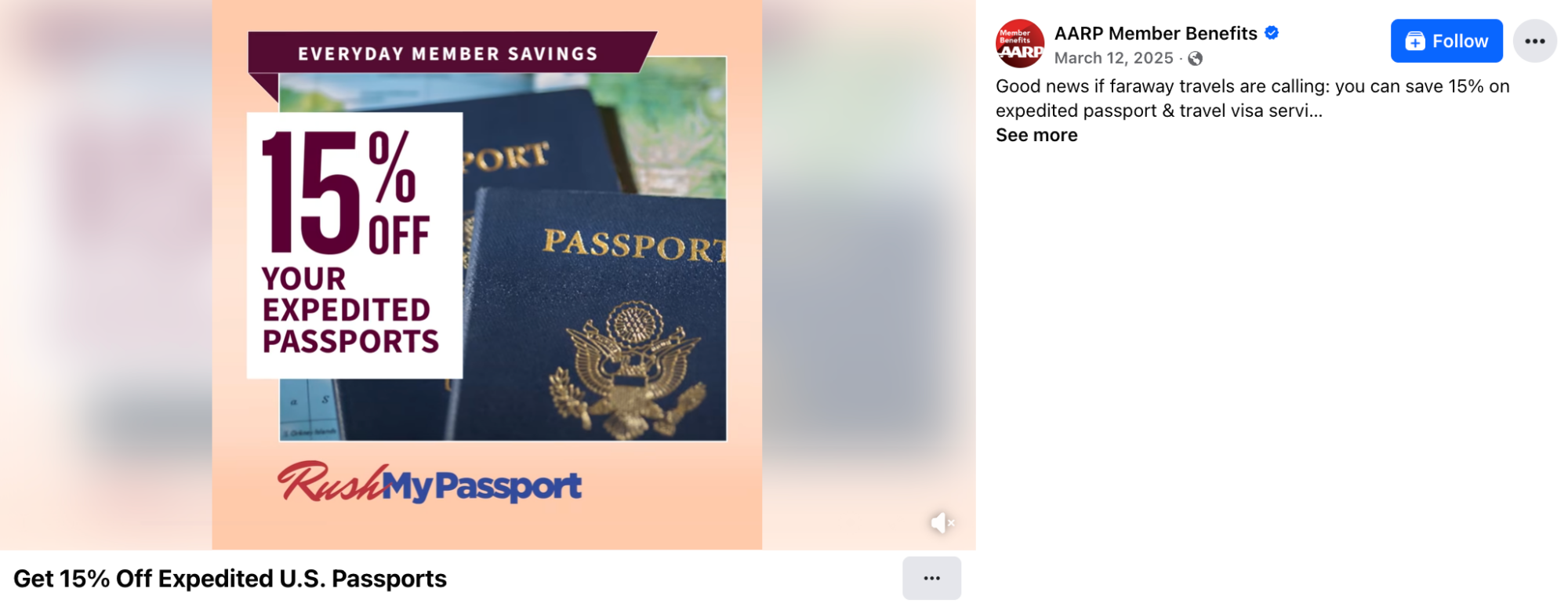
RushMyPassport, for example, has partnered with, among others, FedEx, AAA and AARP, each of which direct consumers to the courier’s services if they’re in need of an “expedited” passport, with FedEx claiming in a recent sponsored Google search result that they can get one in as little as 24 hours.
1of3
And, as the above marketing examples show, consumers may not even be aware that it’s RushMyPassport – and not FedEx, AAA or AARP – that is actually offering the advertised service since the courier’s name is buried in the ads or, in the case of the FedEx ad, not disclosed at all. As TINA.org wrote in its comment to the State Department:
These arrangements do more than extend the couriers’ advertising reach. By incorporating trusted names and logos into the offer, well-known brands obscure that the couriers are independent, for-profit intermediaries.
But even if the existence of a commercial partnership is known, that may not be a reason to stay away. On the contrary, many consumers report selecting couriers precisely because they trusted the referring brand.
In July 2025, TINA.org heard directly from one such consumer who hired RushMyPassport’s services through FedEx, which the consumer said promoted the courier as “a trusted passport expediting service,” adding:
This branding implies speed, legitimacy, and accountability – none of which reflect my experience or that of hundreds of other customers. I paid RushMyPassport hundreds of dollars for expedited passport services, including an additional FedEx fee for shipping, based on promises of rapid processing. Not only did the passport never arrive, but I missed my international trip and lost thousands of dollars in non-refundable costs.
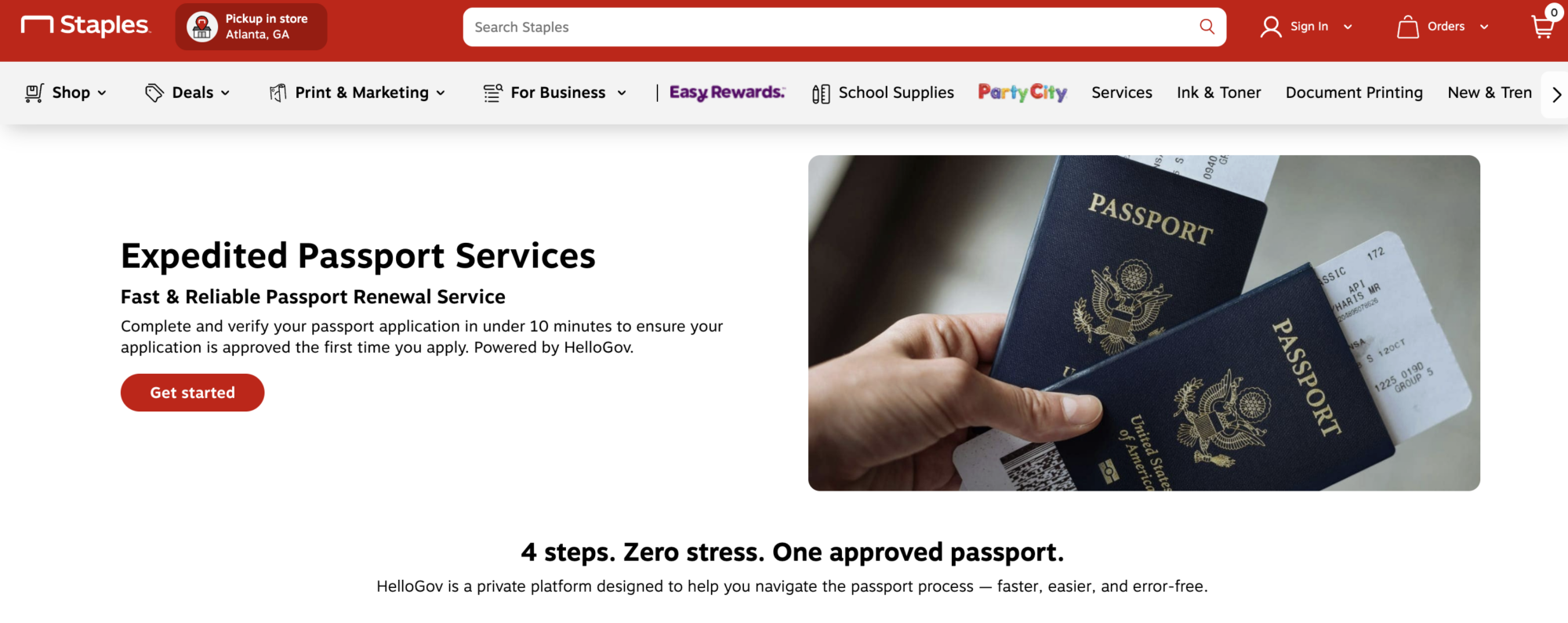
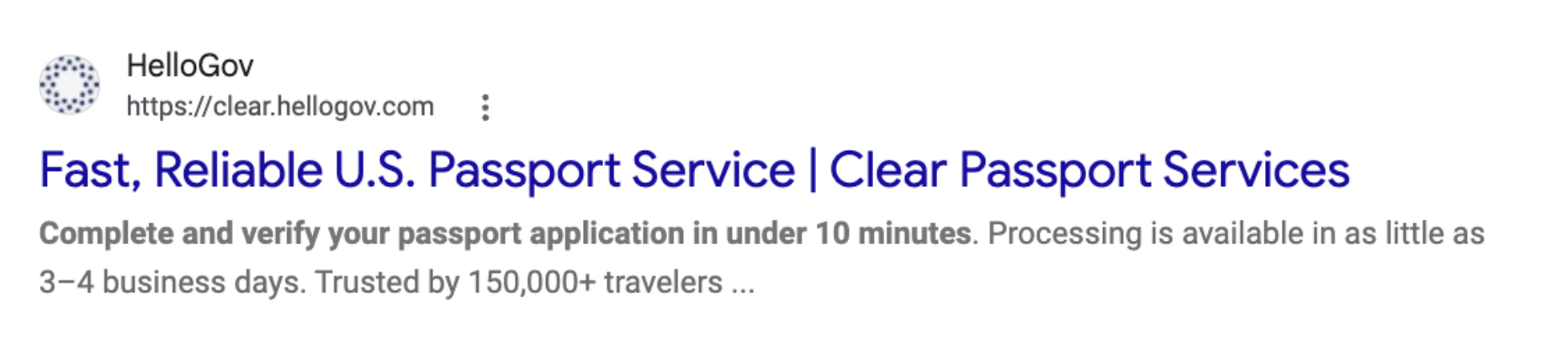
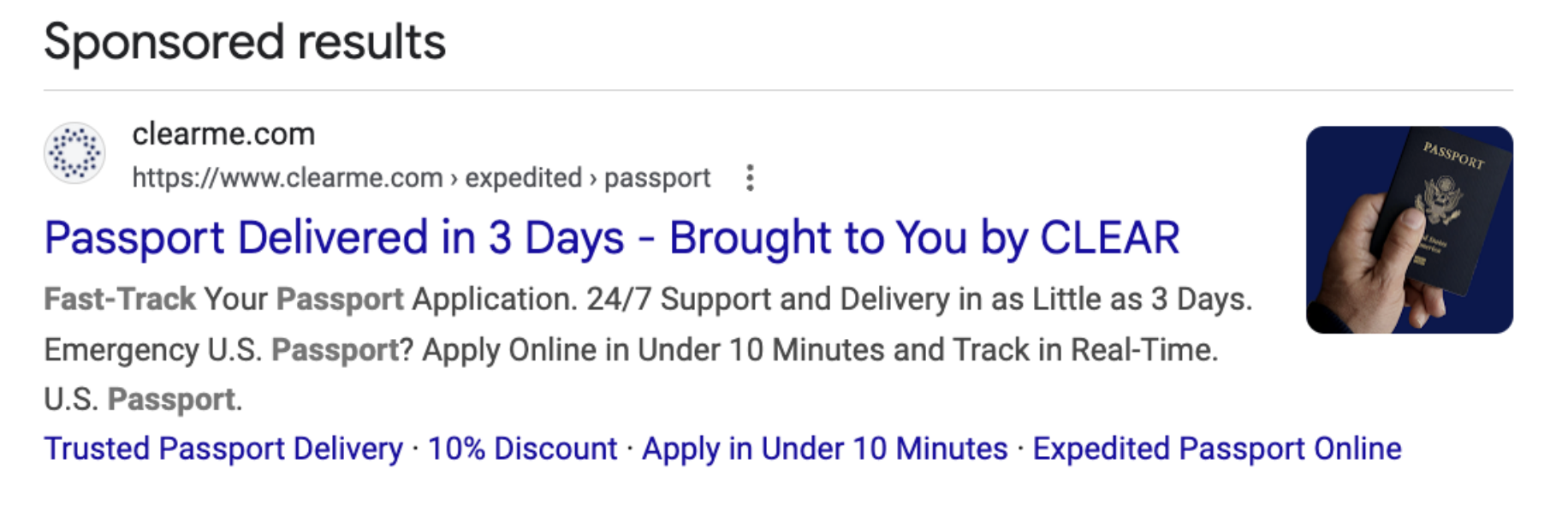
Staples and CLEAR, the private, for-profit airport security company, similarly direct consumers in search of expedited passport services to HelloGov.
1of3
CLEAR’s role as a third-party partner raises additional concerns as its own relationship to the government is often misunderstood by the public, compounding consumer confusion.
As part of our passport courier industry action, TINA.org has also sent letters to these and other third-party partners notifying them of deceptive marketing tactics prevalent in the industry and urging them to review their marketing to ensure compliance with the law.
Couriers respond
To date, TINA.org has received more than a dozen responses from couriers who received notification letters, many of which adamantly denied any wrongdoing.
In response to a request for comment, HelloGov said it doesn’t claim to be affiliated with or endorsed by the federal government or that it claims it can cause the State Department to process a passport faster than someone who is able to obtain an urgent appointment and apply directly at a passport agency. The company also said it prominently discloses “all relevant pricing information.”
In its response to a TINA.org request for comment, Fast Passport Center said that it makes the alternatives to its passport services “clear” but that it would review its website and “further clarify” its disclosures. And ItsEasy.com said that it is an honest company that has been in business for 50-plus years and pointed to its A+ BBB rating.
What’s next
The State Department has an opportunity to address these issues within its passport courier program. A proposed rule by the department would establish, for the first time, formal enforceable standards for registered couriers.
Under the proposed rule, couriers registered with the State Department would be prohibited from misleading consumers about their relationship with the agency, including by stating that they are “authorized” or “approved by” the department or by using the agency’s official seal in marketing materials. The proposed rule would also prohibit registered couriers from deceiving consumers about their ability to expedite applications, such as by falsely claiming that they can process passports faster than the government.
TINA.org’s comment expresses support for these marketing-related requirements while also urging the State Department to go further. The comment calls on the department to adopt a rule that also requires that registered couriers:
Refrain from referring to themselves as “expeditors” or using similar titles to describe their services.
Clearly and conspicuously disclose all mandatory government and business fees in advertised prices.
Furthermore, TINA.org argues any company found in violation of the proposed rule should be automatically removed from the registered couriers list on the State Department website and that the proposed rule should hold registered couriers and their third-party partners jointly responsible for all marketing claims reasonably associated with their partnership.
TINA.org’s findings and the thousands of complaints lodged by consumers regarding passport couriers make clear that regulators need to step in, both by moving forward with the proposed rule’s marketing requirements and by holding passport couriers accountable for their conduct.
Passport Couriers Engaging in Widespread Deception, According to TINA.org
MADISON, CONN. Sept. 14, 2026 – Need a passport? Be wary of paying a passport courier for help, according to consumer advocacy group truthinadvertising.org (TINA.org). After a lengthy investigation, the…