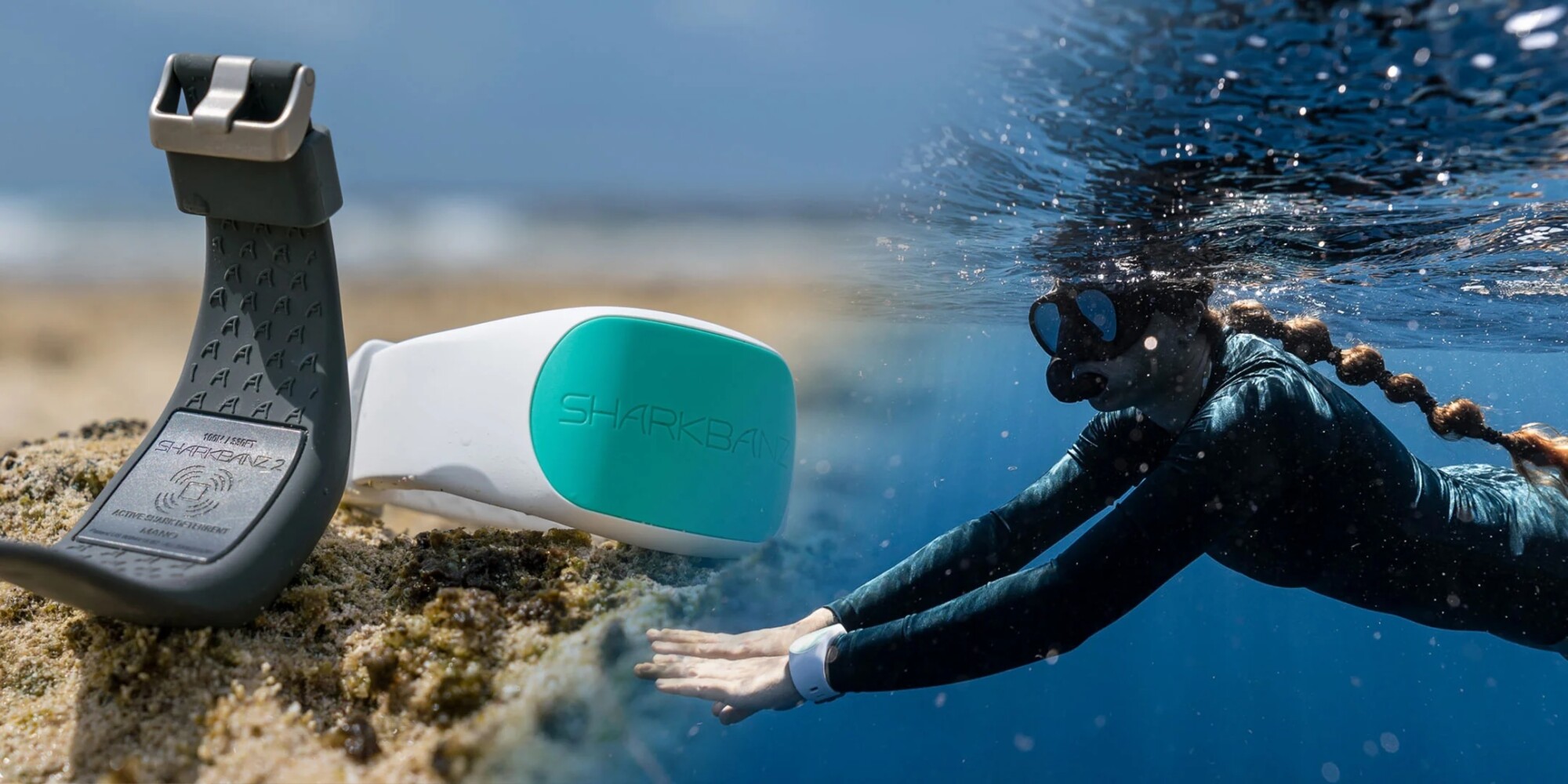
Sharkbanz
TINA.org takes a bite out of company’s research.

Consumer tips are the lifeblood of TINA.org. When you report an ad, you aren’t screaming into the void. The information you provide sparks many of our investigations. Simply put, we would not be able to fulfill our mission of exposing deceptive marketing without the tips we have received over the years from readers like you.
With that in mind, here were some of the best reader tips of 2025.
Prompted by several consumer complaints, we looked into this courier service’s claims to expedite passports in as little as 24 hours. Consumers reported spending hundreds of dollars for the company’s services, only to have their passport delayed or not delivered at all. “Not only did the passport never arrive, but I missed my international trip and lost thousands of dollars in non-refundable costs,” one consumer told us. Our investigation found a number of limitations with RushMyPassport’s services, including that if you’re applying for a new passport, you still must appear in person at an acceptance facility (despite the company’s claim that it will “save you time and a trip to the passport office”). Meanwhile, as we noted in our ad alert, both the State Department and FTC say using a courier service won’t actually get you a passport any faster than going through the typical government channels. Following our inquiry, RushMyPassport now claims on its website that it expedites passports “in as little as 3 business days” instead of “in as little as 24 hours.”
AI continued to dominate the headlines this year. But consumers need to be wary of not just the dangers of artificial intelligence but also old deceptive tactics used to market AI products. Case in point: In May, we got a tip from a reader about MaxAI, a web browser extension that claims to harness the powers of an array of AI models allowing users to “[s]ummarize, search, explain, analyze, translate, write, and more.” The consumer took issue with the “misleading subscription” tied to the product, reporting that he was charged “unauthorized subscription fees.” Our investigation revealed how this could have happened. We found that while MaxAI offers a free version of its product, that version only includes “basic AI features.” If you want “more accurate answers” and “higher-quality results,” you need to sign up for a paid subscription, the full terms of which are not adequately disclosed to consumers during the checkout process.
In September, we received a tip from a consumer about Mario Badescu’s rosewater facial spray. As the reader correctly pointed out, despite being marketed as containing rosewater, the spray is actually made with “rosa canina extract.” We did some digging and found some notable differences between the two ingredients. This included that while rosewater is made by distilling petals in water to bring out “the essence of the roses,” as Mario Badescu itself explains in a post on its site, rosa canina extract comes from the fruit or seed of the rose. When we brought our findings to the company, it offered a less-than-inspiring response. Mario Badescu told us that the product is marketed to contain rosewater “to indicate the presence of a rose-derived component,” while acknowledging that the “rosewater” facial spray doesn’t contain any actual rosewater.
Concerned about your child’s growth? NuBest claimed in a Facebook post in March that its supplements are “clinically proven to help kids grow tall.” But after receiving a tip from a consumer, we found that the company’s touted clinical study didn’t support its “clinically proven” claims – to say the least. The study reported “inconclusive” results concerning improvements in height (among other parameters), adding, “Overall, the results of this study indicate that the efficacy of the test product and the placebo product were similar.” In other words, there weren’t any significant differences in results between kids who took NuBest and kids who didn’t take the supplement. After we alerted the company to our findings, NuBest took down the Facebook post and removed a “clinically proven” claim from its homepage, marketing corrections that wouldn’t have happened if we didn’t receive the consumer tip that initiated our inquiry.
Another TINA.org success story that started with a consumer tip involves Happy Howl and the dog food company’s claims that it only makes “100% human-grade dog food” with “100% human-grade ingredients.” As our ad alert pointed out, “human-grade” only means that the food is safe for humans to eat, not that the food provides any nutritional benefit. After we reached out to the company for comment, it removed claims on its website that its dog food helps with health conditions like allergies, inflammation, arthritis, tumors and cancer. It may be a dog-eat-dog world but it’s made better by the tips we get every day from consumers.
Click here to report an ad.
TINA.org takes a bite out of company’s research.

A closer look at what we’ll be monitoring in the new year.

Here were some of the worst ads TINA.org investigated this year.