
When TINA.org Investigations Collide
These brand collabs are far from fab.
Why agency independence is in the best interests of consumers.
| Laura Smith
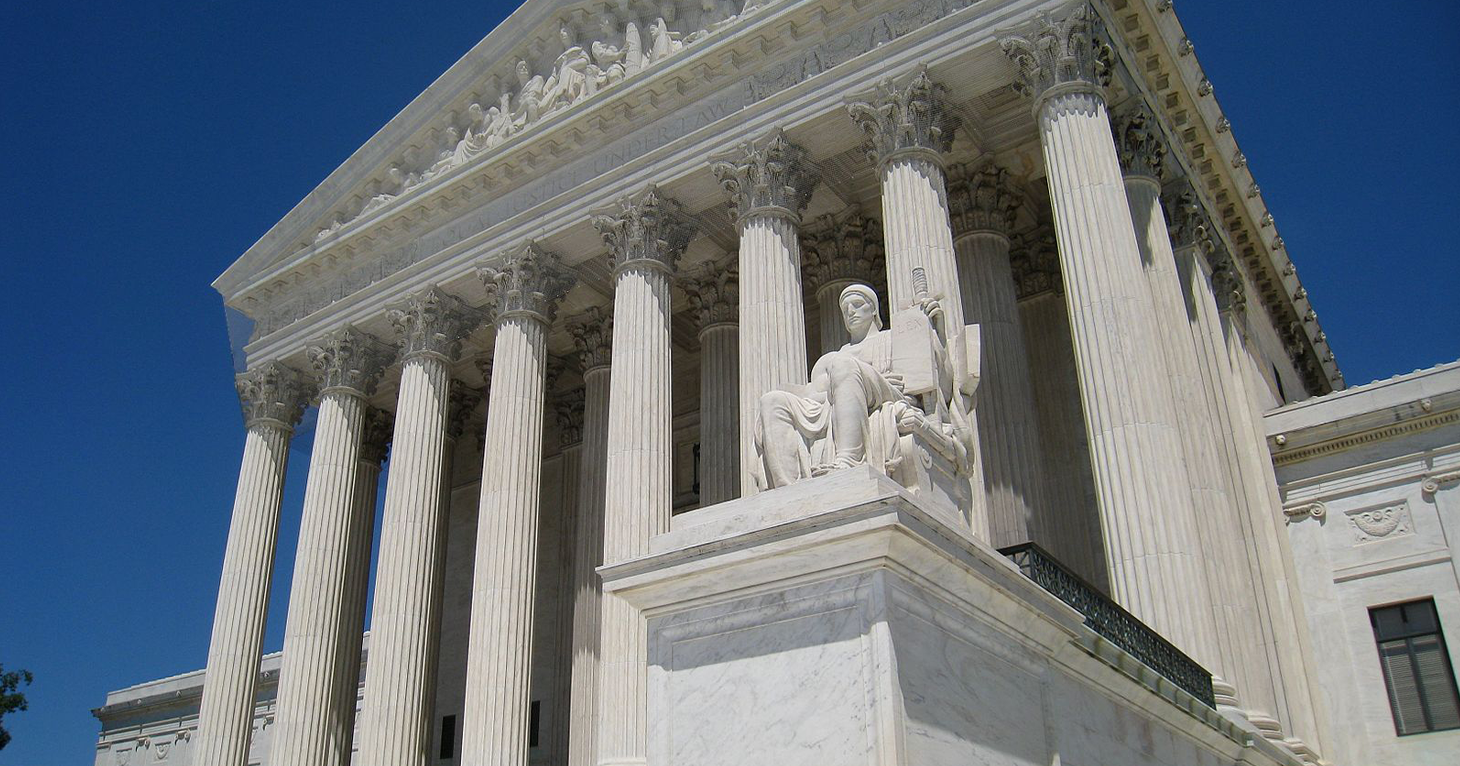
On Thursday, TINA.org joined dozens of consumer interest groups – including the UC Berkeley Center for Consumer Law and Economic Justice and Consumer Federation of America – in filing an amici curiae brief in a significant Supreme Court case that has long-lasting implications for the independence of federal agencies like the FTC. The brief, which TINA.org joined for a number of important – and nonpartisan – reasons, raises several key points.
But first a little background on the lawsuit.
In March, President Trump removed two democratic FTC commissioners, Rebecca Kelly Slaughter and Alvaro Bedoya, leaving just two FTC commissioners at the helm – Chairman Andrew Ferguson and Melissa Holyoak, both republicans.
Slaughter and Bedoya responded to their firings by suing President Trump in the U.S. District for the District of Columbia arguing the removals were unlawfully executed in violation of both the statute establishing the FTC’s protections and prior Supreme Court precedent set by a 1935 case called Humphrey’s Executor v. United States. That case held that presidents can only remove FTC commissioners with “cause,” such as inefficiency, neglect of duty or malfeasance. (Bedoya later accepted another job and therefore lost his standing in the case.)
President Trump’s position is that the statutory “for-cause” removal protections for FTC commissioners are unconstitutional.
In July, the district court ruled that Slaughter’s removal was unlawful, and ordered her reinstatement. The case, Trump v. Slaughter, is now before the U.S. Supreme Court, which must decide whether the president has the authority to fire FTC commissioners without cause.
TINA.org joined a coalition of 40 consumer protection advocates who share an interest in preserving the constitutionality of for-cause removal protections among independent commissions like the FTC in order to urge the Supreme Court to reaffirm its conclusion in Humphrey’s Executor.
As the brief explains, removal protections insulate commissioners from political or public coercion and allow for stronger consumer protection. The brief states:
Bipartisan appointments with for-cause removal protections not only improve decision quality by forcing agency leaders to contend with competing views and well-reasoned criticisms; they also enhance transparency and accountability.
It goes on:
[I]ndependent commissions promote varied viewpoints and deliberative moderation that agency leaders would otherwise silence to avoid retaliatory removals by the president. Because of staggered terms and removal protections, commissioners are typically drawn from both major political parties, ensuring representation from divergent backgrounds and multiple administrations.
To further highlight that this is not, or should not be, a partisan issue, the brief includes a statement by current FTC Chair Andrew Ferguson, who – one day before Commissioner Slaughter’s firing – warned of politicization risks rendering FTC guidance “basically meaningless if they just are like one-party statement of its view … Courts won’t follow them any more if they think that they’re just openly partisan, regulated entities won’t rely on them to plan.”
To this end, the brief also includes a statement by then-Judge, now-Justice Brett Kavanaugh, who previously observed that the multimember structure of independent commissions “reduces the risk of arbitrary decision-making and abuse of power, and thereby helps protect individual liberty.”
We could not agree more.
The happenings at the FTC are of particular interest to TINA.org. Over the years, our organization has sent more than 45 complaints to the agency tasked with protecting consumers from deceptive practices, and has provided the commission with evidence on a number of other deceptive marketing investigations, collectively leading to numerous successes. In fact, since 2015, the FTC has obtained monetary judgments totaling more than $370 million against wrongdoers based on TINA.org’s investigative complaints and evidence, and returned millions in ill-gotten gains to consumers.
TINA.org has also filed more than a dozen comments with the FTC regarding agency rules, guidance, settlements and other marketing issues; filed a petition for rulemaking (which led to the FTC enacting a new labeling rule); testified in lawsuits filed by the commission; participated in informal hearings regarding proposed agency rules; presented on commission panels; and filed amicus briefs in support of the FTC in numerous pending federal court cases, among other things.
TINA.org’s multifaceted advocacy work with the FTC has spanned the tenures of six different FTC chairs and acting chairs and three different presidents from both major political parties. No doubt, the commission’s decisions to act on a number of TINA.org investigations – under several different leaderships – has helped us in achieving our mission: to combat false and deceptive advertising.
Another factor that has helped us in achieving our mission is one of TINA.org’s guiding principles: that varied viewpoints provide a stronger, more reliable foundation for understanding and decision-making.
This principle is precisely why, before publishing information on our website about a particular ad or marketing campaign, we communicate our concerns and findings to the business itself, both in an effort to effect change but also so that we have considered its position and to ensure fairness in our reporting. Similarly, with respect to our advocacy work, TINA.org oftentimes sends warning letters to companies before contacting government regulators. Again, we do this not only in an effort to prompt change, but also to help ensure we have weighed disparate views.
This principle is also part of what prompted TINA.org to join the amici curiae brief filed in the Trump v. Slaughter case last week.
Oral argument in the case is scheduled for Monday, Dec. 8. Stay tuned for updates.

These brand collabs are far from fab.

TINA.org submits a comment to the FTC urging it to update its .com Disclosures guidance to help rein in deceptive marketing.

MLM making deceptive claims after several warnings.