TINA.org Joins Consumer Advocates to Keep FTC Bipartisan
Why agency independence is in the best interests of consumers.
Why TINA.org wants the Supreme Court to address proof of harm in Lanham Act cases.
| Laura Smith
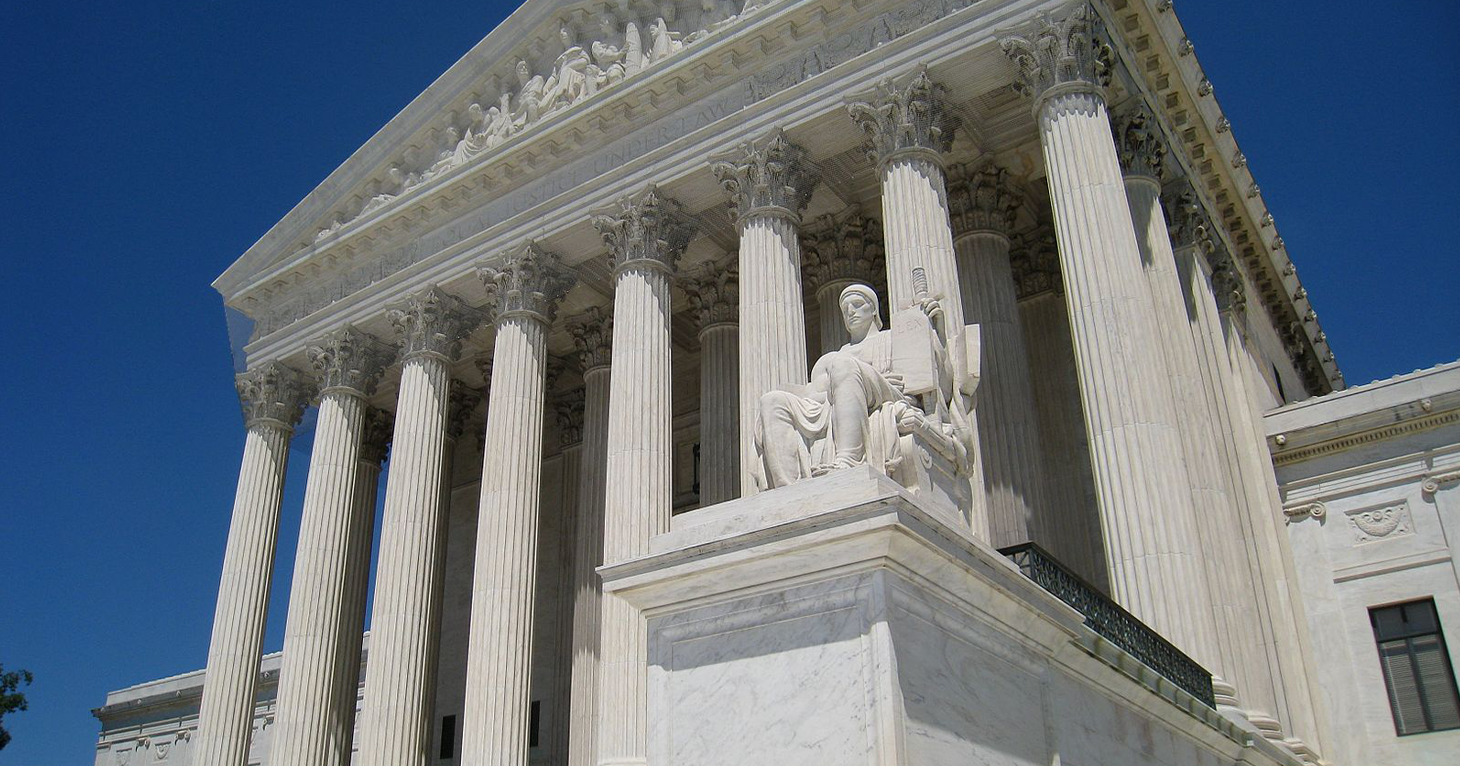
The U.S. Supreme Court has been asked to weigh in on a simple yet critical question: When a company knowingly engages in false advertising, can the company’s intent itself support an inference that consumers were harmed?
A recent amici curiae brief filed by leading Lanham Act scholars as well as TINA.org in CareDx v. Natera argues that the answer should be yes – and that some courts have lost sight of how the Lanham Act (the federal statute allowing businesses to sue competitors over false advertising and trademark infringement) was designed to function. The case presents a divide among federal courts over what plaintiffs must prove to recover damages for false advertising.
Below is an overview of the dispute, the arguments by amici, and why the case could impact Lanham Act litigation.
CareDx, Inc., a transplant diagnostics company, markets a kidney transplant rejection detection test called AlluSure. One of its competitors, Natera, Inc., sells a similar test known as Prospera. In 2019, CareDx sued Natera under the Lanham Act and Delaware state laws, alleging that Natera falsely marketed Prospera as superior without adequate supporting data.
At the end of a 2022 trial, the jury found that Natera had engaged in false advertising and had done so intentionally and willfully. The jury awarded $21.2 million in actual damages and $23.7 million in punitive damages.
The district court, however, granted Natera’s post-trial motion as to damages, setting aside the nearly $45 million award. The court concluded that – even though Natera may have intentionally made false statements – CareDx had not shown that consumers were actually deceived. In effect, the court decided that Natera should not pay a dime despite the jury finding that it intentionally lied about its product.
On appeal, the Third Circuit affirmed, acknowledging evidence of literal falsity and willful conduct but holding that the record lacked proof of “actual deception”:
The District Court correctly concluded that there is sufficient evidence for a reasonable juror to find the challenged claims were literally false. … [E]vidence demonstrates Natera’s willful conduct, but it does not show any consumers were deceived by it. … In sum, even viewing the evidence in CareDx’s favor, there was insufficient evidence for a reasonable juror to find actual deception.
This approach places the Third Circuit at odds with other federal courts of appeals, which generally allow juries to infer consumer deception from intentional false advertising.
CareDx has now asked the Supreme Court to resolve this circuit split through a petition for certiorari.
The amici brief contends that the Third Circuit’s reasoning misunderstands both advertising reality and Lanham Act doctrine. At the brief’s core is a common-sense premise: Advertisers don’t spend money on claims they believe are ineffective. If a company knowingly promotes a false claim, it is reasonable to infer that the claim influenced consumers.
Put differently, if an advertiser thinks the lie will work, a jury should be allowed to think so too.
The brief also challenges the notion that plaintiffs must rely primarily on consumer surveys or individual testimony to prove harm. As the brief explains, neither form of evidence is perfect:
Individual consumer testimony may be unavailable or unreliable for various reasons. The liability standard is likely deception among a substantial number of reasonable consumers—and therefore, while courts often accept individual accounts as probative, they also often say that anecdotes are insufficient to prove liability, given their lack of representativeness. … Surveys, which can substitute for direct consumer testimony, offer additional problems, as this Court has noted in recent cases. … Surveys are expensive, putting them out of the reach of smaller businesses. And even when they are present, courts often characterize them as imperfect and biased.
The point is not that surveys or testimony are irrelevant – they can be very useful in many cases – but that all harm-related evidence requires inference:
None of this is to say that survey or consumer testimony evidence of impact on consumers—the mechanism by which harm to plaintiffs occurs in trademark infringement and false advertising—is inadmissible. Rather, it is to highlight that all harm evidence can be imperfect and requires inference. As such, it does not make sense to reject reliance on other forms of evidence of harm, including reasonable inferences made from knowledge of falsity and the centrality of a claim to an ad campaign.
In other words, if courts accept inference from surveys or anecdotes, they should not exclude reasonable circumstantial evidence such as intentional deception when assessing harm. Ignoring a bad actor’s intent to lie, the brief warns, risks insulating deliberate falsehoods from meaningful remedies.
CareDx filed a cert petition on Feb. 9. Two weeks later, the Supreme Court requested a response from Natera, signaling that the justices are at least considering the case.
In the coming months, the justices will decide whether to take up the case – and potentially clarify how a marketer’s intent factors into proving harm under the Lanham Act. If the court grants review, the decision could significantly impact the evidentiary standards governing false advertising claims.
Stay tuned for updates.

Why agency independence is in the best interests of consumers.
TINA.org continues to support FTC, New York in federal court.

Cautionary stories like Belle Gibson’s are not unique.