Bytech America’s Made in USA Claims
Marketing and reality are not in sync.
TINA.org sheds light on confusing and misleading brightness claims.
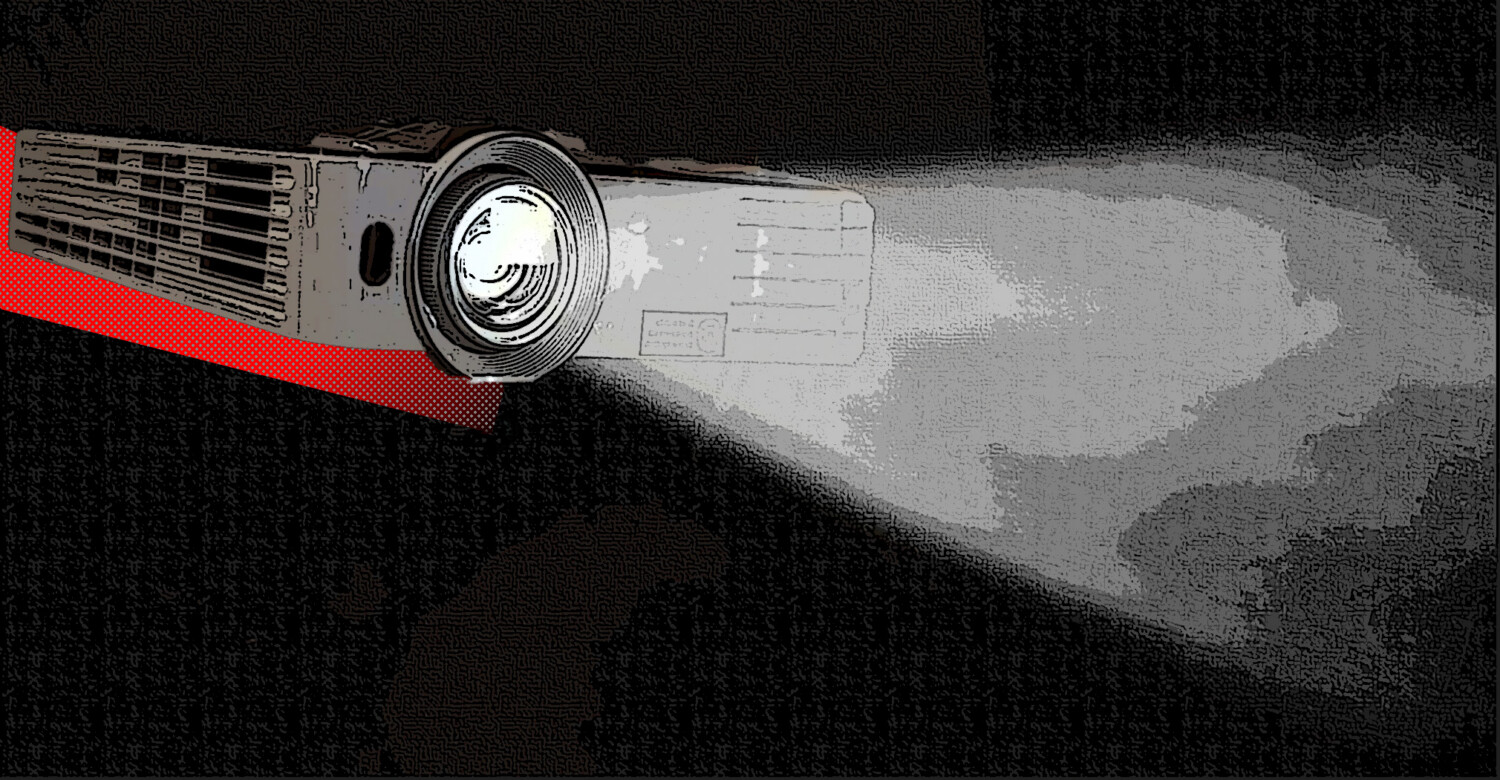
If you’ve ever seen those cozy backyard movie night videos on TikTok, you may be tempted to buy your own home projector to recreate the experience. But once you start shopping, things can get confusing – especially when it comes to brightness.
Here are some things that you should know in order to avoid getting misled.
A projector’s brightness is a key feature that helps determine how clear the projected image will look on the screen. How much brightness you need depends on the environment. Outdoor spaces (including at night) require higher brightness levels than low ambient light environments indoors. Generally, the higher the brightness, the more expensive the projector.
Brightness is measured in lumens. ANSI (American National Standards Institute) lumens and ISO (International Organization for Standardization) lumens are both recognized as the most reliable, standardized and accepted methods for measuring uniform brightness across the entire screen. Both are calculated by averaging the brightness measured at nine different points on the screen.
Generally, a few hundred lumens are enough for a small, dark room, while a few thousand lumens are needed for outdoor or large spaces. If you wanted to operate a drive-in movie theater, you would need at least 15,000 lumens.
Things get murky when projector brands play fast and loose with their calculations by using lumen measurements that are not industry standard. Rather than use ANSI or ISO lumens, some brands use non-standardized lumen measurements, like LED, lux, peak or light source lumens, which can dramatically overstate brightness.
LED quantifies the brightness sensed by the human eye and is subjective; lux values vary depending on the distance from the light source; peak lumens measure the brightest point at the center of the screen instead of the entire picture; and light source lumens measure the brightness of the bulb rather than that of the image projected on the screen.
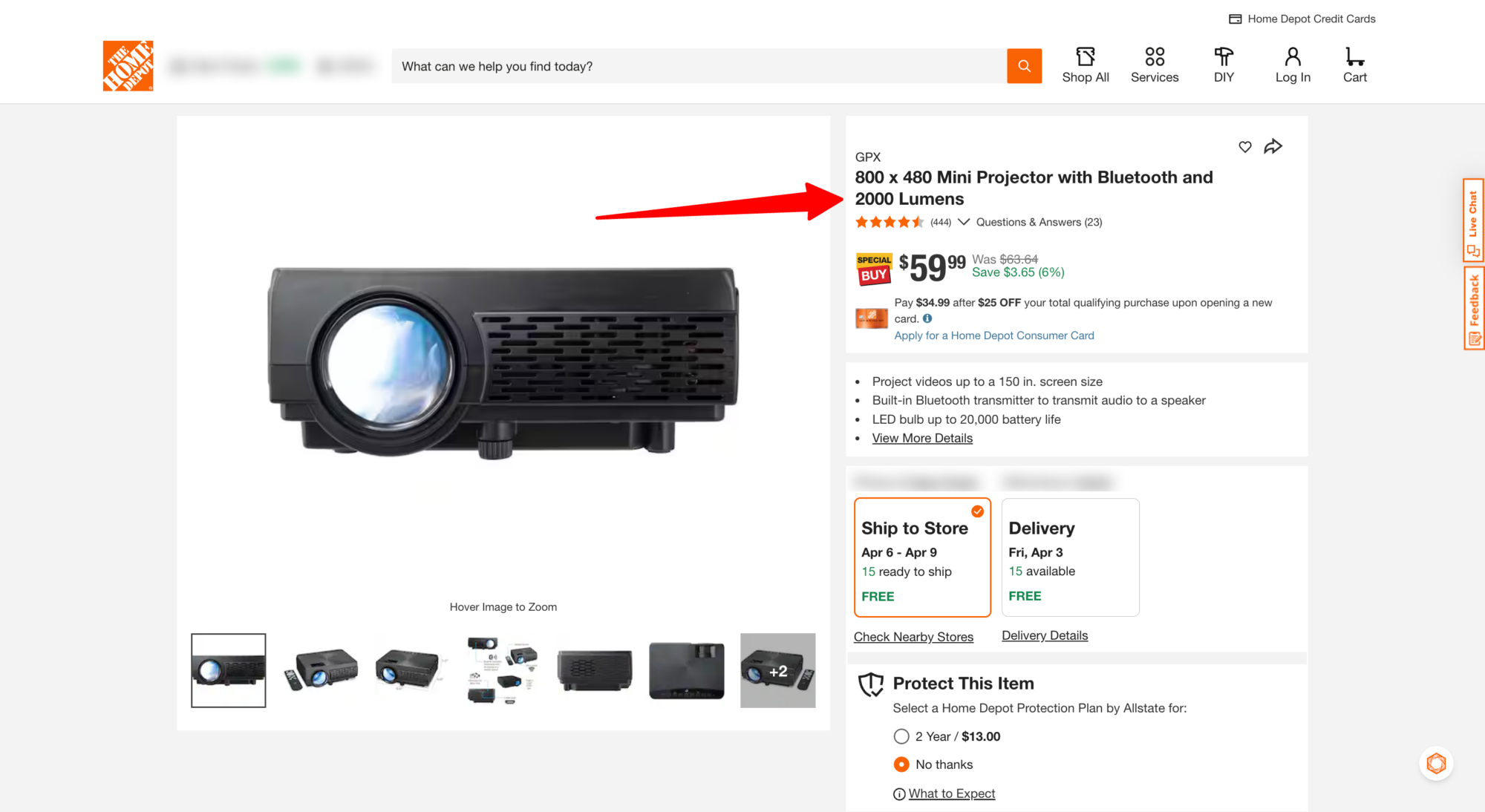
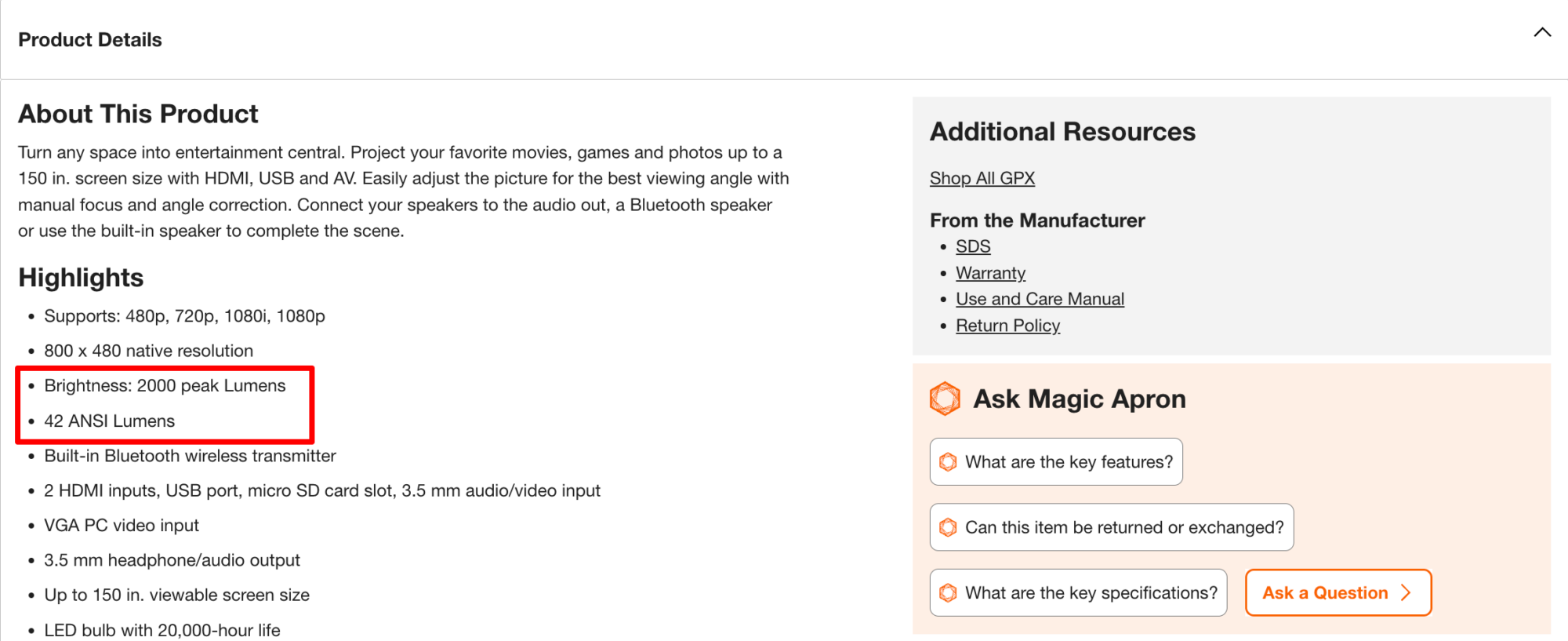
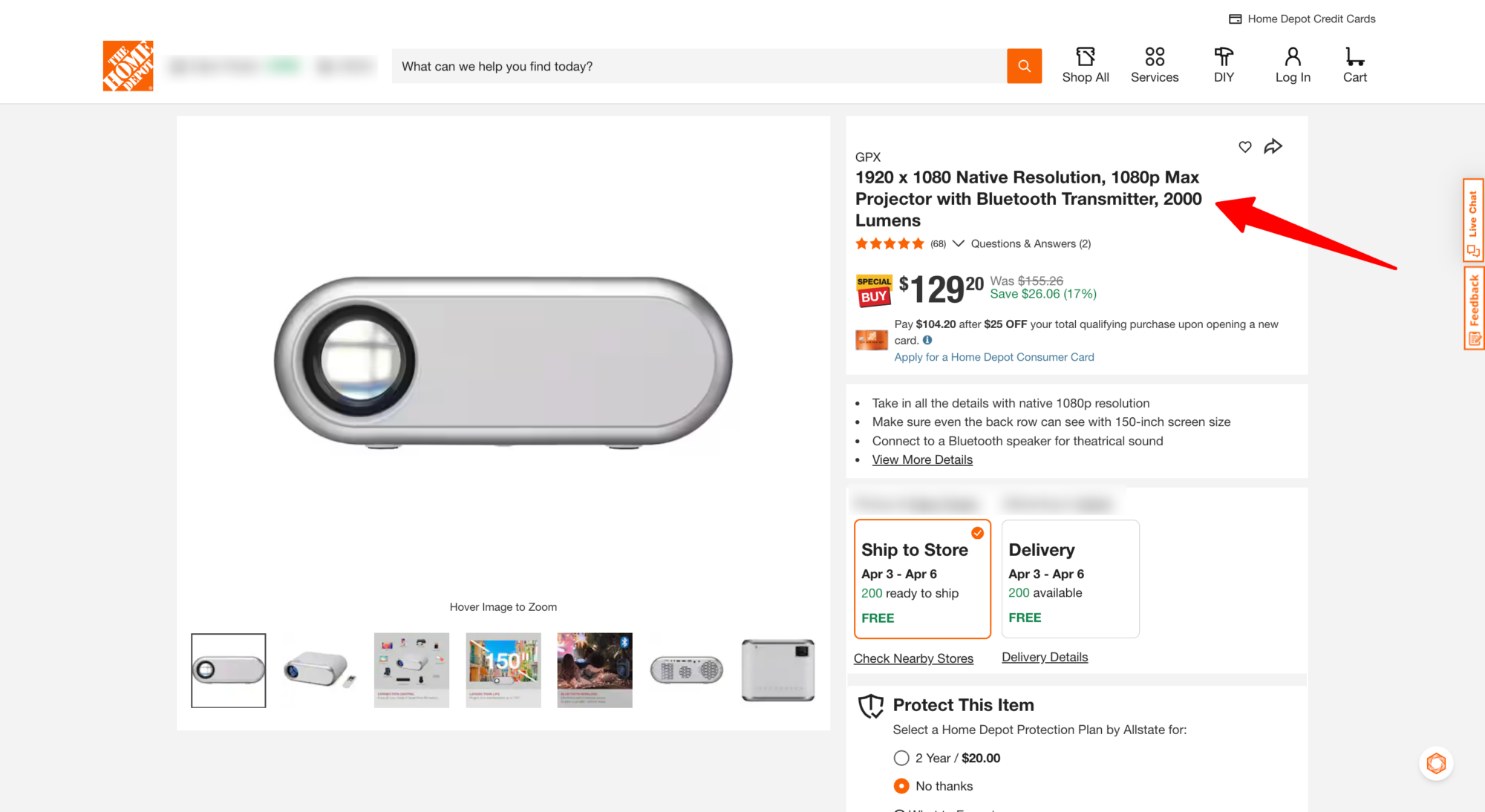
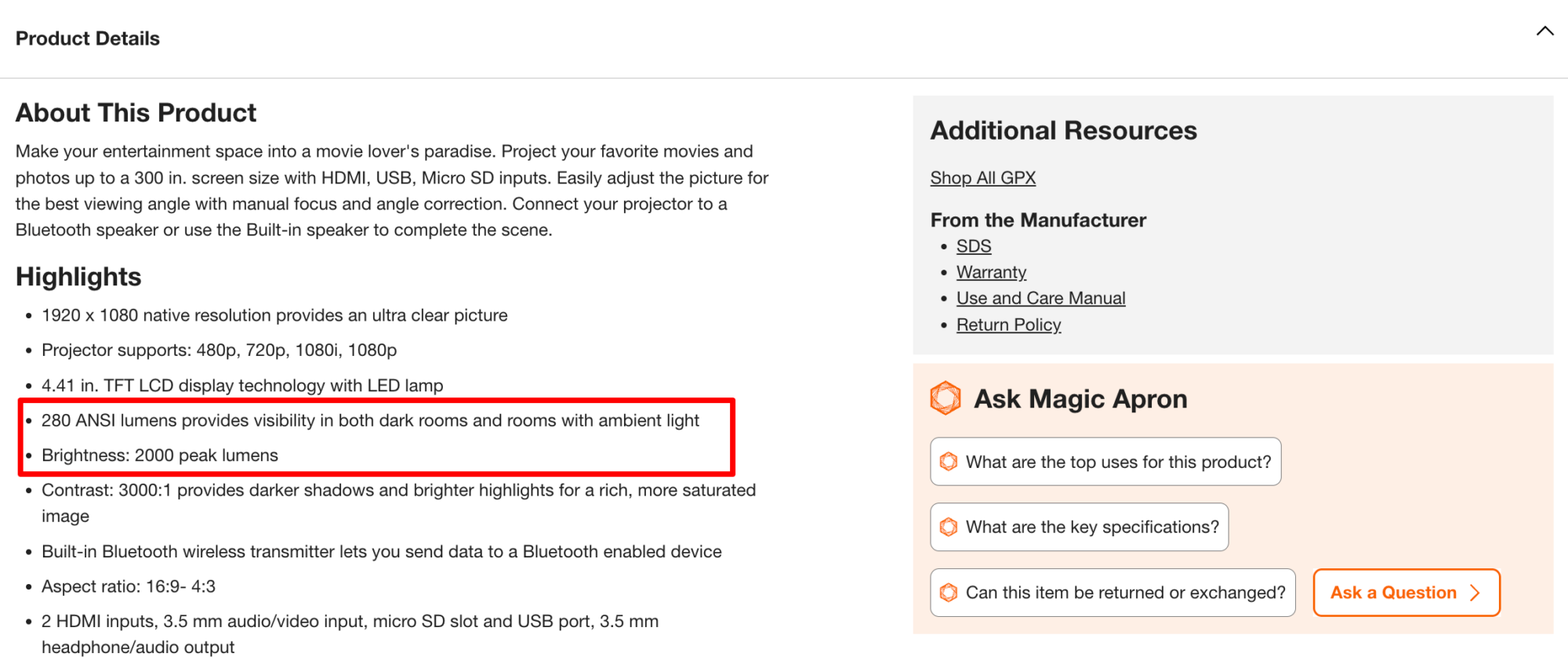
To put this in context, let’s take a look at Home Depot’s website, which sells GPX projectors that are marketed as having 2,000 lumens. But hidden in the product details behind closed tabs the listing discloses that this number represents the “peak lumens” and that the actual amount of ANSI lumens are a fraction of what’s advertised.
It’s a similar story on Walmart’s website, which advertises a CocoBear projector with “4000 Lumens LED,” but discloses in an image (buried in the listing’s image gallery) that the actual amount of ANSI lumens is only 200.
Other projector listings on Walmart’s site claim to have thousands of lumens, but are actually measuring brightness in lux or light source lumens and don’t disclose the amount of ANSI lumens at all.
Of note, projectors with 400-600 ANSI lumens typically cost $300-$350. So if you see a projector claiming high ANSI lumens for less than $300, that should raise some red flags.
None of the projector brands or online marketplaces mentioned above responded to a request for comment.
Perhaps not surprisingly, misleading projector brightness claims have been the subject of several lawsuits. Over the past few years, Epson has sued several of its competitors for misleadingly advertising their projectors’ brightness (here’s one example) and there have also been multiple class actions filed over the issue.
The only reliable, standardized measures of projector brightness are ANSI or ISO lumens. In general, consumers should be skeptical of any marketing that doesn’t specifically use these terms, as well as projectors advertised as having a high number of lumens for a fraction of the typical cost.
Find more of our coverage on technology and communication.
Marketing and reality are not in sync.

See how you stack up.

TINA.org offers some tips on how to avoid a shopping mishap this season.