
Best Reader Tips of 2021
This year reader tips led to dozens of ad alerts, as well as a complaint to regulators.
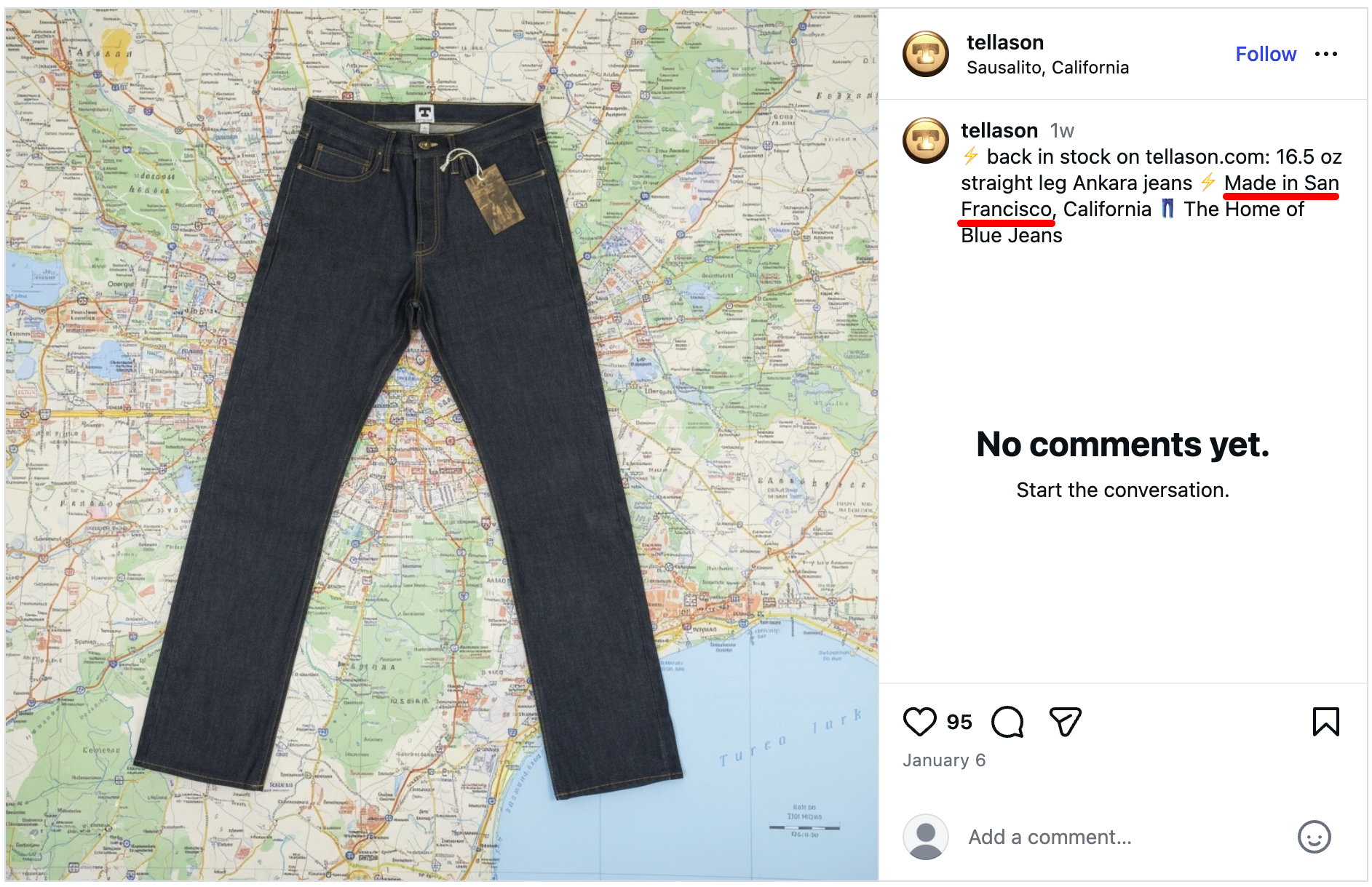
Since the days of the California gold rush, Americans have been wearing jeans. And according to Tellason, a denim clothing company based in San Francisco, it’s “very important that historically American products are produced in the USA.” That’s why, Tellason claims, its jeans are “Made in America” and “Built [i]n San Francisco.” The company reinforces this Made in USA messaging in a Google search result, where it claims that its jeans are “Made in San Francisco, the Home of Blue Jeans.”
But a closer look reveals that the vast majority of the company’s jeans do not meet the FTC’s standard for Made in USA marketing.
According to the FTC, in order for a product to be marketed as “made” or “built” in the USA, the product must be “all or virtually all” made in the U.S. That is, it must contain “no – or negligible – foreign content.”
Tellason falls short of this standard because the denim used in more than 90 percent of the jeans listed on its website is sourced from Japan.
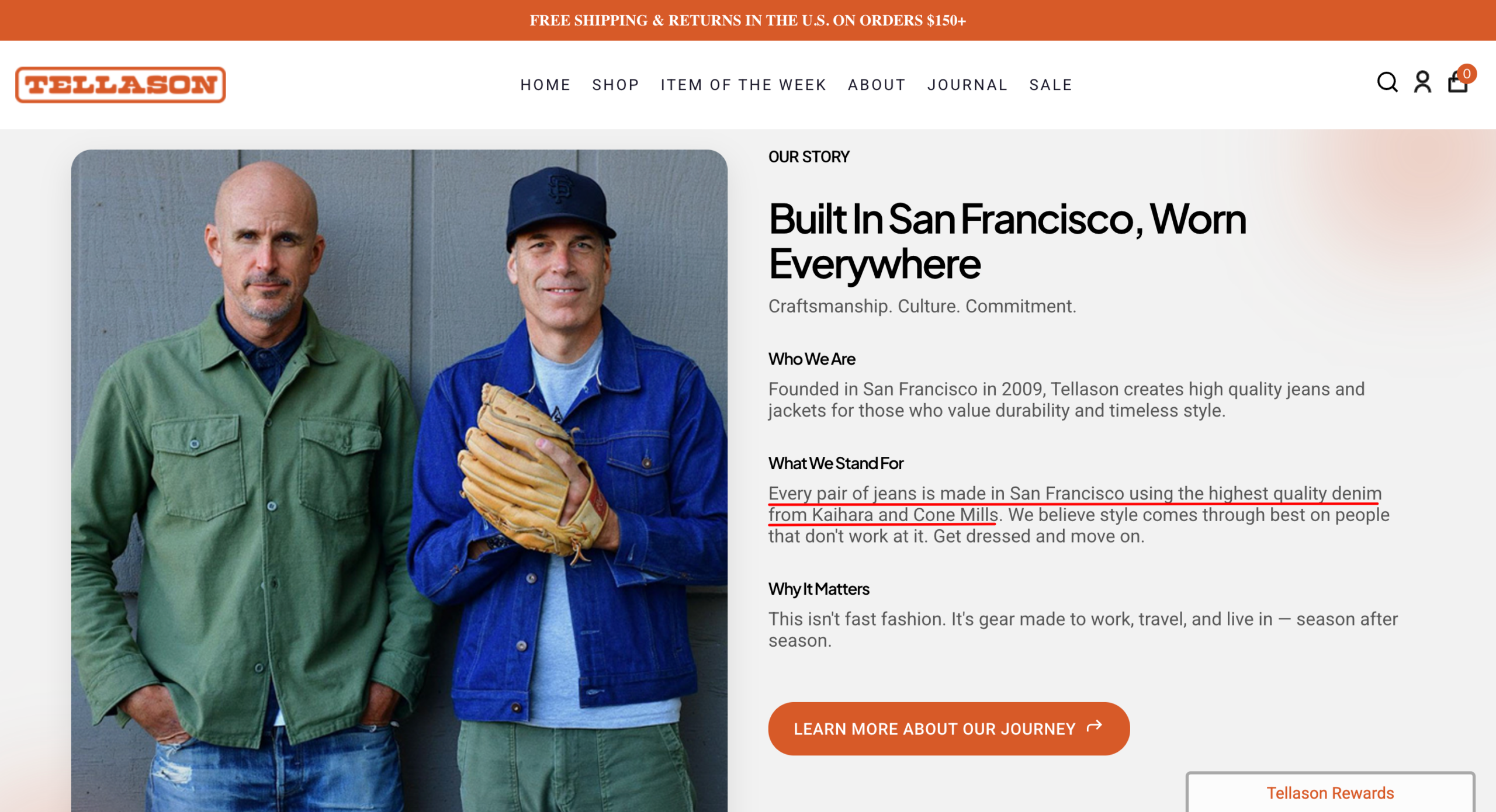
Beneath its large, bold “Built In San Francisco” claim on its homepage, the company clarifies – in smaller font – that “[e]very pair of jeans is made in San Francisco using the highest quality denim from Kaihara and Cone Mills.”
According to a company-sponsored blog post, Cone Mills was a plant located in Greensboro, North Carolina, that supplied denim to Tellason until it shut down at the end of 2017. After the plant closed, the company’s founders “turned their gaze to the west – across the Pacific Ocean to Japan,” where they found Kaihara Mills, which is now the primary supplier of the company’s denim.
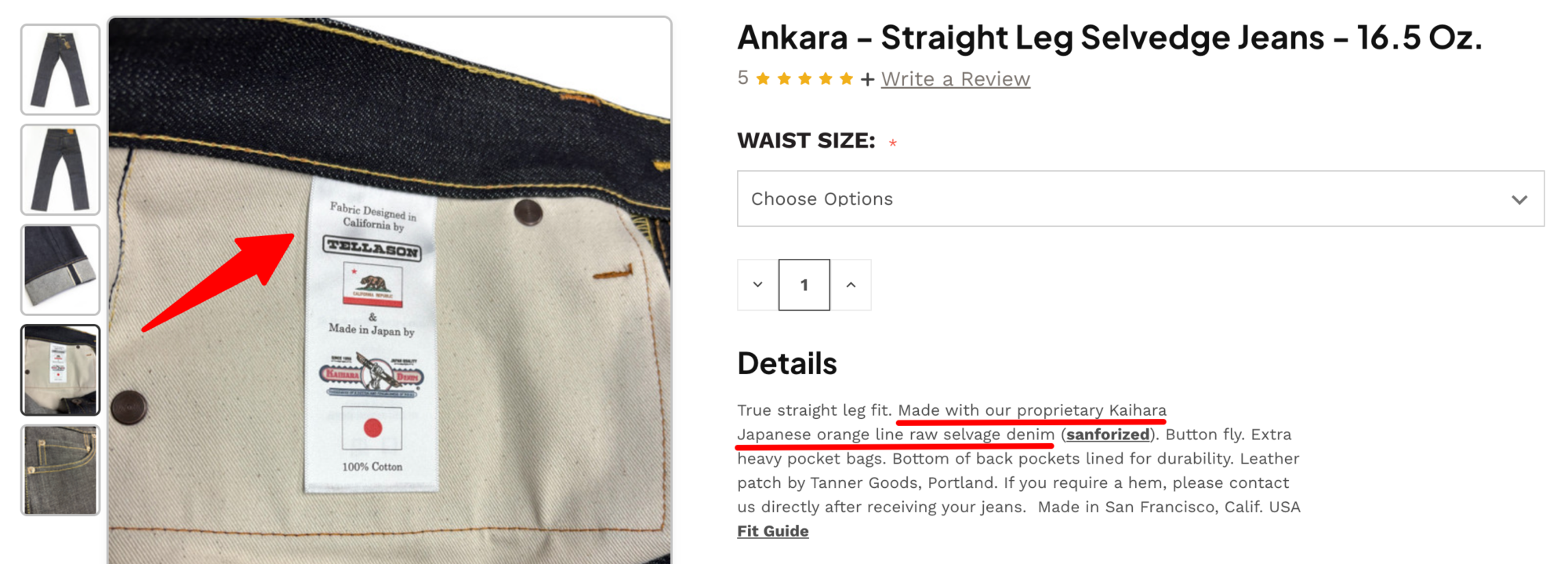
Today, only two of the jeans listed on the Tellason website are made from Cone Mills denim. (One pair doesn’t specify where the denim comes from.) The vast majority – 33 out of 36 styles – are made from Japanese-sourced denim, according to origin information on product pages, as well as product tags stating “Fabric Designed in California by Tellason & Made in Japan by Kaihara” (see second image in slider below).
Yet this has not stopped Tellason from advertising its Japanese-sourced denim jeans as “Made in San Francisco.”
We looked into Tellason’s Made in USA claims after receiving a reader tip about Real American Deals – a website that purportedly highlights American-made products. Tellason was featured on the website, which promoted the brand as “proudly made in USA,” while noting that the company “[i]mports some denim fabric.”
Tellason did not respond to a request for comment. After reaching out to Real American Deals, the website immediately removed Tellason from its Made in USA database.
The bottom line
In the past, the FTC has made clothing companies pay for making false Made in USA claims. While companies are free to promote their U.S. assembly operations, they are not allowed to deceptively overstate the amount of manufacturing that takes place domestically.
If buying American-made products is important to you, make sure to check for inconsistencies with a brand’s U.S.-origin claims before making a purchase.
Find more of our coverage on Made in USA.
Our Ad Alerts are not just about false and deceptive marketing issues, but may also be about ads that, although not necessarily deceptive, should be viewed with caution. Ad Alerts can also be about single issues and may not include a comprehensive list of all marketing issues relating to the brand discussed.
This year reader tips led to dozens of ad alerts, as well as a complaint to regulators.
FTC publishes first closing letters since Made in USA Labeling Rule went into effect in August.
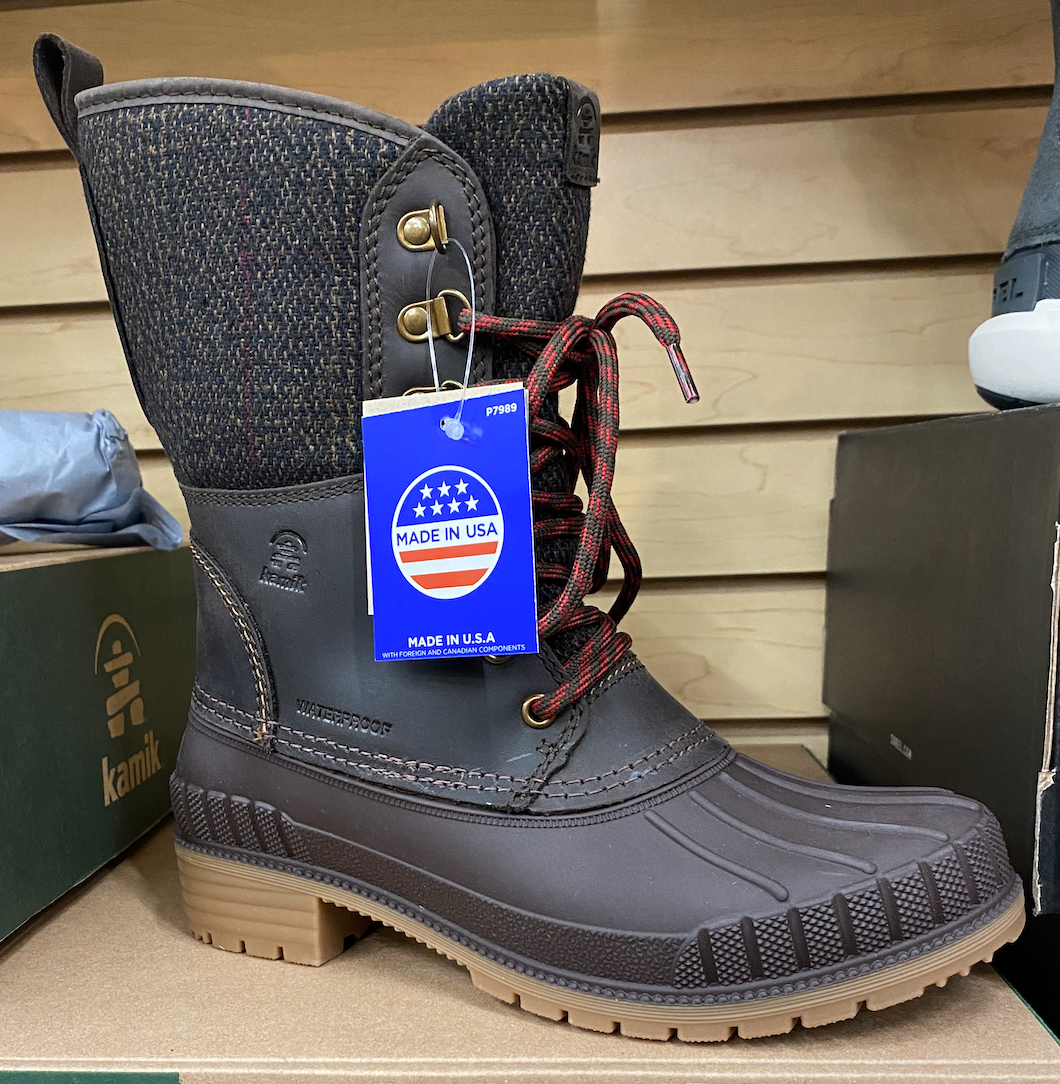
Zooming in on the fine print of a “Made in USA” tag.