
Buffalo Wild Wings’ Pick 6 Meal for Two
Advertised $19.99 price deserves an official review.
Serena Williams credits GLP-1s for helping her lose weight after having children.
“After kids, it’s the medicine my body needed,” the tennis legend says in the above TV ad for the telehealth company Ro. “GLP-1s helped me lose 31 pounds.”
But while the 14-time Wimbledon champ says in the ad that it only took “one app” to hit her weight-loss goals, she didn’t lose all the weight – or perhaps even most of it – “on Ro.” According to the ad’s fine print:
After losing weight with another GLP-1 provider, Serena chose Ro to continue her weight loss journey.
And her reasons for choosing Ro may have had something to do with a family connection to the company that isn’t disclosed in the ad at all. Williams’ husband, Alexis Ohanian, was an early investor in Ro and has served on the company’s board of directors since 2018.
If consumers watching the Ro ad were aware that Williams’ lesser-known husband has a financial stake in the company, would they view her endorsement differently?
According to the FTC’s Endorsement Guides:
When there exists a connection between the endorser and the seller of the advertised product that might materially affect the weight or credibility of the endorsement, and that connection is not reasonably expected by the audience, such connection must be disclosed clearly and conspicuously. Material connections can include a business, family, or personal relationship.
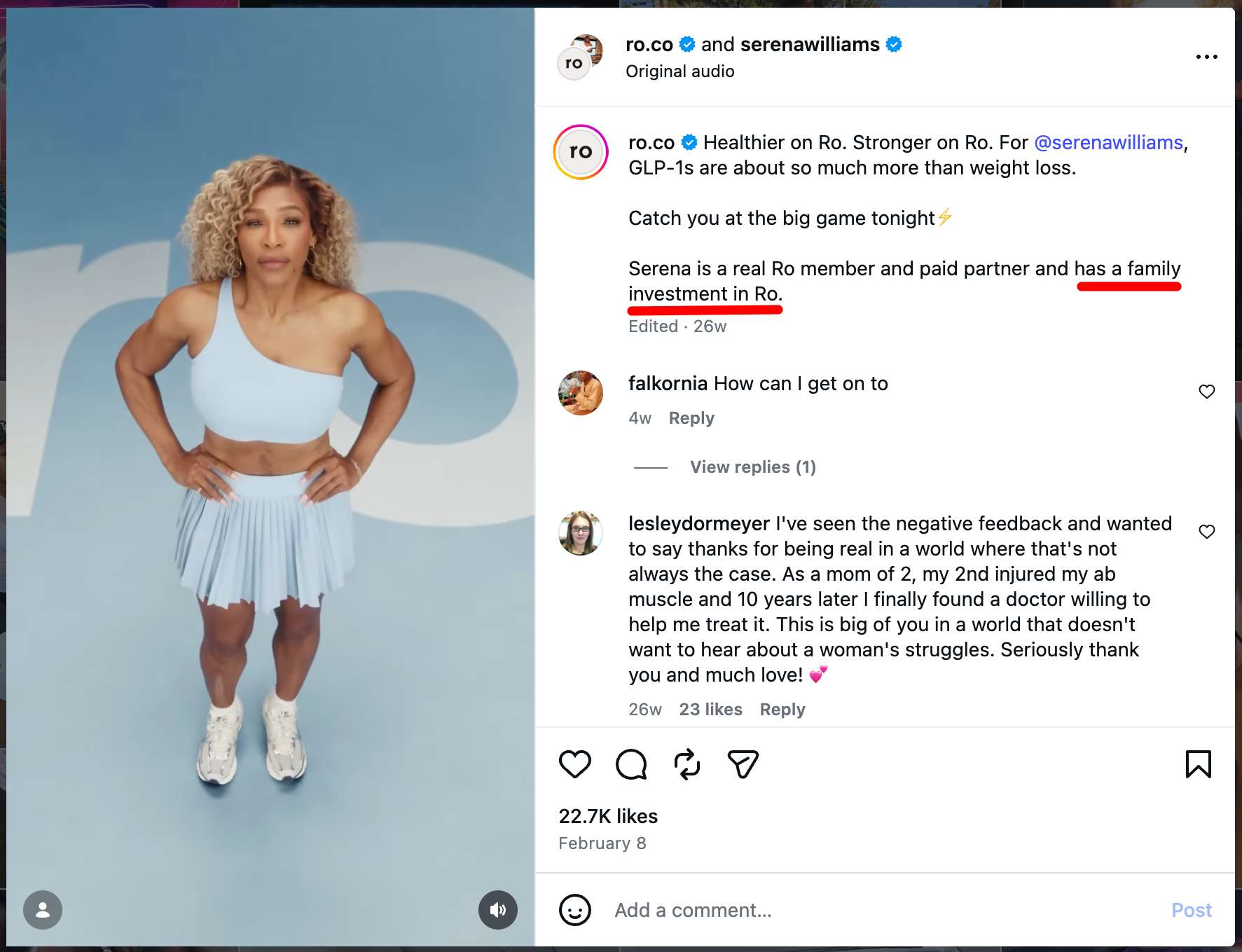
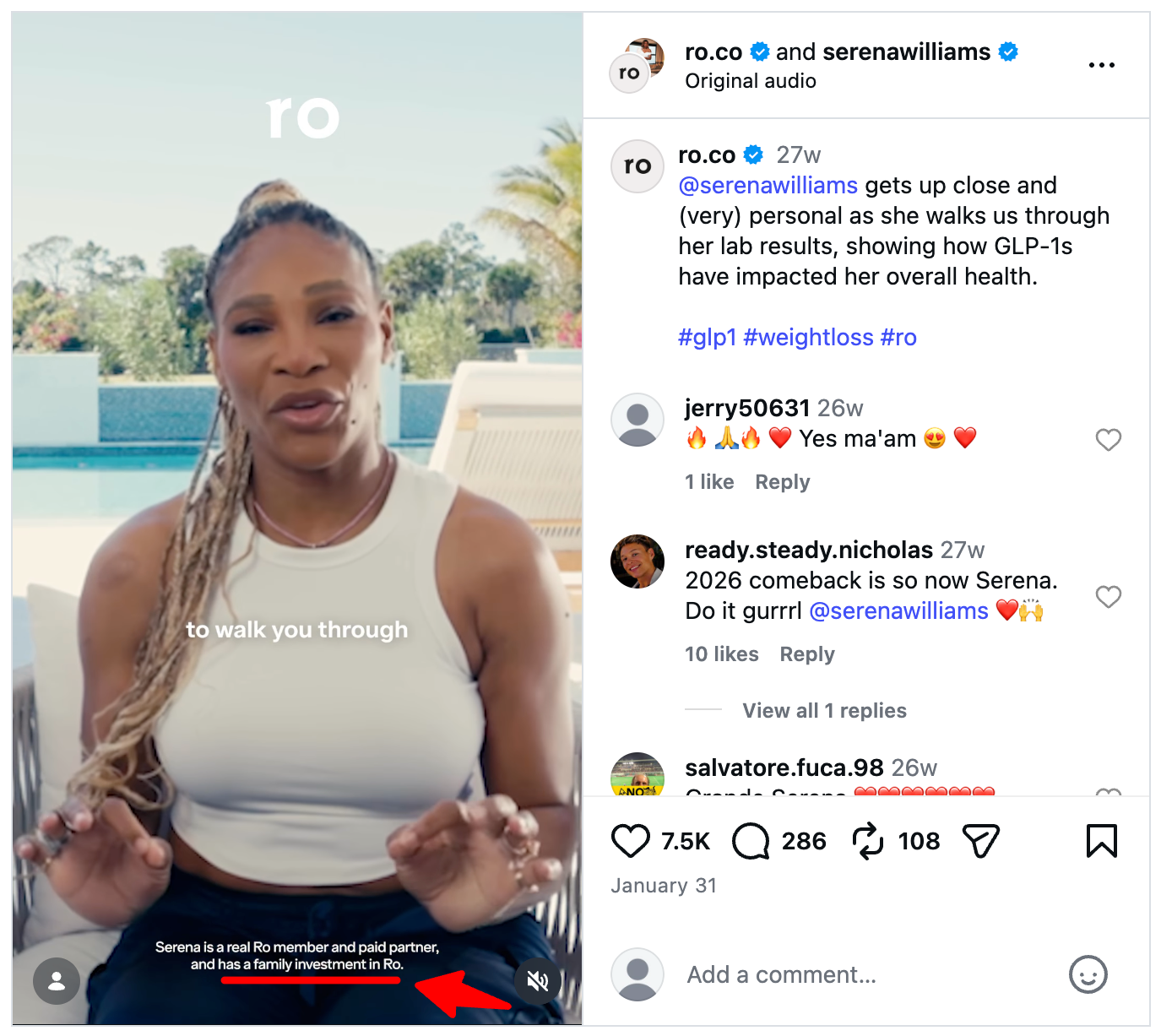
The fact that Ro discloses in some of its Instagram posts that Williams “has a family investment in Ro” (see below) reasonably implies that the relationship between Ro and her husband is not widely known (i.e., reasonably expected by the audience). Otherwise, the company would not have included the disclaimer.
Yet any such disclosure regarding Williams’ familial ties to the company is notably missing from the TV commercial. And for that, we’re calling a fault on this ad.
Ro did not respond to a request for comment.
Find more of our coverage on endorsements and testimonials.
Our Ad Alerts are not just about false and deceptive marketing issues, but may also be about ads that, although not necessarily deceptive, should be viewed with caution. Ad Alerts can also be about single issues and may not include a comprehensive list of all marketing issues relating to the brand discussed.
Advertised $19.99 price deserves an official review.
Your best defense against deceptive AI? A little research.
Products contain some surprising ingredients for a drink advertised as “like water.”