A List of Freebies
Before paying a company for something, know all your options.
The majority of workers have to wait two weeks or more to get paid, creating a potential financial gap before payday. Cash advance apps – also referred to as earned wage products – claim to bridge this gap by offering short-term, interest-free loans to pay bills or other living expenses that are repaid once consumers get their next paycheck.
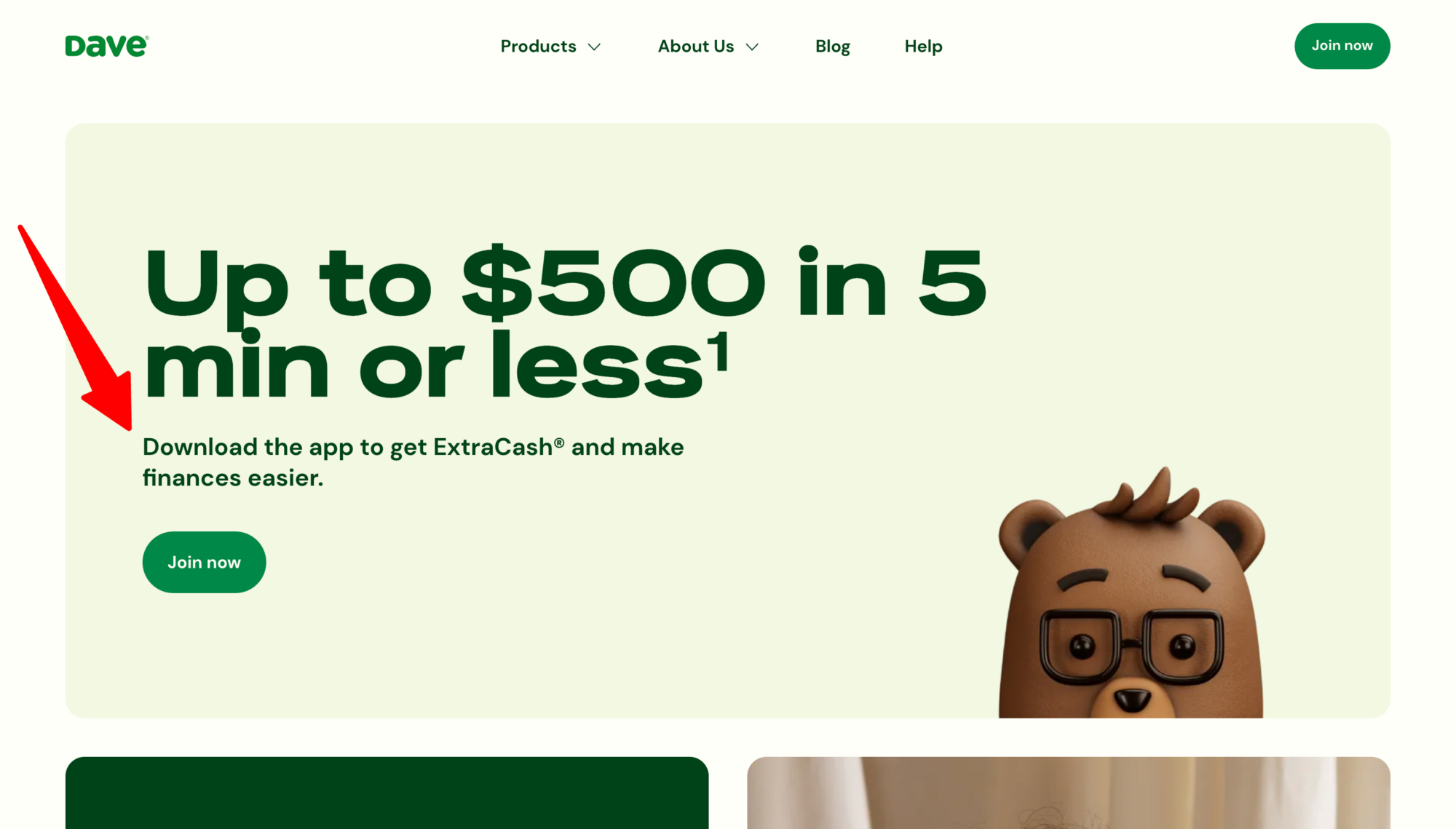
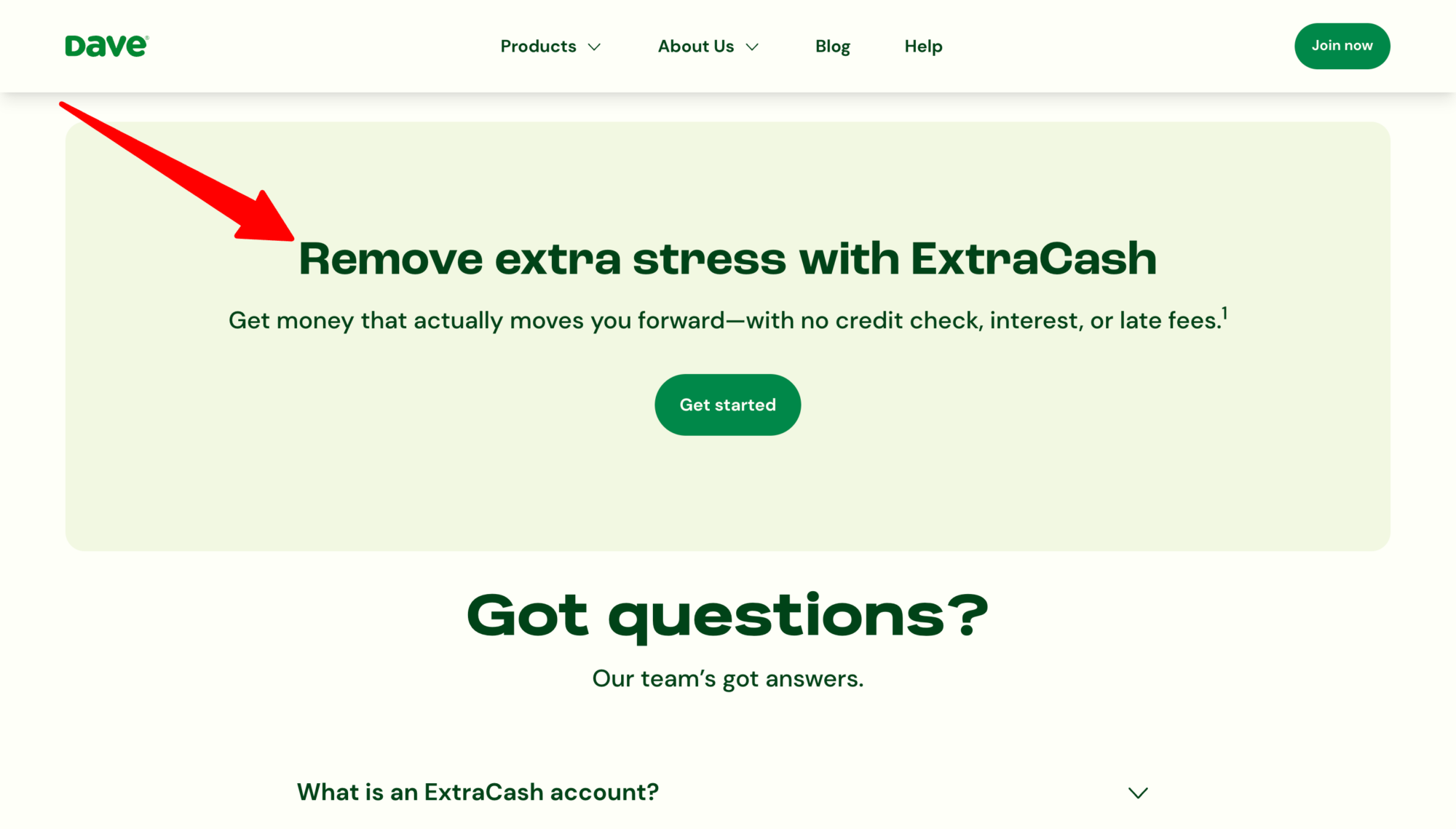
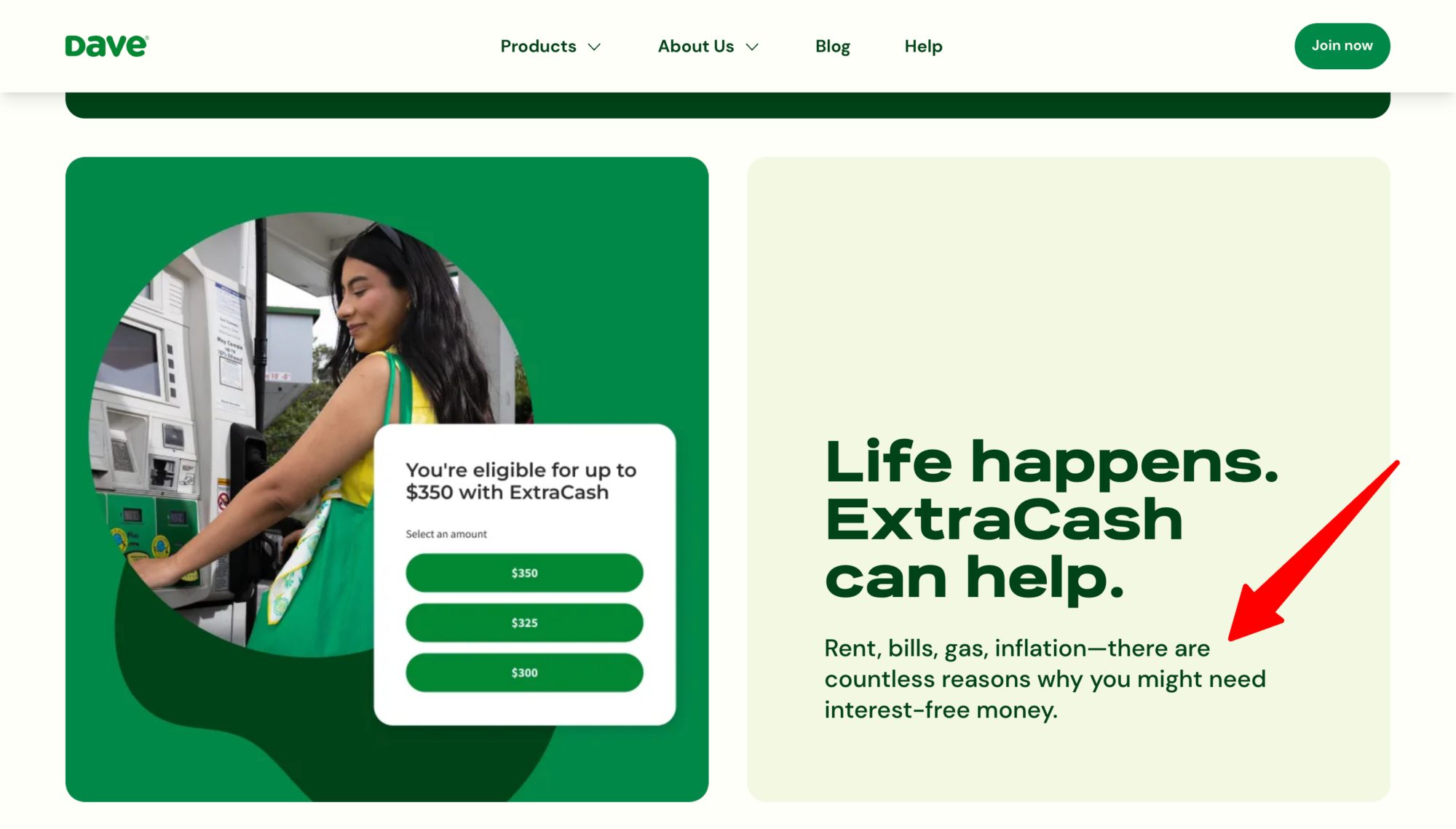
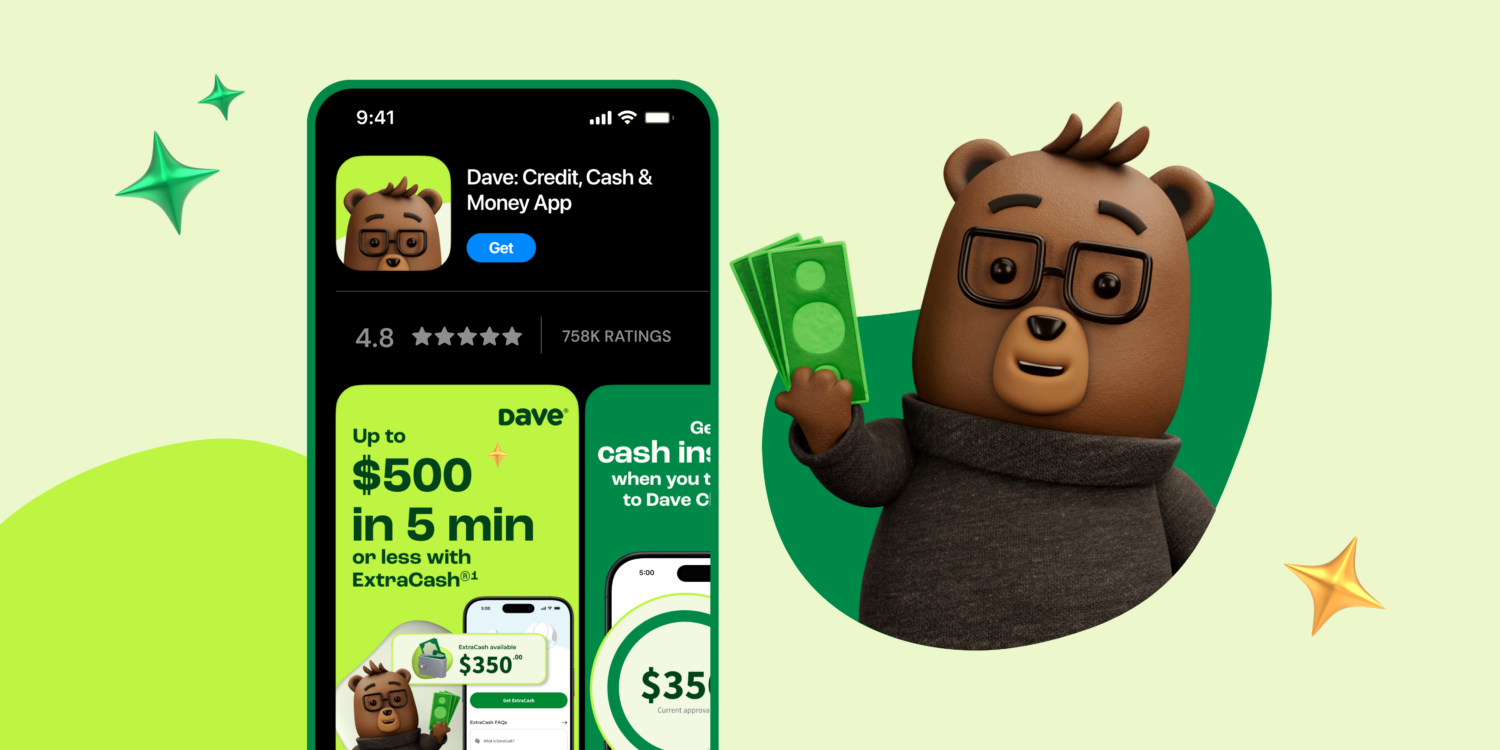
Dave markets its ExtraCash advance – including through TikTok influencers, Meta ads and its website – as providing consumers an “extra buffer” between paydays, offering “up to $500 in five minutes or less” with no credit check, interest or late fees. Ads flash hundreds of dollars in cash and target financially strapped consumers: moms struggling to afford baby supplies, dog owners facing unexpected vet bills, people needing money for gas and groceries. Dave also pitches the “interest-free money” for non-emergencies, like paying off student loans or funding a new hobby, and its website claims ExtraCash “remove[s] extra stress” by easing inflation-related and “countless” other expenses.
But the ads leave out some important details – or bury them in tiny fine print at the end of the ad. Here’s how the app actually works and what to watch out for.
The company’s ads make the process sound simple – just download the Dave app and get fast cash. But, in reality, it’s a multistep process including:
Despite Dave’s “five minutes or less” claim, getting the cash can take much longer.
For one, consumers have to go through the multistep process described above before any money moves. Beyond that, timing depends on where the funds are sent: transferring ExtraCash to the Dave checking account might be quick, but transferring it directly to an outside bank account takes up to three business days – unless consumers pay a fee for delivery within an hour.
This gap in receiving funds may explain the fine print at the bottom of Dave’s website, which notes that advances are “typically” authorized within 5 minutes.
Dave claims that “[m]illions of people take up to $500,” and it often advertises consumers getting approved for $350. But according to the fine print, “few qualify for $500” and ExtraCash amounts actually start at $25. And according to the FTC, which has investigated Dave before, the company typically offers $0.
Dave’s ads also leave out fees, or disclose only certain charges in the fine print. Here’s a breakdown of what you can expect:
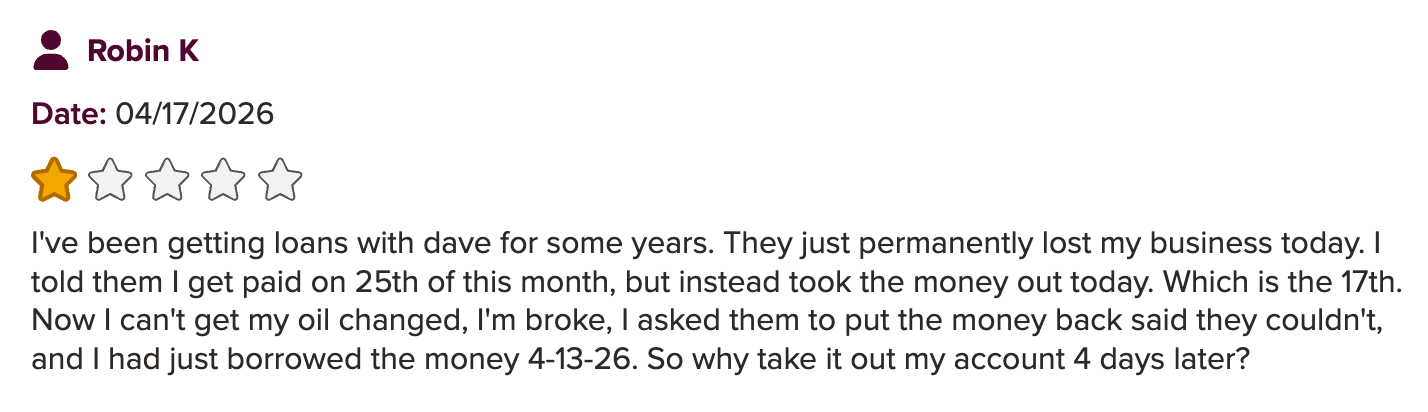
So despite Dave’s “no interest” claim, these advances are far from free. Or as a recent consumer complaint filed with the BBB put it, “The issue is Dave says no interest but what they do charge are fees to take the money.”
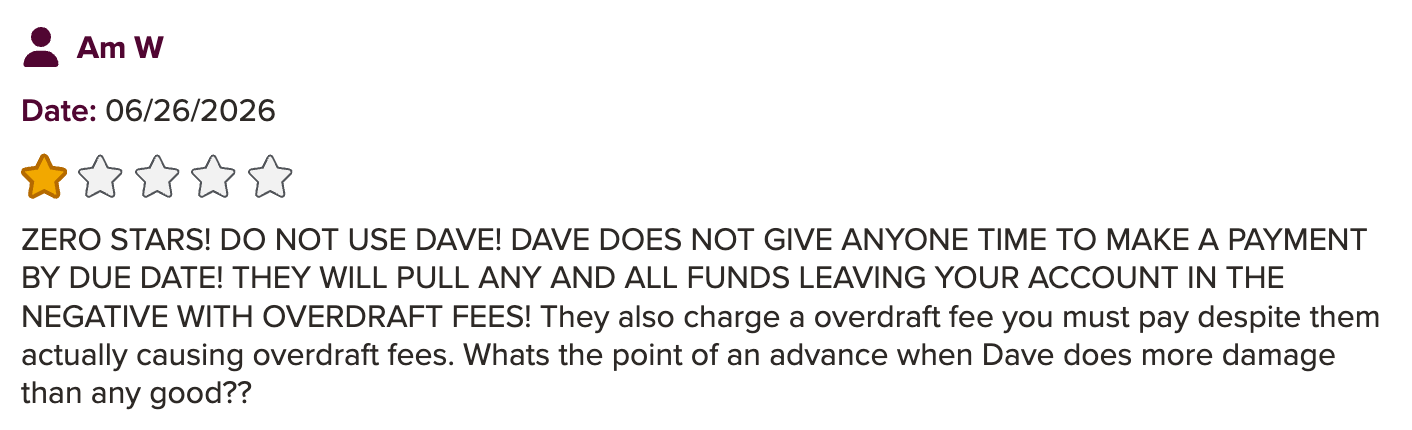
“No late fees” doesn’t mean consumers can repay the loan whenever they want. If funds are short on the due date, Dave will attempt to take partial payments or pull from the linked Dave checking account. If that doesn’t cover what’s owed, Dave keeps monitoring the consumer’s account and automatically withdraws money as it becomes available – even if that means overdrafting the bank account, since, per its terms, “ExtraCash is repayable on demand.”
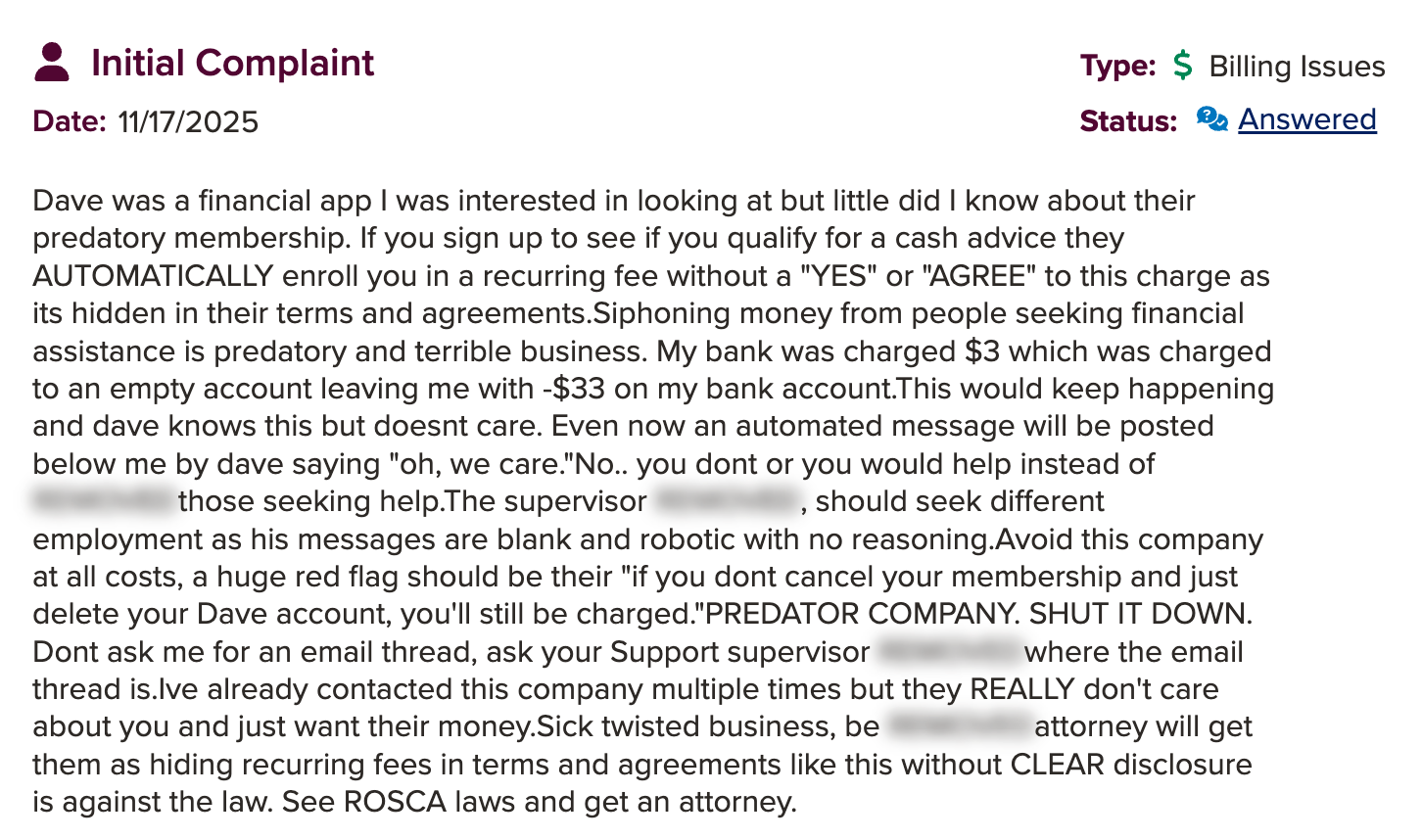
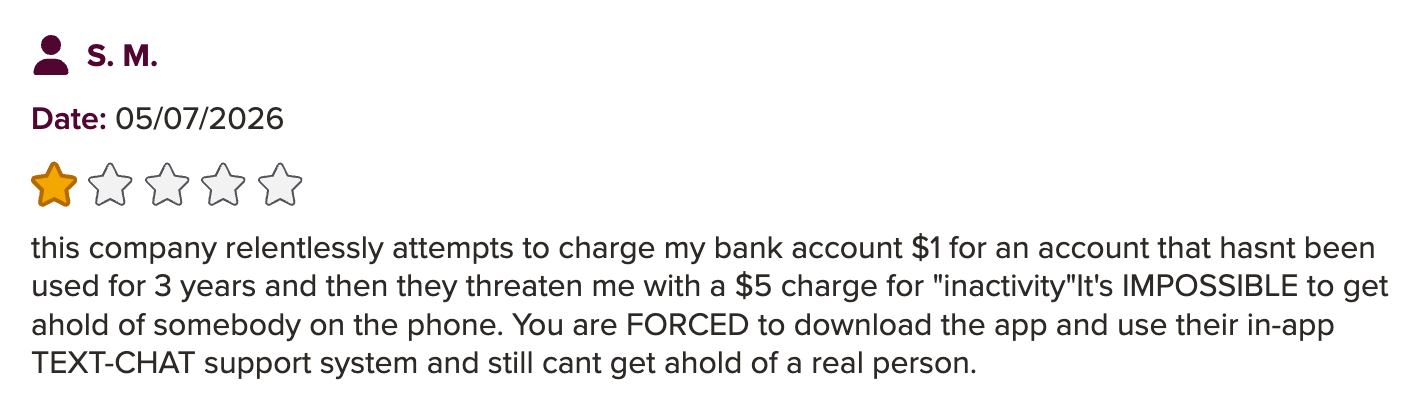
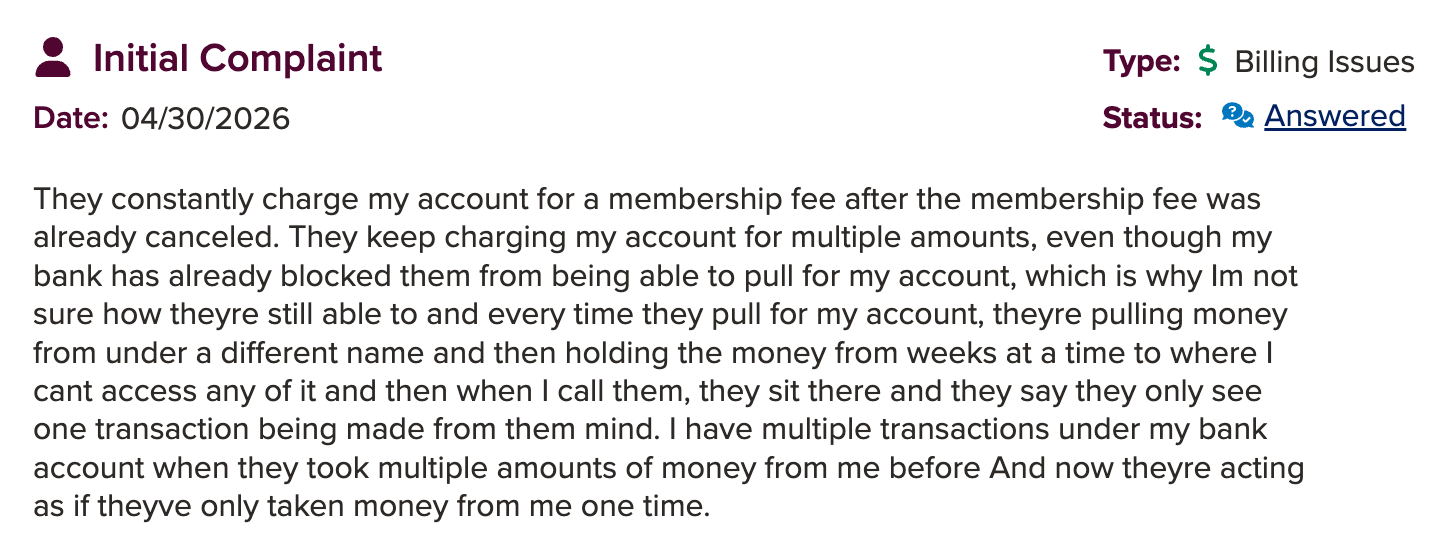
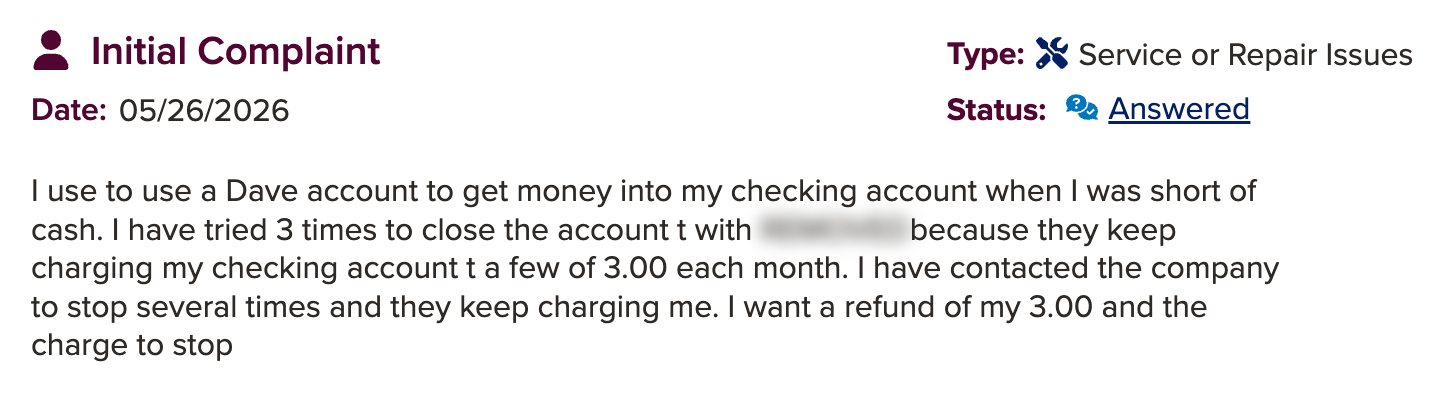
Consumers have complained about Dave to the BBB regarding issues they’ve reportedly had with the company withdrawing money before they got paid, signing them up for a subscription without obtaining consent, difficulties canceling membership, hidden fees, poor customer service, and more. A sampling of recent BBB complaints follows.
As of this writing, Dave has a 1.16-star BBB rating, with over 900 complaints filed in the last three years.
In recent years, Dave has faced legal issues related to hidden fees, misleading claims that consumers can get up to $500, and more.
In 2024, the FTC took action against Dave alleging that despite advertising cash advances of up to $500, Dave only offered the full advertised amount 0.002% of the time. Additionally, the lawsuit alleged that consumers didn’t qualify for any advance over 75% of the time and when they did qualify the most common amount Dave offered was $25. The complaint also said Dave deceptively advertised “instant” advances when consumers actually had to pay an express fee for the service, added a surprise 15% fee – which it referred to as a “tip” – at the very end of the checkout process and made its subscriptions difficult to cancel. The complaint has since been referred to the Department of Justice, which filed an amended complaint. Of note, following this amended complaint, Dave said it eliminated optional tips and express fees.
Additionally, late last year, the city of Baltimore sued Dave for charging “10 times the maximum APR allowed for consumer loans in Maryland, which is 33%.” Similarly, a class-action lawsuit against Dave alleges that the company violates the Military Lending Act by charging an average APR of 329%. Dave’s motion to dismissed the lawsuit was denied, which it is appealing.
Dave did not respond to a request for comment.
Consumers should be wary of cash advance apps as they often come with hidden fees and can leave you in a worse financial position than you started in. Additionally, when a company claims you can get hundreds of dollars in minutes, always make sure to do your research and look for any fine print before providing your banking information. Reading consumer reviews from a variety of third-party platforms can also be helpful.
Find more of our coverage on loans.
Our Ad Alerts are not just about false and deceptive marketing issues, but may also be about ads that, although not necessarily deceptive, should be viewed with caution. Ad Alerts can also be about single issues and may not include a comprehensive list of all marketing issues relating to the brand discussed.
Before paying a company for something, know all your options.

Can you really get paid to write reviews?

A closer look at what we’ll be monitoring in the new year.