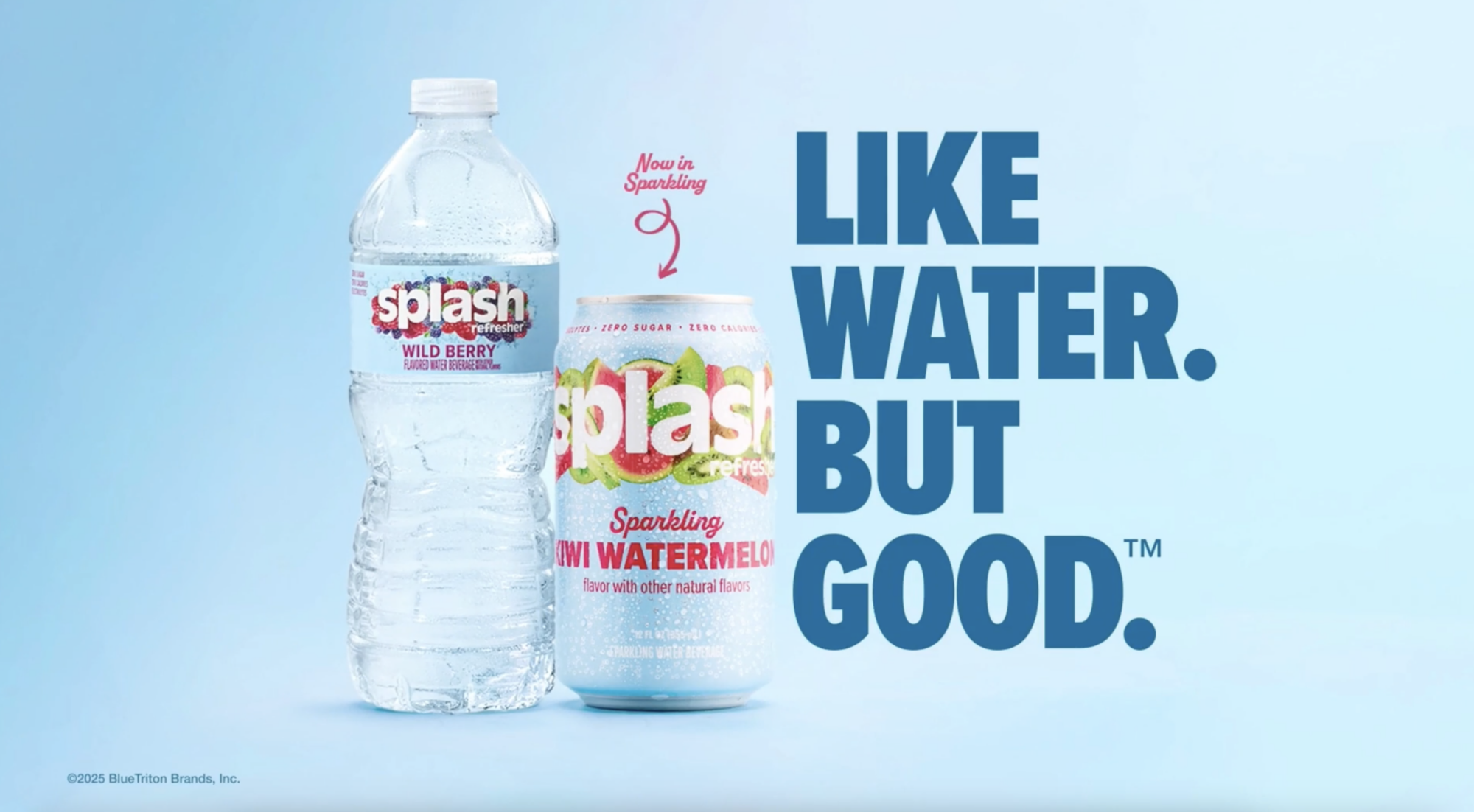
Splash Refresher Sparkling Water
Products contain some surprising ingredients for a drink advertised as “like water.”
Lawsuit cries fowl over preservative-free claims.
Costco’s $4.99 rotisserie chicken seems to defy the basic principles of economics. The retail giant reportedly takes a loss on the birds even as it sells more than 100 million of them a year. And this has been the case for years.
But according to a recent class-action lawsuit, the cult favorite also defies the laws of truthful advertising.
Specifically, the lawsuit alleges that Costco advertises its Kirkland brand rotisserie chicken as containing “no preservatives,” including on in-store signs, when the birds contain two additives – sodium phosphate and carrageenan – that preserve the texture of food and extend shelf life.
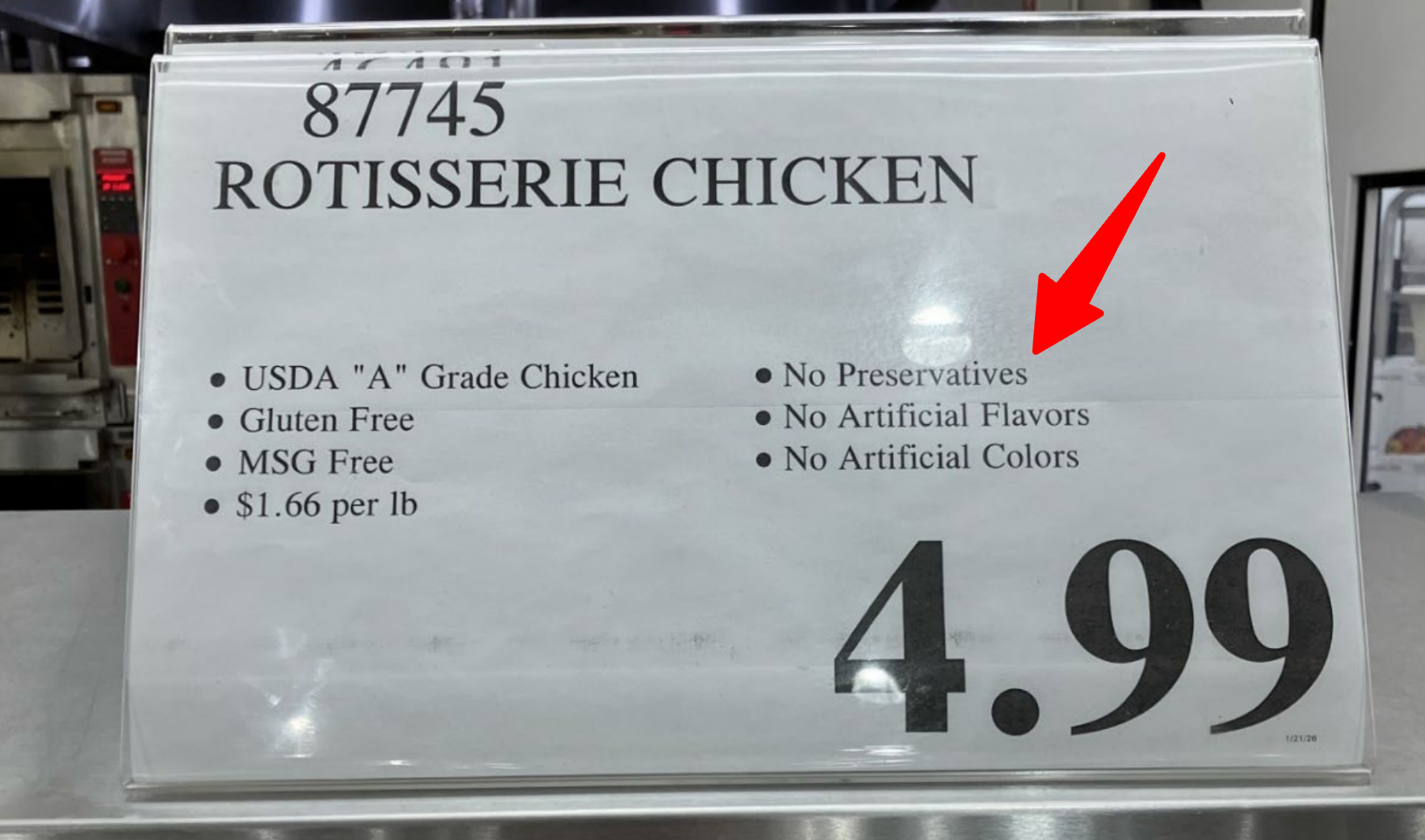
The lawsuit, filed last month in California federal court, roasts the retailer for “systemically cheat[ing] customers out of tens – if not hundreds – of millions of dollars by falsely advertising its Kirkland Signature Seasoned Rotisserie Chicken as containing ‘no preservatives,’” adding:
Any disclosure of these added ingredients appeared, if at all, only in small print on the “back of the label” ingredient list and without any explanation of their preservative roles, rendering any such disclosures insufficient to alert a reasonable consumer to the falsity of Costco’s prominent “No Preservatives” Representations.
While both ingredients are common food additives generally recognized as safe by the FDA, studies have suggested that carrageenan may be bad for gastrointestinal health and certain individuals, including those with kidney disease, are advised to avoid sodium phosphate.
In response to a request for comment, a Costco spokesperson said:
To maintain consistency among the labeling on our rotisserie chickens and the signs in our warehouses/on-line presentations, we have removed statements concerning preservatives from the signs and on-line presentations. We use carrageenan and sodium phosphate to support moisture retention, texture, and product consistency during cooking. Both ingredients are approved by food safety authorities.
The lawsuit comes amid increased scrutiny of preservative-free claims. Last year, TINA.org reported on a trend in class-action litigation concerning such claims used to market a range of products, from popcorn and pasta to shampoo and cat treats.
Find more of our coverage on ingredient claims.
Our Ad Alerts are not just about false and deceptive marketing issues, but may also be about ads that, although not necessarily deceptive, should be viewed with caution. Ad Alerts can also be about single issues and may not include a comprehensive list of all marketing issues relating to the brand discussed.
Products contain some surprising ingredients for a drink advertised as “like water.”
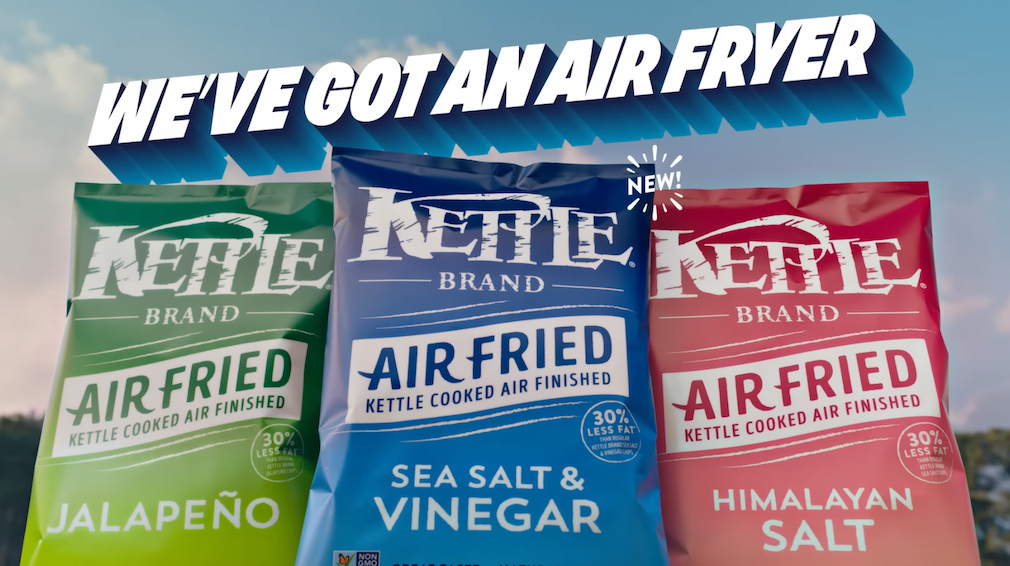
Lawsuit alleges Kettle is cooking up something deceptive with its “air fried” claims.

Get a load of this.